China contributes to practical cooperation of SCO: chief Yermekbayev in exclusive interview with GT at organization’s 25th anniversary
China contributes to practical cooperation of SCO: chief at 25th anniv of organization
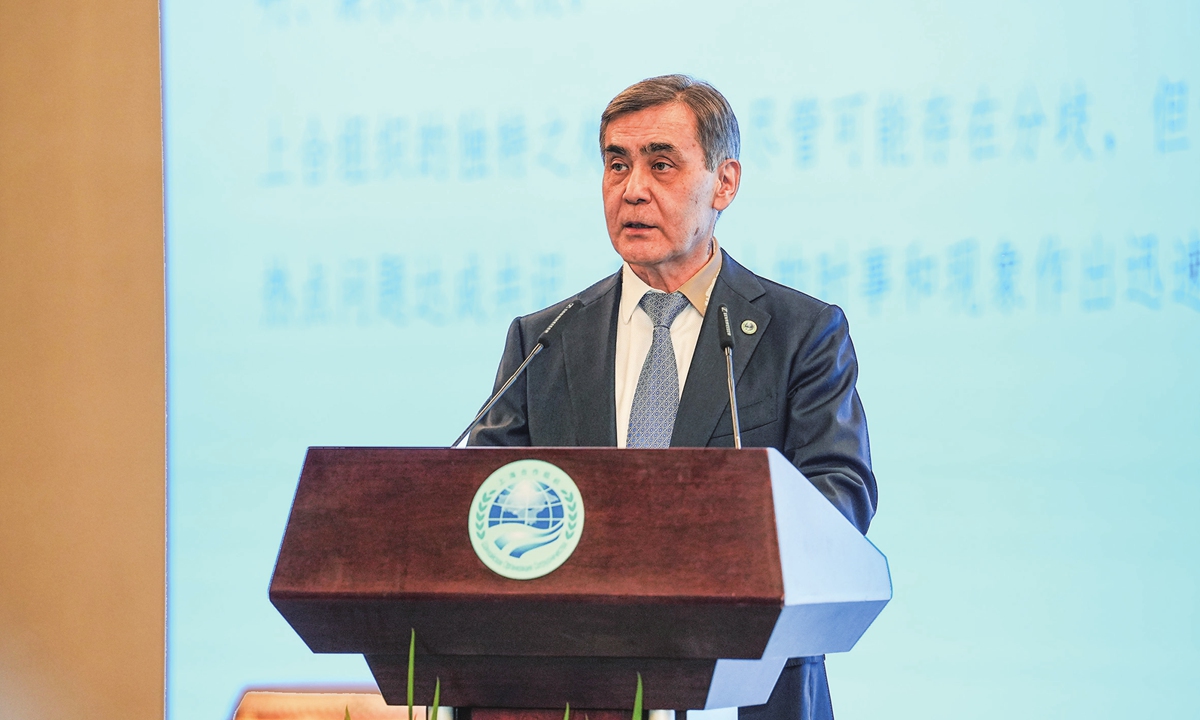
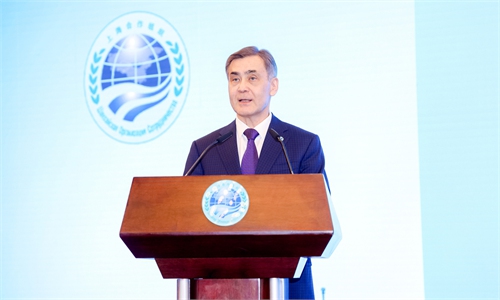
SCO Secretary-General Nurlan Yermekbayev gives a keynote speech at the 25th anniversary of the Shanghai Cooperation Organisation in Beijing on June 15, 2026. Photo: Courtesy of the SCO Secretariat
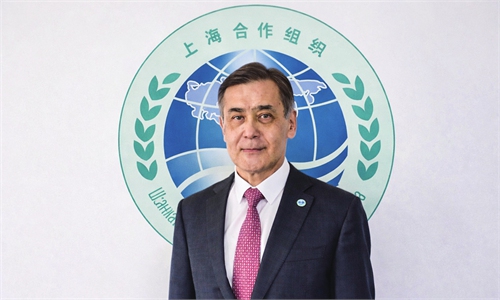
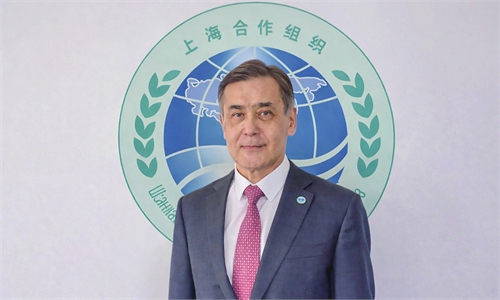
The Shanghai Cooperation Organisation (SCO) has established itself as one of the largest transregional associations, making a significant contribution to strengthening peace, stability and sustainable development across Eurasia and beyond. China's role - as one of the founding states and the host of the SCO Secretariat, the organization's main permanent executive body - can hardly be overstated, SCO Secretary-General Nurlan Yermekbayev told the Global Times in a recent exclusive written interview.Over the years, China, together with other member states, has worked tirelessly to enhance the SCO's strategic role in shaping a just and multipolar world order, which is grounded in universally recognized principles of international law, with the United Nations (UN) playing a central coordinating role. Through its initiatives and their effective implementation, China contributes substantively to deepening practical cooperation within the organization, he elaborated.
China has demonstrated a responsible approach to fulfilling its SCO commitments through promoting practical cooperation, Yermekbayev said, giving the example of offering assistance in building high-technology incineration plants. One of such facilities is already operational in Bishkek, Kyrgyzstan. In 2025, Kazakhstan signed investment agreements with China for the construction of three further plants.
China is also making a significant contribution to biodiversity conservation. In May 2024, the Kunming Biodiversity Fund (KBF) was officially launched in Beijing. In 2025, China approved biodiversity conservation projects in SCO countries including Iran, Kazakhstan, Kyrgyzstan, Pakistan and Uzbekistan, as well as in Cambodia, the Maldives, Nepal, Türkiye and Sri Lanka.
The SCO has 10 member states with a combined territory of about 36 million kilometers and a population of over 3.4 billion. It represents about 25 percent of global GDP and over 15 percent of international trade, according to the latest data released on its website.
This year marks both the 25th anniversary of the SCO and the launch of China's 15th Five-Year Plan (2026-2030) for national economic and social development. Yermekbayev said that the 15th Five-Year Plan opens up new prospects. "We are convinced that its implementation will help accelerate socio-economic and technological development, while strengthening peace, security and stability," he noted.
Yermekbayev said that the 25th anniversary of the SCO is not just a date to mark - it is a moment for strategic planning and action amid fundamental transformations in global architecture. "Member states are actively working on the implementation of the SCO Development Strategy until 2035, that was agreed upon in Tianjin in 2025," the secretary general shared.
The SCO prioritizes maintaining regional stability, deepening economic and trade cooperation, improving transport infrastructure, and accelerating digital transformation.
Yermekbayev said the reform of the SCO is progressing, including amendments to its legal framework, amendments to the Charter of the organization, and development of the regulations for its new specialized security bodies.
These include the Universal Centre for Countering Security Challenges and Threats in Tashkent, Uzbekistan, which encompasses the Centre for Combating Transnational Organized Crime in Bishkek, Kyrgyzstan and the Information Security Center, as well as SCO Anti-Drug Center in Dushanbe, Tajikistan.
At the same time, the parties are successfully expanding cooperation between defense ministries, security councils, competent agencies and anti-drug authorities, he added.
Sharing his view on the importance of the SCO security community as both a platform for member states to participate in global governance and fulfil their international obligations, and a platform for exploring new models of international relations and building a community with a shared future for humanity, the secretary general said that the SCO provides conditions for developing a collective approach to countering conventional and emerging security challenges, helps strengthen trust, and facilitates member states' fulfilment of international obligations based on the principles of mutual respect, equality, and consideration for national interests.
In transport, the Concept of Cooperation in the Development of Ports and Logistics Centers is being implemented, and international road transport routes are being expanded.
In finance, the SCO Development Bank is being established on a voluntary basis among interested countries.
In the digital sphere, work is under way on e-commerce and data-exchange platforms, Yermekbayev added.
The SCO demonstrates that effective international cooperation may be built on finding accord, mutual benefit, and respect for diversity rather than on a bloc mindset and confrontation. This is why the organization is considered an important platform for forming new models of international relations based on the principles of justice, inclusivity and multipolarity, he said.
As for the commonalities between the concepts and practices of the SCO and the Global Governance Initiative proposed by China, he highlighted the alignment between the Chinese vision of building a community with a shared future for humanity and the philosophy of the SCO - primarily, in the context of commitment to a shared security system, development of interconnectedness, cultural dialogue, and pursuit of the harmonious co-existence of countries with different political systems and development models.
The similarities can be seen quite clearly in the China-proposed four global initiatives. All these initiatives are aimed at strengthening peace and stability, facilitating sustainable development, broader humanitarian exchanges, and deeper understanding between nations. These approaches find practical implementation in the projects and SCO cooperation mechanisms in politics, economy, culture, and humanitarian affairs.
Given that international relations are becoming increasingly turbulent, the SCO's experience is gaining particular relevance. The SCO demonstrates in practice that it is possible to build a space of trust, neighborliness, and joint development on the basis of equal dialogue.
Based on the Shanghai Spirit, the SCO will build consensus among the parties and continue to expand practical cooperation in the future. Yermekbayev said that past experience proves that when a decision truly serves common interests, it will get support.
In this sense, the principle of consensus allows the member states to consolidate their opinions into a unified position.
At the same time, member states may find practical implementation through flexible cooperation mechanisms. On some issues, when countries can't reach consensus, cooperation may happen on the basis of voluntary participation or the "format of interested parties," where each country determines the extent of its involvement in a project and if none of the Member States objects to the project being carried out without its participation.
"I believe that one of the SCO's strengths lies in this combination of firm principles and flexible mechanisms. The Shanghai Spirit provides us with a value-based foundation, the principle of consensus ensures equality, and flexible tools of practical cooperation allow us to transform common goals into tangible results," he said.
RELATED ARTICLES