ARTS / CULTURE & LEISURE
New rose varieties bred by Chinese scientists honor revolutionary spirit of the Long March
New rose varieties bred by Chinese scientists honor revolutionary spirit
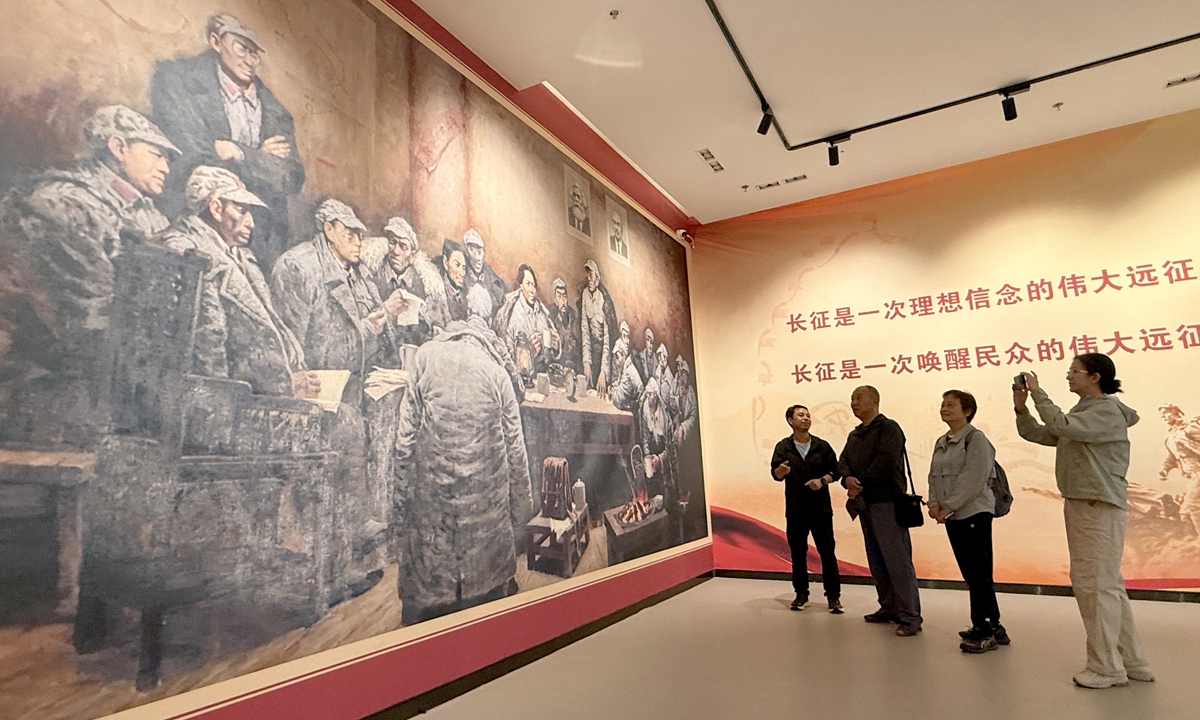
Visitors take in an exhibition at the Zhaxi Conference Memorial Hall in Zhaotong, Yunnan Province, on September 22, 2026. Photo: VCG
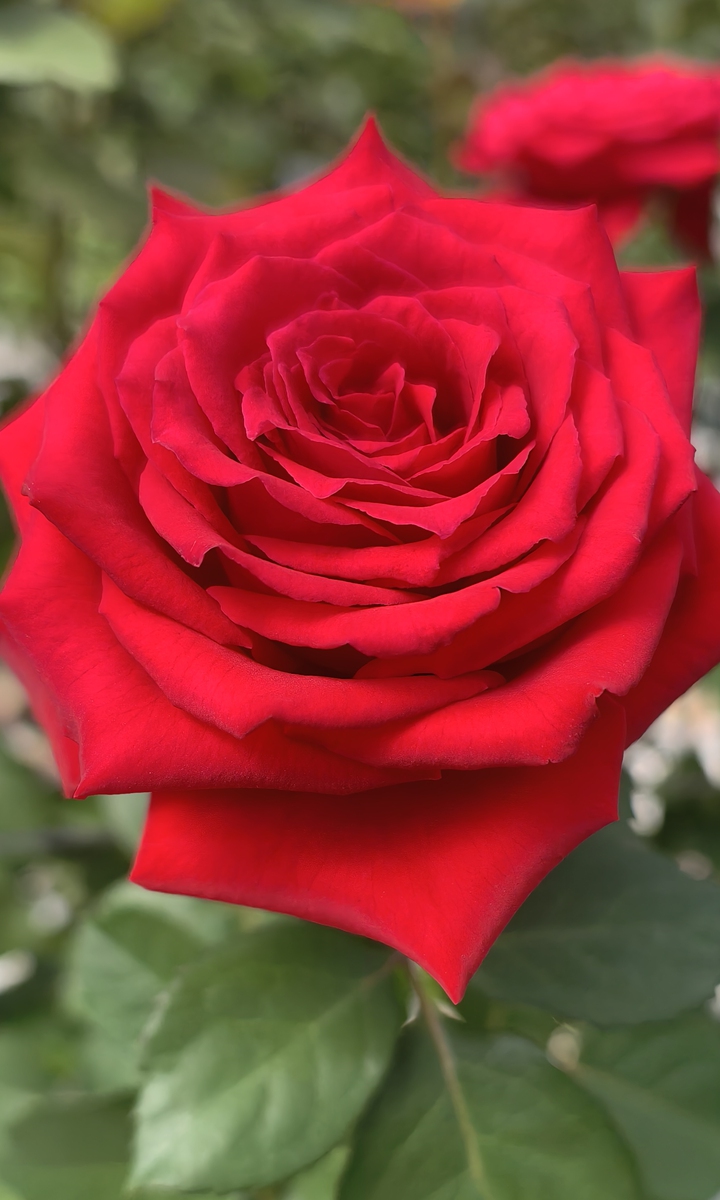
The Zhaxi Red rose Photo: Courtesy of Cai Yanfei
In Kunming, Southwest China's Yunnan Province, a new collection of Chinese roses is bringing the history of the Long March to life through the language of flowers.Unveiled recently at the Dounan Flower Market in Kunming, the six varieties in the "Long March" series were created to pay tribute to the victory of the Long March and its enduring spirit, weaving memories of a defining chapter in Chinese history into the colors and names of freshly cultivated blooms.
The year 2026 marks the 90th anniversary of the victory of the Long March (1934-36), a military maneuver by the Chinese Workers' and Peasants' Red Army that later became a defining episode in modern Chinese history.
From October 1934 to October 1936, the Red Army soldiers led by the Communist Party of China (CPC) broke through the encirclement of Kuomintang forces, crossed more than 10 provinces, and braved raging rivers, snow-capped mountains and treacherous grasslands before finally completing their epic military maneuver. The Long March victory marked a major turning point from setbacks to victory for the CPC and the Chinese revolution, and ushered in a new phase in the CPC's struggle for national independence and the people's liberation, according to the Xinhua News Agency.
The new varieties, developed by the Flower Research Institute of the Yunnan Academy of Agricultural Sciences (YAAS), represent the brainchild of Chinese researchers working to develop homegrown flower varieties and strengthen seed-source independence.
Cai Yanfei, a research fellow at the institute, told the Global Times that when people see these domestically bred rose varieties, they will be able to understand how revolutionary culture can be vibrant and beautiful, rather than something distant and confined to history books. The Long March was not only a journey of hardship and endurance, but also one of ideals, faith, hope in the face of desperate circumstances, and the joy of ultimate victory, Cai noted. "As people admire the flowers, I hope they will also come to understand that ideals and perseverance can blossom just like flowers," she said.
Reverse-breeding approach
"Some key events along the route of the Long March took place in Yunnan, including the Zhaxi Conference, the crossing of the Jinsha River, and the crossing of the Shigu ferry. These historical sites are right here around us, inspiring us to pay tribute to these heroes through flowers," Cai noted.
"We hope to use flowers that people can see and touch to bring the stories of the Long March out of textbooks and into the public view, honoring those who sacrificed their lives during the historic march," she said.
The six names of the new varieties link key milestones along the Long March in Yunnan with iconic imagery from poems about the historic journey. Each evokes a particular memory of the Long March while reflecting the character of the rose itself.
For example, one variety "Zhaxi Red" is named after the Zhaxi Conference, a major turning point in the Long March. It features vivid, deep-red petals symbolizing the seeds of revolution, Cai said.
Held in February 1935, the Zhaxi Conference made a series of major decisions and strategic arrangements crucial to the survival and development of the CPC and the Red Army, ushering the Chinese revolution into a new stage on the path to victory. Today, the Zhaxi Conference Memorial Hall has become a tourist destination where visitors can learn about the Long March and reflect on revolutionary ideals.
The other varieties are Shigu Chunjiang, named after the Shigu ferry, and Jinsha Wanli, Qianli Xue, Yunya Nuan and Jin Kaiyan, all inspired by a poem on the Long March by Chairman Mao.
The biggest challenge in this breeding project was the adoption of a reverse-breeding approach. In conventional breeding, researchers first select roses with desirable traits, apply for variety protection and then promote them to the market.
However, this approach can lead to a disconnect between breeding and market demand, with varieties potentially being eliminated before they even reach the market, Cai said.
"Our reverse-breeding model, by contrast, allows market demand to guide breeding. We first identify the characteristics a variety should possess, taking into account both the cultural preferences and aesthetic sensibilities of Chinese consumers and market demand. We then search for matching plant lines in germplasm banks and among hybrid offspring," she said.
This approach enables breeders to develop roses that carry cultural significance while meeting the flower industry's ongoing demand for new, distinctive and superior varieties, according to Cai.
Independent breeding
Thanks to the province's natural advantages, seven out of every 10 fresh-cut flowers sold in China come from Yunnan, making the province one of the world's major producers of fresh-cut flowers, Xinhua reported in March.
Kunming Customs data shows Yunnan's fresh-cut flower exports reached 1.22 billion yuan ($183 million) in 2025, a year-on-year increase of 60.5 percent, covering 64 countries and regions.
Founded in 2004, the institute has independently bred a total of 676 new varieties, 310 of which have received national authorization and 20 of which have been internationally registered. Its efforts have helped increase the market share of domestically bred flower varieties in China from less than 5 percent to more than 15 percent, the Yunnan Daily reported in May.
Cai noted that developing homegrown flower varieties is itself a "new Long March." For a long time, China's rose industry relied heavily on varieties introduced from overseas, with royalties paid to foreign patent holders for every flower sold, leaving the country dependent on others for its plant varieties, she said.
Just as the Red Army sought a way forward in seemingly hopeless circumstances during the Long March, today's flower breeders are working to overcome bottlenecks in the development of domestically bred varieties and achieve greater self-reliance in plant breeding.
"We plan to make seedlings of the six varieties available to growers as early as July of next year, with commercial production gradually ramping up toward the end of the year. Through cooperation with growers, we aim to deliver seedlings directly to the fields and help increase flower farmers' incomes," she added.
RELATED ARTICLES