China’s AI gadgets fly off overseas shelves as exports boom
Fast iteration, stable supply chains fuel China’s AI gadget export surge
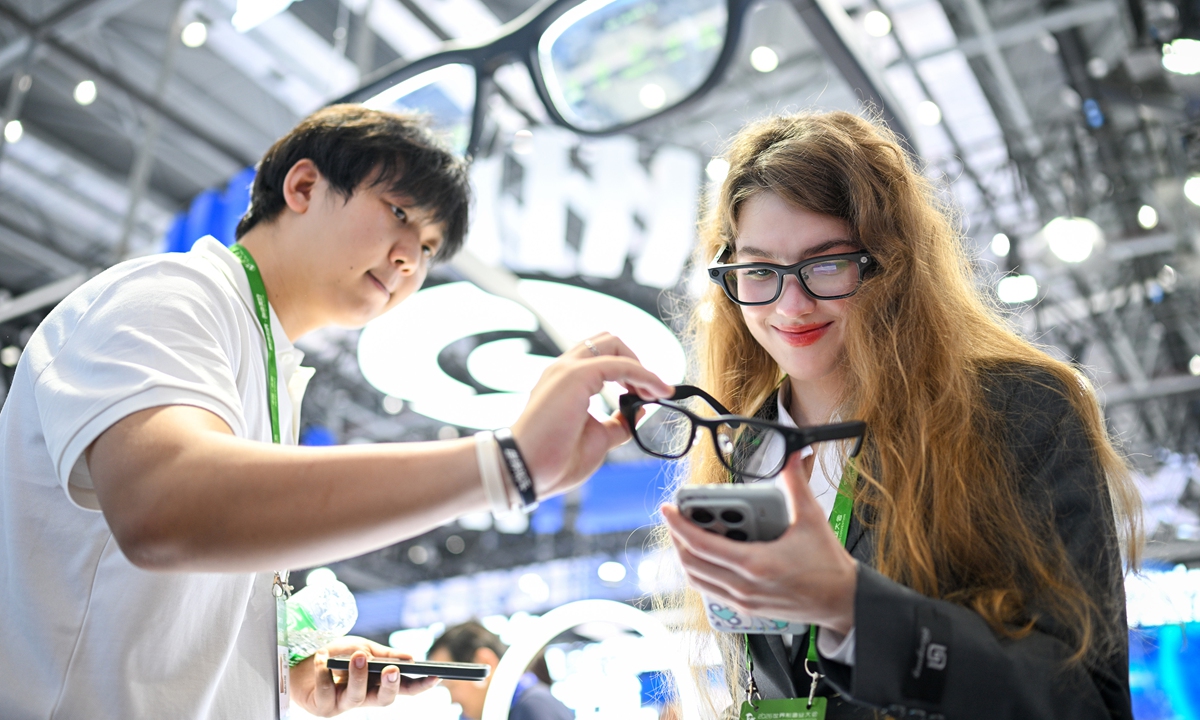
A foreign visitor (right) tries on AI-powered glasses at the 2026 World Manufacturing Convention in Hefei, East China's Anhui Province, on September 20, 2026. Photo: VCG
It's 1 am in Dongguan, South China's Guangdong Province, and a factory floor is still humming. Four production lines are running at full capacity. Workers in anti-static wristbands fit batteries and components into artificial intelligence (AI) eyeglass frames - about 220 units an hour. In a corner lab, machines flex the temples and subject them to hot-and-cold tests.
This is not an isolated case. A factory owner in Shenzhen told the Global Times that in June alone, white-label AI glasses drew 70,000 export orders.
Over recent months, millions of AI glasses have shipped from workshops in China to the US, Europe, Southeast Asia and the Middle East, according to media reports.
A few dozen kilometers away, at the 140th Canton Fair in Guangzhou, the floor is louder. A long line of foreign buyers would around an AI glasses booth, waiting to a chance to try the latest models.
"More than 1,000 people line up in a day. Some buyers give up waiting and just buy on the spot," a booth staffer told the Global Times in an earlier interview.
A few steps away from the booth, Shenzhen-based Kim Dai Intelligent sold all 2,000 sample units of its AI ring by the second day of the Canton Fair.
"We have received orders from more than 30 customers, each with more than 1,000 units. If they have good market feedback, more orders will come in," Wang Maolin, CEO of Kim Dai Intelligent, told the Global Times.
Inside factory sprint
Demand is felt on the production line first. At Luxottica's plant in Dongguan, the lines run two shifts, 24 hours a day. The factory's customs manager Zheng Ke said that overseas demand keeps heating up and the plant is running at full capacity to meet delivery deadlines.
Customs data added a hard number on it: In the first half of 2026, Dongguan's exports of smart glasses and components reached 4.8 billion yuan ($720 million), up more than 800-fold year-on-year. Data company Omdia estimated global AI glasses shipments at 8.7 million units in 2025, with Dongguan companies accounting for more than 4 million - nearly half the world total.
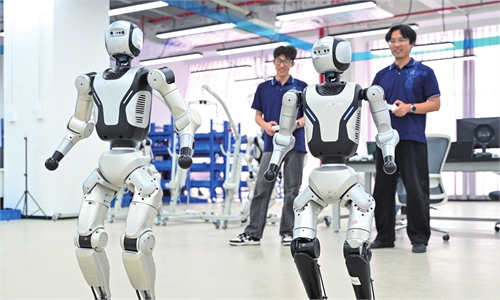
Larger devices are ramping up just as quickly. On Sunday, Shanghai-based PrimeBot's 5,000th personal robot rolled off the line, barely a month after the company began sales on September 20.
Gao Quanzhong, the company's co-president, said PrimeBot went from zero to 5,000 units in a single month and now turns out one robot every 2.5 minutes, with daily capacity rising from about 10 to more than 200, according to a statement sent to the Global Times.
To make that happen, Kunshan Huguang Auto Harness Co, the manufacturer of PrimeBot, brought its automotive-grade quality-tracking system into robot assembly. Zhou Ye, the plant's director, said the goal is to overcome an industry bottleneck summed up in one line: "Prototypes are easy, stable mass production is hard."
In Yiwu, East China's Zhejiang Province, Red Sun Technology's workshop runs to a different rhythm. Fu Hua, the company's chairperson, shuttles between the factory and his shop in the Yiwu global trade hub, phone ringing nonstop. "Orders are booked two months out," he said. The first batch of more than 600 AI plush toys sold out in under a month after launching in March. Sales jumped in May, and by August overseas orders were so strong that the company added a third production line, the Global Times learned.
Now three lines run flat out, exporting 7,000 to 8,000 units a month, according to Fu.
The 3D printer industry is also a quiet giant. One Shenzhen-based exporter, which earns more than 90 percent of its revenue overseas and counts North America as its main market, ships two to three times as much in peak season as in slow months. The company's brand manager is blunt: It receives about 100,000 orders a month, capacity and logistics both saturated, and some orders are being pushed into next year.
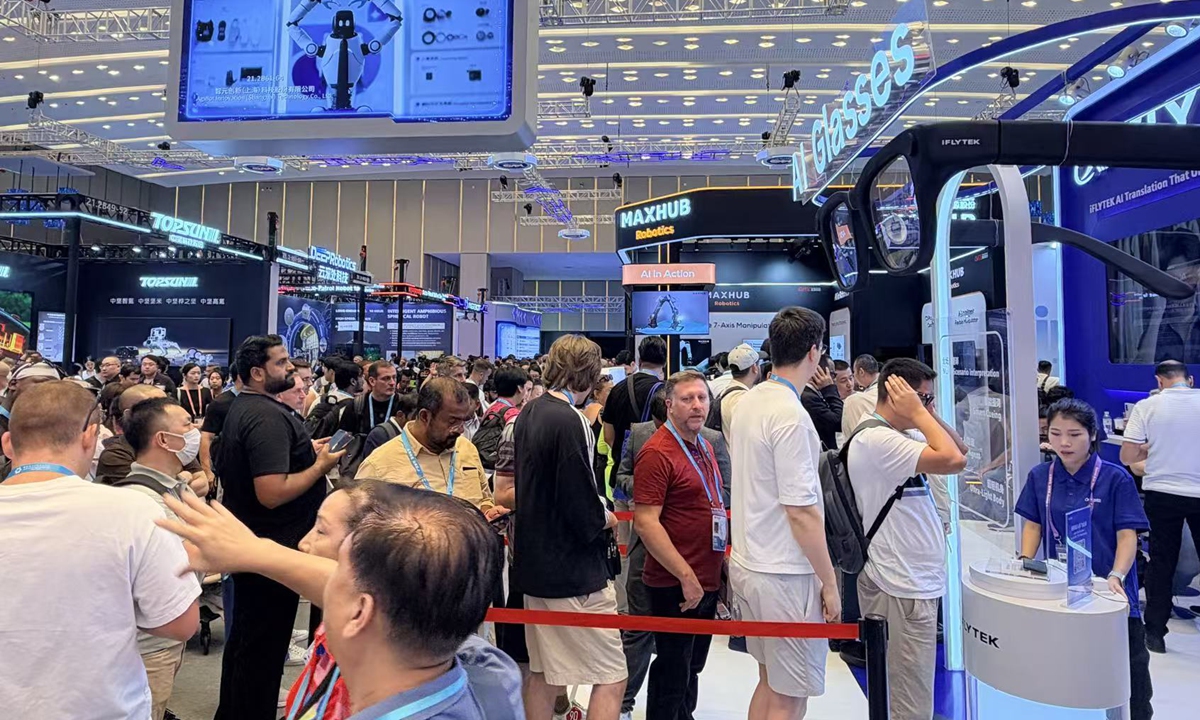
Overseas buyers line up to try on AI glasses at the 140th China Import and Export Fair (Canton Fair) in Guangzhou, South China's Guangdong Province, in October 2026. Photo: Chi Jingyi/Global Times
Behind the rush
Making the product is one thing. Getting it into a container, at a workable price, is another.
Yu Wei, business director at a Shenzhen logistics firm that does about 80 percent of its business in the US, said volumes are up but freight rates are swinging wildly. Shippers now need to lock in space at least a month in advance; as the sailing date approaches, space is all but gone.
"In July and August, prices could change weekly - always upward," Yu told reporters.
Beyond logistics, industry insiders said the export rush is driven by fast iteration and China's stable supply chains.
A saying in Shenzhen's Huaqiangbei electronics hub puts it bluntly: "Design in the morning, prototype in the afternoon, mass-produce the next day, ship overseas within a week."
When an overseas visitor requested a customized pair of AI glasses, an AI model generated the design and bill of materials. A delivery rider fetched components from the market, and engineers assembled and tested the device on the spot - fitting the visitor a pair of real-time translation glasses in just one hour.
Behind that speed is the 1.45-square-kilometer Huaqiangbei business cluster, which is plugged into the world's most complete consumer-electronics supply chain and backed by factories across the Pearl River Delta that can respond instantly.
Fast iteration, real technology and the ability to produce at scale - when all three come together on the same street, the order surge is not just a demand-side stroke of fluke. It reflects the underlying strength of the supply side, an AI glasses exporter said.
RELATED ARTICLES