India exports to China Illustration: Chen Xia/Global Times
China's market may pose India's next export test. PTI reported on Tuesday that India's Commerce and Industry Minister Piyush Goyal wants India to become a major exporter to China and ASEAN in the coming years. What will it take to turn that hope into reality?
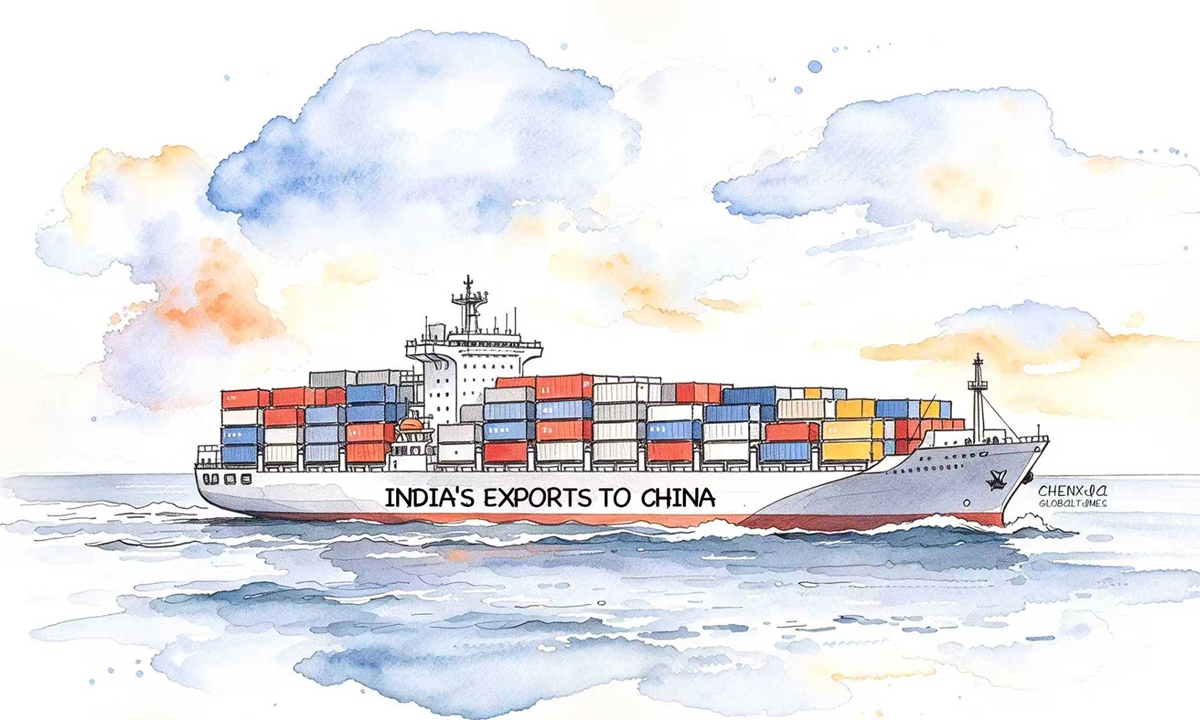
Recent trade figures show steady growth. India's exports to China rose 36.62 percent year-on-year to $19.47 billion in the 2025-26 fiscal year. The momentum has continued into the current fiscal year, with exports rising by about 36 percent in the April-September period. This sustained growth points to the potential of the Chinese market for Indian exporters. The opportunity, however, extends beyond rising export figures.
At a time when global economic growth remains subdued and trade policy uncertainty weighs on international commerce, access to some traditional developed markets, including the US, has become less predictable. Against this backdrop, China's import growth offers a notable contrast. From March through September 2026, China's imports grew by more than 20 percent year-on-year for the seventh consecutive month, with monthly imports exceeding 2 trillion yuan ($300 billion) for the first time in September. The sustained growth points to the scale of China's import demand and the opportunities it may offer exporters seeking to diversify their markets.
What is driving this import growth? Part of the answer lies in China's manufacturing sector, whose production generates demand for imported raw materials, including iron ore, aluminum ore and other industrial inputs. These materials, along with imported components and intermediate goods, enter China's manufacturing processes and are transformed into finished or semi-finished products for domestic use and export markets. In this way, China's manufacturing sector creates demand for imported industrial inputs while connecting suppliers around the world to global production networks.
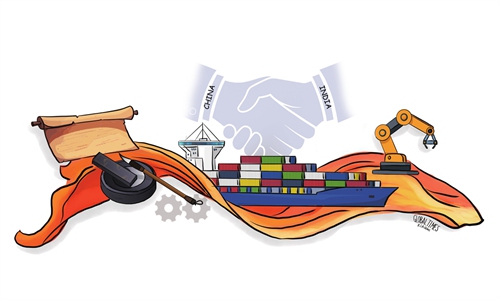
For India, the opportunity lies in becoming a more integral part of these production networks. Closer integration with Chinese supply chains would allow Indian firms to benefit from its neighbor's ongoing industrial growth while building their own export capacity. The goal is not simply to sell more products to China, but to develop complementary strengths across the two countries' industries.
As India seeks to expand its manufacturing base, comparisons with China are inevitable. Yet some Western commentators mistakenly cast the two countries' industrial development as a zero-sum contest, in which one side's gains come at the other's expense. That narrative sits uneasily with the way Western companies' continued investment in China and their pursuit of its market. Why, then, should India buy into a view that sets the two economies against each other? Healthy competition has its place, but the greater opportunity lies in building on complementary strengths. For India, closer integration with Chinese supply chains could help boost its exports to China.
India's recent export growth to China offers a starting point, but lasting gains will take time to build. The task is to look beyond competition-focused views of manufacturing and find practical ways for the two countries' industries to complement each other.
The benefits run both ways. India can expand exports by supplying goods that Chinese industry and consumers need. At the same time, imports of Chinese components and other intermediate goods can help Indian manufacturers cut costs, sharpen their competitiveness and scale up production.
PTI quoted Piyush Goyal as saying that India was open to Chinese suppliers to meet its growing import needs. Turning that openness into concrete action would be a constructive step. More predictable market access and fewer unnecessary barriers for Chinese suppliers seeking to enter the Indian market could help businesses on both sides develop supply-chain links that serve their mutual interests.
India's ambition to become a major exporter to China reflects how much it values the Chinese market. Making it happen will take more than export promotion. Closer industrial integration, with two-way trade reinforcing each other, points to a practical way forward.
The author is a reporter with the Global Times. bizopinion@globaltimes.com.cn
RELATED ARTICLES