Liaoning carrier group expands operations in western Pacific
Lineup highlights long-range operational capabilities: expert
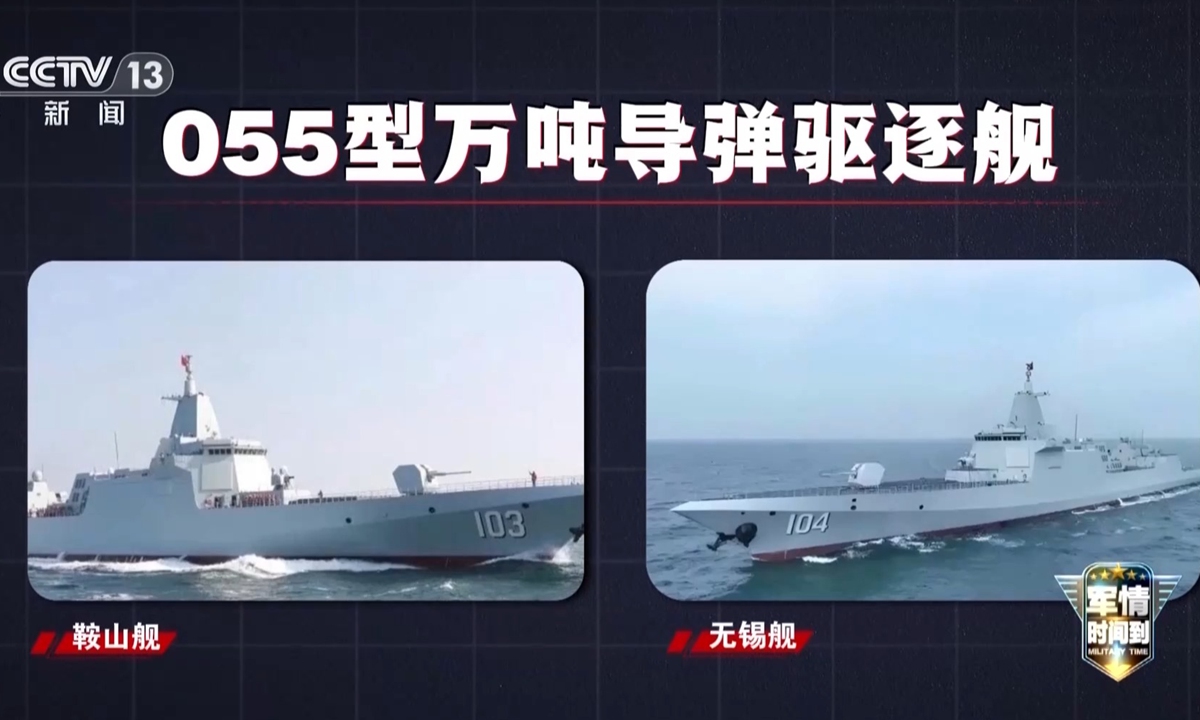
Photo: CCTV
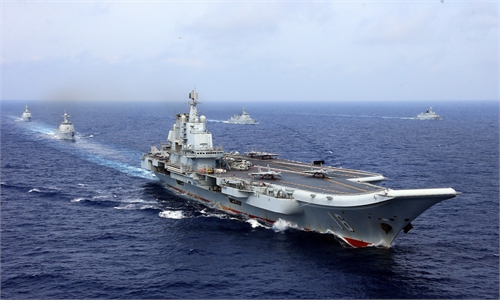
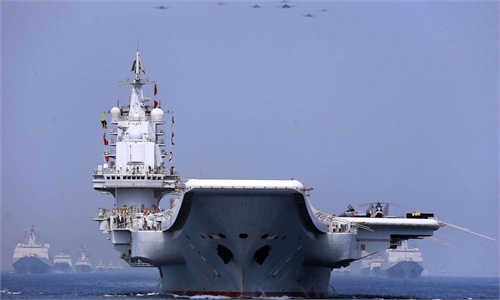
China's Liaoning aircraft carrier group is conducting far-seas training in the western Pacific, while Japan has reported sightings of over a dozen Chinese naval vessels in the region, including at least four Type 055 large destroyers.Chinese experts say the formidable lineup highlights the Chinese navy's growing capabilities for long-range operations.
On Wednesday, Japan reported Chinese vessel activities in the region, including a Type 055 destroyer, a Type 052D destroyer, a Type 054A frigate and a China Coast Guard vessel. The latest reports bring the total number of Chinese naval and coast guard vessels identified in the region in recent weeks to at least 17.
One day earlier, Japan's Defense Ministry Joint Staff said in a release that it had spotted two Chinese naval vessels, a destroyer with hull number 117 and a frigate with hull number 546, west of Kume Island in the Okinawa Prefecture at around 10 am that day. The vessels subsequently sailed southeast between Okinawa's main island and Miyako Island toward the Pacific Ocean. A separate release by Japan on the same day said it had spotted another group of Chinese warships, including a destroyer with hull number 102 and a replenishment ship with hull number 903 heading in the same direction.
The latest sightings followed a series of releases by Japan's defense ministry earlier in October concerning Chinese naval movements in the western Pacific.
The movements came after the Chinese People's Liberation Army Navy announced on October 14 that a carrier task group led by the Liaoning had set out to the western Pacific for training.
The exercises are part of the PLA Navy's annual training plan and are intended to test and improve the troops' combat-oriented training capabilities and their ability to fulfill missions, according to the announcement. The training complies with relevant international law and practices and is not directed at any specific country or target, the navy said.
The carrier group's movements have also drawn attention from the Philippines. The Armed Forces of the Philippines' Western Mindanao Command claimed that its maritime units tracked the Liaoning task group passing through waters off the Zamboanga Peninsula on October 22, according to Philippine media outlet INQUIRER.net.
The report said the fleet was initially spotted northwest of Talulu Point in Siocon, Zamboanga del Norte, before being seen southwest of Maitum, Sarangani, as it moved southeast toward the Celebes Sea.
The passage may mark the second time the Liaoning has transited the central Philippine maritime region, following a similar passage in 2024.
Song Zhongping, a Chinese military affairs expert, told the Global Times that the lineup for this deployment is particularly formidable, describing it as a "high-end configuration" of a carrier battle group. He said aircraft carrier formations are complex, carefully designed systems whose composition varies depending on operational plans and mission requirements.
In his view, the Type 055 destroyer is expected to become a central component of China's naval operations in distant waters, particularly in escorting aircraft carrier groups.
China has 10 Type 055 destroyers in service - eight from a first batch and two from a second batch - with more expected to enter service, Song said.
The Type 055 builds on the technological foundation of the Type 052D destroyer but features larger displacement and enhanced combat and logistical support capabilities, Song said. He described the Type 052D as a mainstay model, with some of its missions potentially being taken over by the Type 055 as the latter becomes more widely deployed.
The Type 055's primary role in a carrier battle group is to provide outer-perimeter protection, including area air defense and anti-submarine defense, while it also possesses the capability to strike surface and land targets, Song said.
The Type 052D will continue to perform combat and support missions in China's near and distant seas, while the Type 055 could take on a greater role in operations farther from China's shores, potentially including escort missions in the Gulf of Aden, he said.
"In a word, China's overall naval combat capabilities, including its ability to operate and provide support in distant seas and airspace, are growing significantly," noted Song.
Aircraft carriers remain the principal offensive component of carrier battle groups, with their embarked aircraft capable of establishing air superiority and conducting strikes against maritime and land targets at ranges beyond those covered by the ships themselves, he noted.
The types of carrier-based aircraft accompanying the Liaoning on its deployment to the western Pacific have also drawn widespread public attention.
Following the Liaoning group's return to its home port in June after more than 40 days of a previous far-seas combat-oriented training, footage was released publicly for the first time showing multiple J-15T carrier-based fighter jets taking off from and landing on the carrier, state broadcaster CCTV News reported.
The J-15T is a domestically developed, single-seat, heavy carrier-based fighter designed for catapult-assisted takeoff. Based on the J-15, also known as the Flying Shark, the upgraded model features improvements to its avionics, weapons systems and airframe, with enhanced capabilities for carrier operations and maritime adaptability.
According to Song, together with attack submarines, replenishment ships and land-based early-warning aircraft, the carrier and its escort vessels form an integrated combat system. Meanwhile, submarines can help counter underwater threats and strike surface and land targets, while replenishment ships provide fuel, ammunition and other supplies needed for sustained operations.
The combination of carrier-based aircraft, large destroyers and supporting vessels enables the Chinese navy to conduct more complex operations across distant seas and airspace, Song said.
RELATED ARTICLES