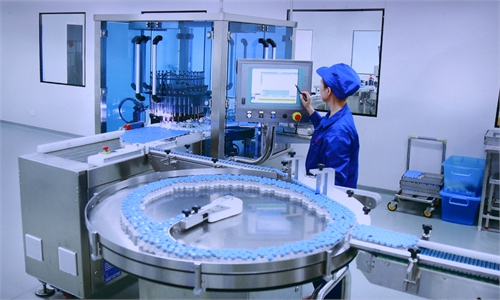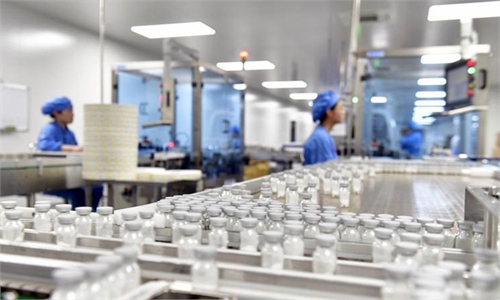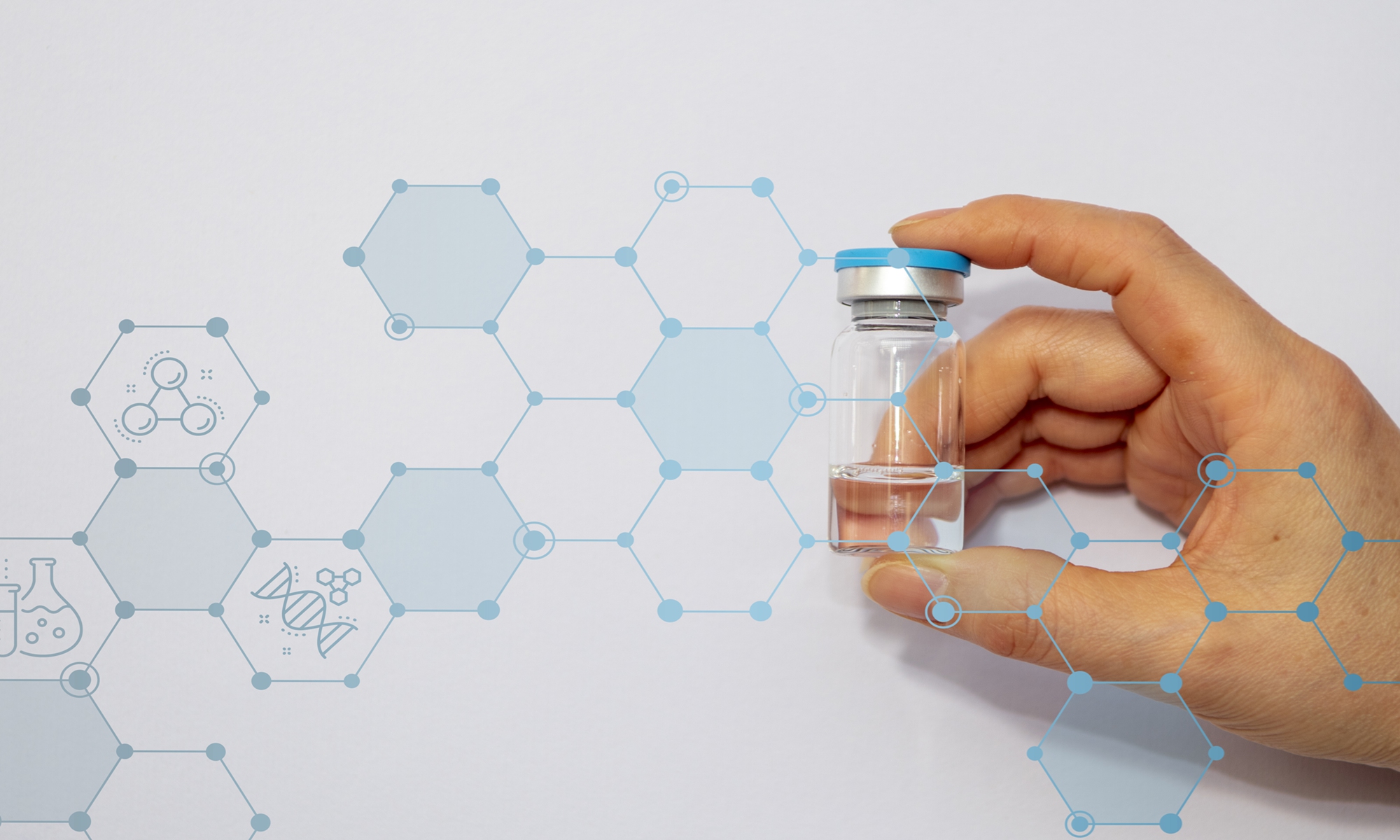
Concept picture of innovative drug File photo: VCG
New anti-cancer drugs developed by China took center stage at a recent international oncology event, highlighting the country's rising strength in pharmaceutical innovation.
At the European Society for Medical Oncology (ESMO) Congress 2026, held in Madrid, Spain, from October 21 to 27, a total of 29 studies involving Chinese innovative drugs were selected as late-breaking abstracts (LBAs), accounting for one-third of the conference's total, the Securities Times reported on Wednesday. Five of the studies were featured in the Presidential Symposia.
The feat reflects improvements in the quality and international competitiveness of China-made drugs, an expert said.
LBAs at ESMO are often reserved for significant clinical findings with the potential to influence cancer treatment. The inclusion of Chinese-developed therapies in the event's highest-profile sessions demonstrates the increasing visibility in global oncology research, the Securities Times reported.
Among the participating Chinese pharmaceutical companies, Jiangsu Hengrui Pharmaceuticals Co presented 64 studies involving 21 innovative drugs. The studies covered a wide range of cancer treatments, including breast cancer, lung cancer and gastrointestinal cancer.
Other Chinese drug makers, including BeOne Medicines and Shanghai Henlius Biotech, presented more than 10 studies each.
The achievements reflect years of sustained investment in pharmaceutical research and development, supported by China's growing innovation capabilities, Hu Qimu, a professor at the Maritime Silk Road Institute of Huaqiao University, told the Global Times on Wednesday.
The growing presence of Chinese innovative medicines on the international stage comes as the country steps up efforts to develop biopharmaceuticals into a new growth driver, Hu said.
In September, 10 Chinese government departments jointly issued a development plan for the pharmaceutical industry during the 15th Five-Year Plan (2026-30) period, outlining targets for industrial expansion and innovation.
Under the plan, China aims to achieve average annual growth of more than 20 percent in the innovative drug industry by 2030, while increasing the global share of first-class innovative drugs to more than 25 percent.
The plan manifests China's determination to move beyond the traditional scale-driven growth model and place greater emphasis on technological innovation in producing higher-value pharmaceuticals, said Hu.
According to MIIT, 230 innovative drugs and 292 innovative medical devices were approved during the 14th Five-Year Plan (2021-25) period. The ministry also noted that breakthroughs were made in high-end pharmaceutical excipients and key medical device components, strengthening the resilience of the industry's supply chain.
RELATED ARTICLES