ARTS / CULTURE & LEISURE
Weihai, East China’s coastal city, reveals how the Yellow Sea shapes life
The gifts of the sea
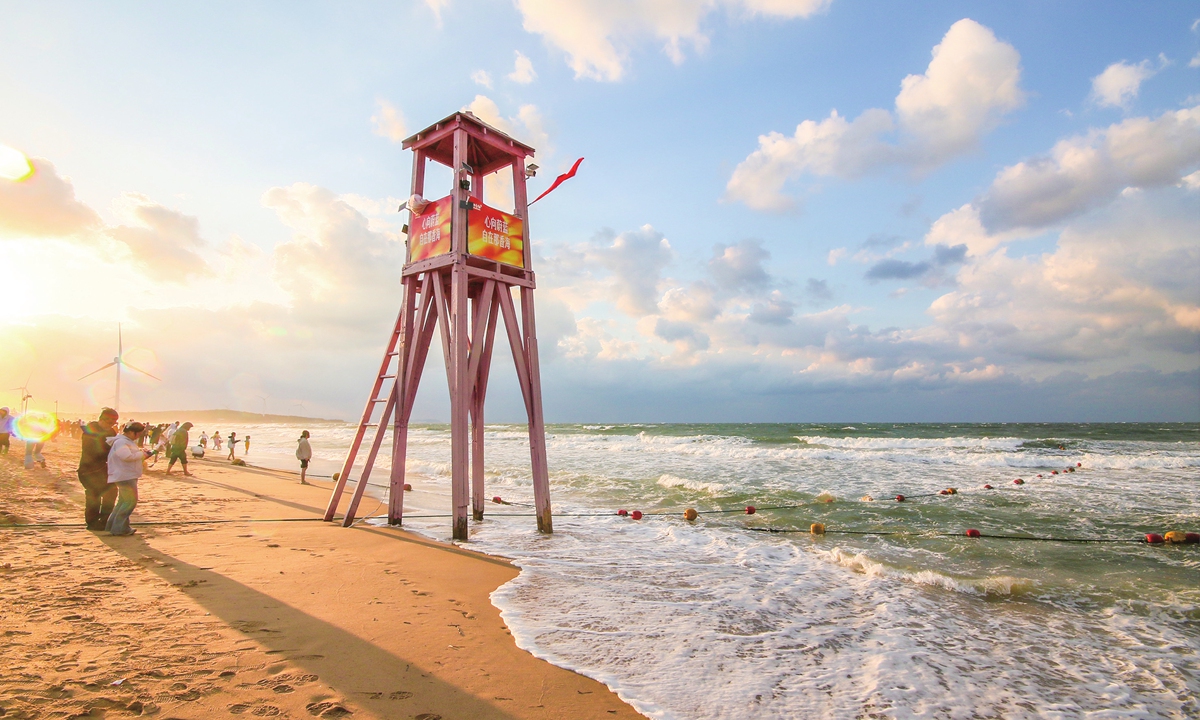
Visitors stroll at the Naxianghai coastal resort in Weihai. Photo: VCG
For travelers in Beijing looking to spend a holiday by the sea, Weihai is closer than it might seem. Around five hours by high-speed train brings visitors to this coastal city in east China's Shandong Province. With a holiday ahead, we decided to go to the coast to enjoy the sea breeze and a change of pace from the capital.
Winding coastal roads trace the shoreline, opening up views of rocky headlands, stretches of open water and the rugged terrain of Maotou Mountain. Farther along the coast, the stranded Bruvis freighter stands out against the sea, an unexpected landmark amid the coastal scenery.
The sea shapes not only Weihai's landscape but also its dining tables. Seafood restaurants across the city serve the day's catch in a variety of ways.
A coastline worth exploring
Maotou Mountain, whose name comes from its resemblance to a cat's head, was on our travel list from the start. Weihai has a lot of coastal attractions, but this spot turned out to be a paradise for cat lovers. From different vantage points, the mountain takes on the shape of a cat's head, making it a natural subject for photographs.
To help visitors enjoy the view, local tourism authorities have built more than 10 viewing platforms along the coast, each offering a different perspective of the mountain at varying distances and tourists often line up to try and capture the perfect picture. The area has also embraced its feline theme, with designated photo spots, cat-themed installations and cafes adding a playful touch to the coastal scenery.
On top of that, one can admire the immeasurable beauty of the sea: along the coastal road, the sea repeatedly comes into view, sometimes opening into a broad expanse of blue, sometimes framed by the rugged terrain.
Further along the coast, the stranded freighter Bruvis presents a striking contrast to the natural landscape. Its enormous hull stands close to the shore, creating an unusual sight against the sea and beach. Where Maotou Mountain draws visitors with its rugged terrain and sweeping views, the ship offers something altogether different: a reminder of the powerful forces that can shape the coastline.
The freighter ran aground off Rongcheng, Weihai, in September 2022 after being affected by Typhoon Nanmadol. Since then, its imposing silhouette has become a draw for visitors and photography enthusiasts.
Standing against the open water, the ship gives the surrounding coast an almost cinematic quality. Its weathered exterior and immense scale contrast with the movement of the waves, making it an unusual landmark in a city better known for its beaches and seaside scenery.
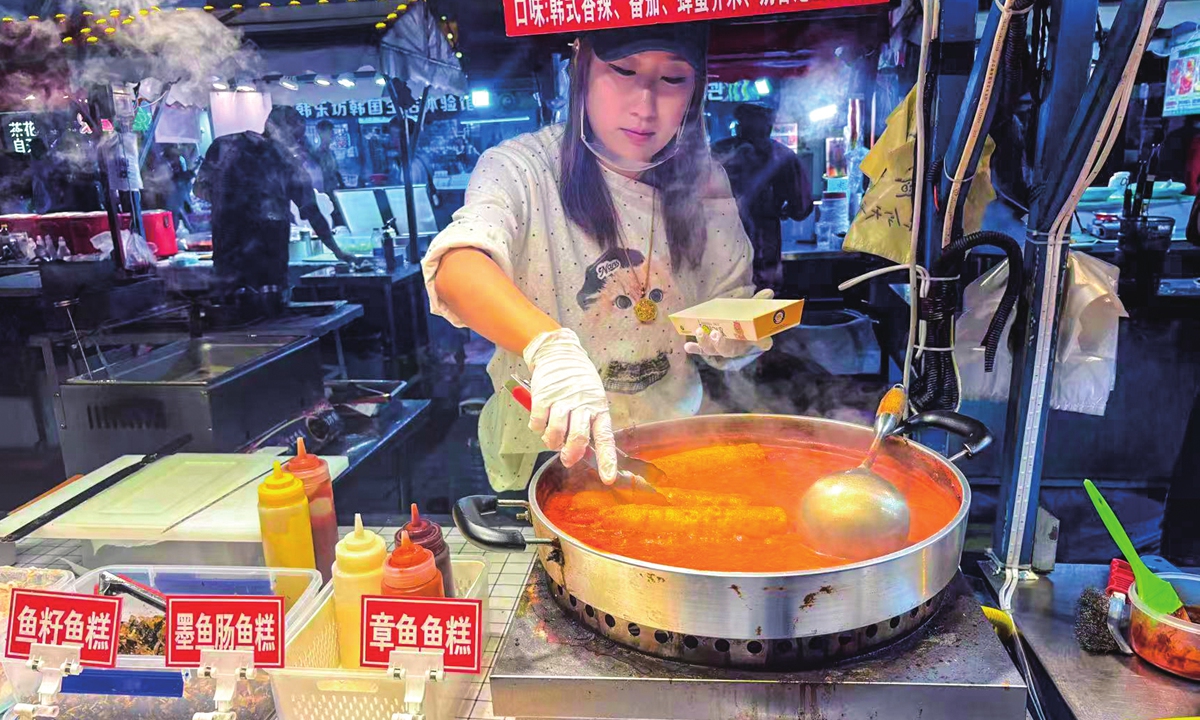
A vendor prepares a snack at the Hanlefang night market in Weihai. Photo: Li Hang/Global Times
Seafood lovers' paradise
Located at the eastern tip of the Shandong Peninsula, Weihai faces the Yellow Sea, with the Korean Peninsula lying just across the water. The sea has long shaped the city's character, from its maritime traditions to the food served in its restaurants.
Seafood restaurants are ubiquitous, serving everything from steamed catches to seafood hot pots and grilled shellfish.
From Spanish mackerel dumplings to seafood hot pot, the dishes are flavorful and relatively affordable. Whether served in a pot to share or grilled over an open flame, seafood is a recurring feature of the local dining scene.
One local specialty stands out in particular: haichang laofan, rice topped with stir-fried sea intestines. Less well-known among visitors than fish or shrimp, sea intestines are prized locally for their distinctive texture and savory taste.
Freshly made, the dish combines crisp, tender sea intestines with rice soaked in their savory juices. The dish is simple but satisfying, allowing the ingredients to take center stage. This is the kind of meal that makes the connection between Weihai and the sea tangible, rather than merely something to admire from a scenic viewpoint.
Other dishes offer their own variations on the city's coastal flavors. Steamed sea bass is delicate and tender, while clams stir-fried with chili are rich with seasoning. Seafood pan-fried buns, with their soft interiors and crisp exteriors, are another local favorite.
The appeal was not simply the variety of dishes, but the freshness of the ingredients. Local residents told us that steaming seafood with minimal seasoning was their preferred way to enjoy it, as it allows its natural flavor to shine through. After spending the day looking out over the Yellow Sea, sitting down to a meal of freshly prepared seafood constitutesa continuation of the coastal experience.
As evening falls, Hanlefang night market offers a livelier side of Weihai. Known for its South Korean restaurants and shops, the district becomes particularly animated in the evening, when diners fill the restaurants and shopkeepers call out to passersby.
Weihai's geographical proximity to South Korea helps explain its popularity among South Korean visitors. The city has developed longstanding connections with South Korea through trade, business and personal exchanges, while transport links across the Yellow Sea have made travel between them more convenient.
The streets offer a mix of food and shopping. Alongside South Korean dishes and everyday products, stores sell local snacks, dried seafood, dried figs, pearls and other goods. The atmosphere is busy and informal, with many South Korean visitors browsing the shops and sampling food.
This seaside city offers more surprises than one might expect, delighting visitors with its distinctive character, its unusual coastal landmarks, and the simple pleasure of fresh seafood. Yet after exploring its many attractions, one is left leaving with the feeling that there is still much more to discover.
RELATED ARTICLES