GT Voice: SK shipbuilding's high-end edge hinges on Asian industrial collaboration
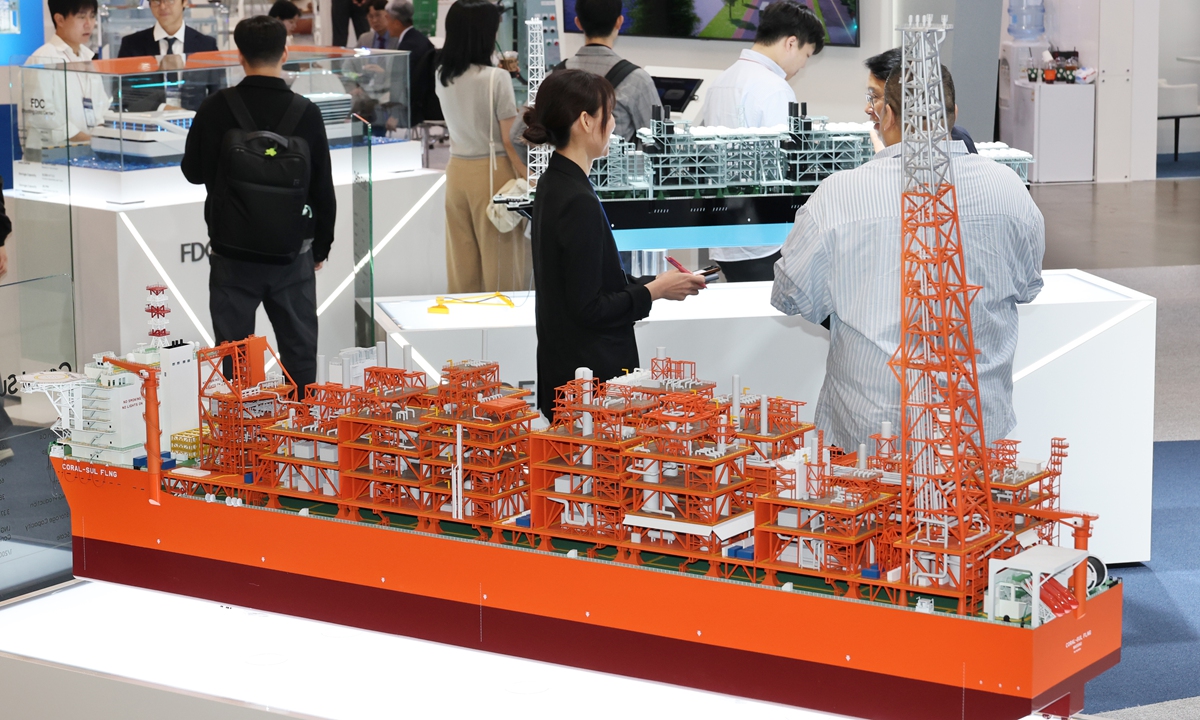
Visitors check out ship models at a booth during the Offshore Korea 2026 held in Busan, South Korea on October 14, 2026. Photo: VCG
South Korea's shipbuilders posted third-quarter profits driven by high value vessels; however, sustaining their high end edge calls for regional industrial collaboration rather than yielding to external geopolitical demands that risk eroding long term industrial strengths.
HD Korea Shipbuilding & Offshore Engineering announced on Wednesday that its third-quarter operating profit rose 37.3 percent year-on-year, driven by higher ship prices and strong earnings from its engine and offshore businesses, The Korea Herald reported.
This strong performance is far from an isolated case. South Korea's three major shipbuilders all achieved relatively robust results in the third quarter of this year. Samsung Heavy Industries announced that its operating profit for the quarter increased by 42 percent year-on-year, bringing the combined operating profit of the three shipbuilders to 2.27 trillion won ($1.7 billion). This growth is attributed to continued revenue from high-value-added vessels, such as liquefied natural gas carriers.
Behind these numbers lies the payoff of South Korea's shipbuilding sector in terms of high-value ship segments, a clear sign that it retains formidable competitiveness in premium shipbuilding markets.
Yet the realization of the high-end ship dividend does not mean that competition will ease. High profitability tends to attract more resources into the high-end market. Global new ship orderbooks have seen China's share steadily rise amid intensifying market competition. If South Korea relies solely on the brand and technological reputation it has built up while neglecting supply-chain efficiency and sustained research and development, its high-end edge could be gradually squeezed.
Holding the leading position requires more than winning high-priced orders; it demands stable delivery, consolidation of core supporting industries, cultivation of technical talent, and the continuous creation of new product advantages.
This is precisely why South Korea's shipbuilding sector needs stable regional industrial collaboration more than ever. After decades of growth, Asia's shipbuilding industrial chain has formed a close, sophisticated division of labor that cannot be easily severed. The interconnected ecosystem spans parts supply, materials and equipment, vessel design technology, and specialized skilled personnel. Even as companies across the region compete fiercely for new orders, they can still identify shared interests in supply chain coordination, technical exchanges, and alignment of industry standards.
To channel all their resources into technological upgrades and consolidate their hold on high-end segments, South Korea's shipbuilders need the support of the Asian industrial ecosystem. The coexistence of competition and cooperation has become a reality for Asia's shipbuilding landscape. Any attempt to break these deeply integrated industrial ties will ultimately undermine South Korea's own core competitiveness.
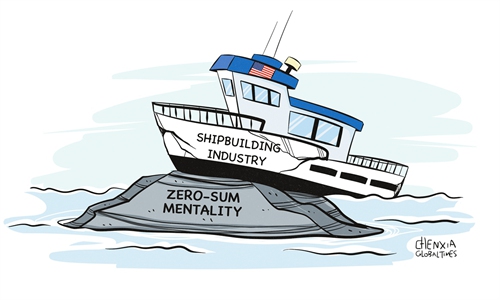
At this critical juncture, persistent efforts by the US to poach South Korean shipbuilding capacity and pull it into its own industrial arrangements deserve particular vigilance. Such "cooperation" may appear to bring new orders and market access, but if its essence is to steer South Korean firms to channel their capital, technology, talent, and key production capacity toward serving America's industrial goals, South Korea must carefully assess the long-term costs.
Shipbuilding is not a single factory that can be relocated at will. Its competitiveness is built on decades of accumulated supplier networks, engineering expertise, and seamless industrial collaboration. Restructuring production outside this established system will not only drive up costs across supply chains, personnel training, and operational coordination, but also divert resources that should be dedicated to South Korea's own industrial upgrading, potentially allowing its clearly laid-out development roadmap to be hijacked by external strategic priorities.
Whether South Korea's shipbuilding sector can hold onto today's achievements will depend entirely on its willingness to keep innovating amid intensifying competition and seizing the initiative while deepening mutually beneficial regional cooperation. By expanding pragmatic regional collaboration, South Korea can turn its current profit into a solid foundation for long-term growth. Advancing regional cooperation is a key way for South Korea to translate today's profits into a foundation for lasting growth, rather than gradually consuming the industrial advantages in the course of catering to external geopolitical demands.
RELATED ARTICLES