Phase III of Haiyang Nuclear Power Complex starts construction; China’s operating nuclear power capacity to top the world by 2030
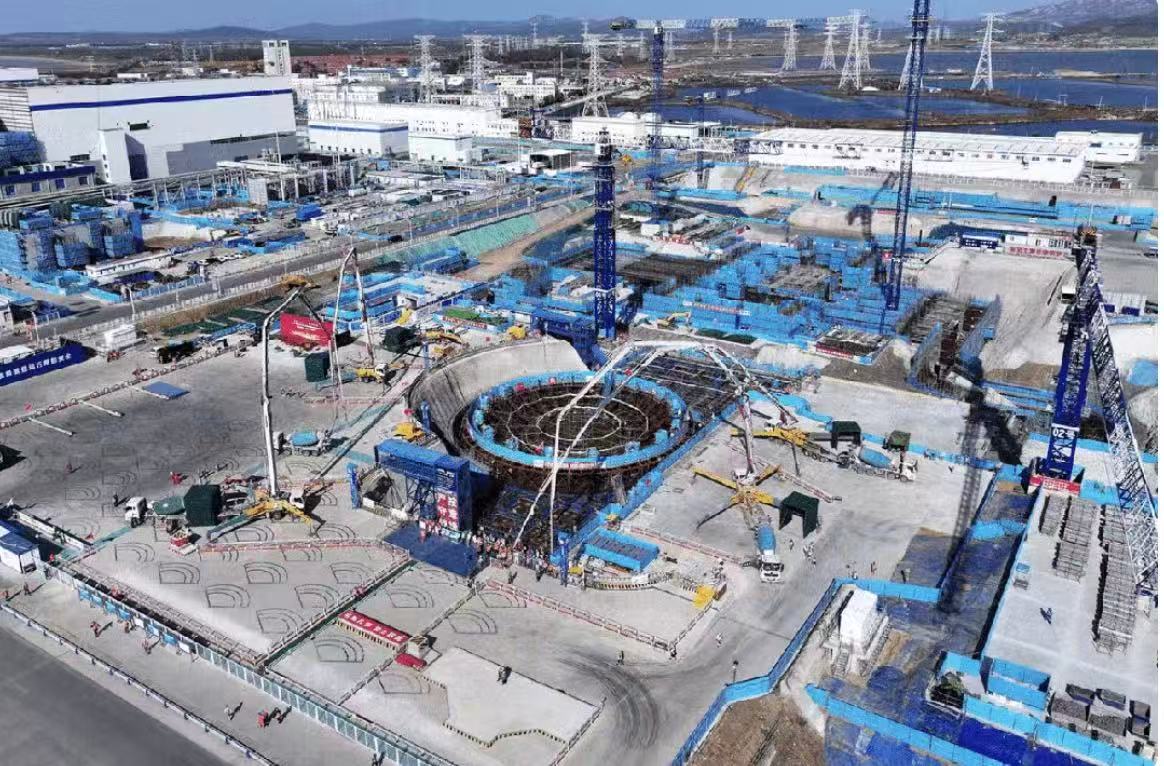
The nuclear island of Unit 5 at the Haiyang Nuclear Power Plant in Haiyang, East China's Shandong Province started construction on Saturday
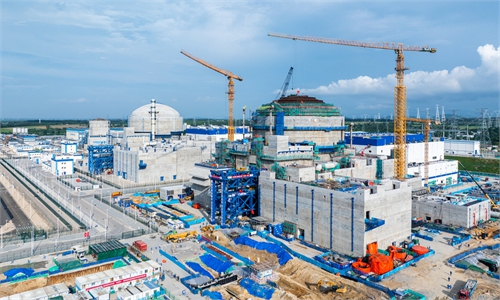
The nuclear island of Unit 5 at the Haiyang Nuclear Power Plant in Haiyang, East China's Shandong Province started construction on Saturday, marking the beginning of Phase III of the Haiyang Nuclear Power Complex, according to a post seen on the Wechat account of the State Power Investment Corporation (SPIC), the project's contractor. It is among the world's first Generation III nuclear power projects.
The site is planned in three phases for 6 million-kilowatt-class reactors. And the construction of Phase III, or the Units 5 and 6 reactors, will use a domestically developed advanced Generation III passive pressurized water reactor. The project is also the first nuclear power project in Shandong to break ground during the 15th Five-Year Plan (2026-30) period, the post said.
With Phase III officially under construction, Haiyang Nuclear Power Complex has entered a new stage of "multi-unit construction and multi-unit operation," accelerating a pattern of diversified nuclear energy development and clustered growth, according to the post.
Liu Fei, head of SPIC Shandong Nuclear Power's Haiyang project, was quoted as saying in a Xinhua report over the weekend that once all six Haiyang units are completed and in operation, the site will become the world's largest nuclear power base built entirely with the passive pressurized water reactor technology. It is estimated that the project's annual electricity generation could reach 60.9 billion kilowatt-hours, enough to meet the yearly electricity needs of about 54 million residents.
"It would save about 18.56 million tons of standard coal a year and cut carbon dioxide emissions by 48.63 million tons — equivalent to planting roughly 134,000 hectares of broadleaf forest. Heating capacity would exceed 150 million square meters, enough to cover 25 county-level cities," the post said.
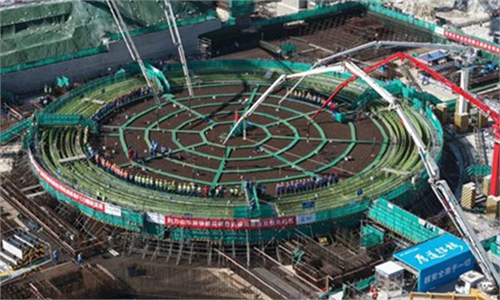
The nuclear island is the plant's most critical structure. Its containment, reactor core and main equipment all rest on a single concrete raft foundation that must carry the island's static weight as well as extreme loads from accidents like earthquakes — the first layer of nuclear safety. Pouring this mass concrete base slab is therefore stricter than for any civil building: work cannot stop, crack or leave joints. Once concrete pouring begins, it can run for dozens of hours without interruption.
"Building on modern know-how and experiences from the past, we have optimized the design to raise each unit's rated electrical output to 1.3 million kilowatts, and the plant can provide clean heating for five county-level cities, significantly improving energy and resource efficiency," Liu said.
China currently has 120 nuclear power units in operation or approved for construction, with a combined installed capacity of 135 million kilowatts, ranking the first in the world. Of these, 64 units are in operation with about 68.59 million kilowatts of capacity, ranking the second in the world, while the remaining 56 units are under construction or approved and awaiting for construction, also ranking the first worldwide.
Forecasts from industry association suggest that China's operating nuclear power capacity could become the world's largest before 2030. By 2040, the country's installed capacity is expected to reach 200 million kilowatts. And by 2060, nuclear power would need to account for roughly 18% of electricity generation to support carbon neutrality goals, implying about 400 million kilowatts of capacity.
Global Times
RELATED ARTICLES