ARTS / CULTURE & LEISURE
Newspaper opens window for China and Saudi to see each other
Editor's Note:
This column, Bridging the Distance: China and Saudi Arabia, is presented jointly by the Global Times and the Al Riyadh. It brings together the personal stories of 20 Saudi friends who have encountered China, come to know it, and been changed by it in the process.
From "China-Saudi partners" to "cultural envoys," from teachers of Chinese to builders of bridges between two of the world's oldest civilizations, they are the ones writing the early chapters of a relationship that is still unfolding. Their accounts show how China and Saudi Arabia have crossed mountains and seas to move forward together.
This installment profiles Abdulaziz Alshaabani, a Chinese affairs researcher who helped deliver Al Riyadh's pioneering Chinese-language newspaper page after years of studying and living in Xi'an, Northwest China's Shaanxi Province.
The page appears in the Al Riyadh newspaper. The day after its launch, Abdulaziz Alshaabani walked into the office of Al Riyadh's editor-in-chief, where he noticed the Chinese-language page elegantly framed and hung on the office wall. Every visitor can see it and hear the editor-in-chief introduce it as the fruit of cooperation between the People's Daily and the Al Riyadh.
A witness and driving force behind this cooperation, Alshaabani is better known by his Chinese friends as Xiao Bang, the same Chinese name used for the renowned composer Chopin.
Looking back on more than 15 years of study and work, Xiao Bang said, "I find myself constantly standing between Saudi Arabia and China."
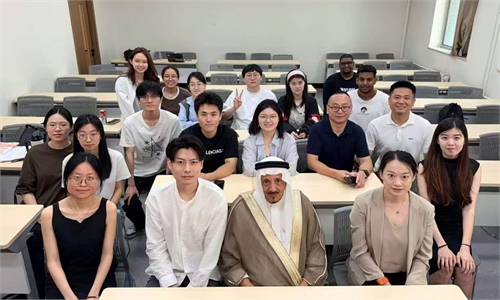
In 2011, after working in journalism for some time, Xiao Bang went to Xi'an, Northwest China's Shaanxi Province, to pursue a Master of Engineering degree in Communication and Information Systems at Xidian University, while also studying Chinese language and literature. It was his first time living abroad, and Xi'an, an ancient Chinese capital, became the starting point for his understanding of the country.
After just one year in this unfamiliar city - more than 6,000 kilometers from Riyadh - Xiao Bang fell in love with the place. He began wandering its ancient alleyways on his own initiative, striking up conversations with locals and making many friends among residents, ties he maintains to this day. "I want to record my six years of experiences in Xi'an," he said.
Upon returning home after graduation, he turned his daily observations, feelings and reflections from Xi'an into a book called In an Old Chinese Town. Since its publication, the book has been presented at book fairs in multiple Arab countries. Some readers enjoy its stories about China, while others appreciate its narrative style rich in cultural contrast. Xiao Bang realized that his personal experience was gradually becoming a window for Arab readers to learn about China.
"For a long time, people in Saudi Arabia and the wider Arab region have formed their impressions of China largely through Western media. There has always been a 'middleman' separating the two cultures," he noted. This reflection led him to think about how to better integrate his professional media background with his experience studying in China. He began devoting more energy to researching China-Saudi Arabia relations and China-related topics, seeking to widen the window of mutual perception between the two countries through media.
In Chinese media, Xiao Bang, serving as a researcher and consultant on Chinese affairs, interprets current affairs in the Middle East for Chinese audiences, hoping to "correct the distorted impressions conveyed by Western media." For Saudi readers, he discusses China's politics, economy and the impact of the Belt and Road Initiative on the region, presenting a true picture of China different from Western narratives.
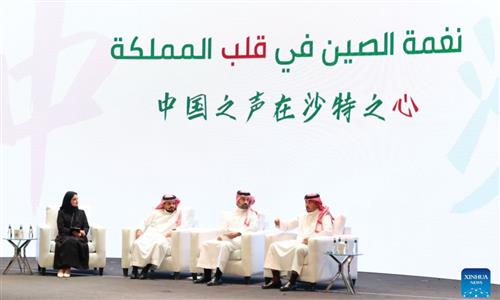
In 2025, the Al Riyadh, Saudi Arabia's largest Arabic newspaper, and the People's Daily, China's largest newspaper, reached a strategic cooperation agreement. The two sides set out to launch a special Chinese-language feature page in the Arabic newspaper to promote mutual understanding and exchanges between China and Saudi Arabia. As one of the Saudi coordinators, Xiao Bang participated in this far-reaching cooperation spanning mountains and seas. He said the special page represents "a highly significant step" in Saudi-China media cooperation. It not only attracts Chinese readers based in Saudi Arabia, but also provides a platform for more Saudi people who wish to learn Chinese and understand Chinese culture.
Xiao Bang has observed that Chinese media outlets have attached increasing importance to covering Saudi Arabia in recent years, with related content exerting growing local influence. At the same time, language and cultural exchanges are bringing the two peoples closer: more Saudi parents are paying attention to their children's Chinese-language education, many young Saudis are keen to explore Chinese culture, and Chinese restaurants and enterprises are on the rise in Riyadh and Jeddah.
Looking ahead, Xiao Bang expects Saudi and Chinese media to go beyond traditional forms of exchange. "We need more new initiatives, innovative approaches and unique ideas to better reach audiences in Saudi Arabia and the wider Gulf region," he said. There should be less third-party narration and more direct dialogue, fewer one-sided labels and more shared storytelling, he said.
"All exchanges must first be built on trust," said Xiao Bang. Positioned between the two countries, he deeply feels that mutual understanding between the two civilizations requires long-term and intensive efforts. "Continuously advancing Saudi-China media exchanges is of great importance, and its outcomes will become more evident in the years to come."
This column, Bridging the Distance: China and Saudi Arabia, is presented jointly by the Global Times and the Al Riyadh. It brings together the personal stories of 20 Saudi friends who have encountered China, come to know it, and been changed by it in the process.
From "China-Saudi partners" to "cultural envoys," from teachers of Chinese to builders of bridges between two of the world's oldest civilizations, they are the ones writing the early chapters of a relationship that is still unfolding. Their accounts show how China and Saudi Arabia have crossed mountains and seas to move forward together.
This installment profiles Abdulaziz Alshaabani, a Chinese affairs researcher who helped deliver Al Riyadh's pioneering Chinese-language newspaper page after years of studying and living in Xi'an, Northwest China's Shaanxi Province.
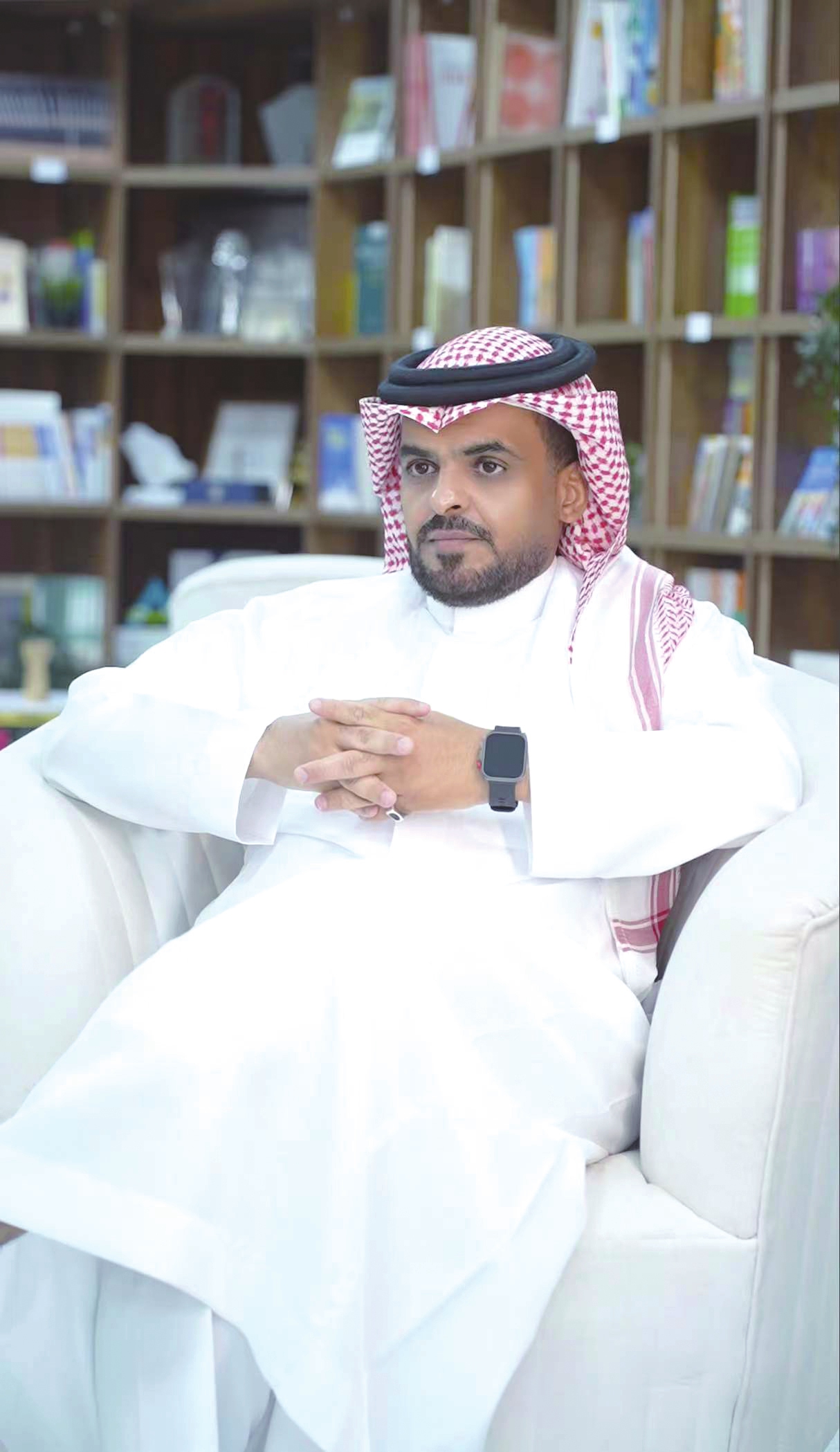
Abdulaziz Alshaabani Photo: Courtesy of Abdulaziz Alshaabani
A historic media milestone has been reached: a Chinese-language page run in a Saudi newspaper, possibly the first of its kind worldwide.The page appears in the Al Riyadh newspaper. The day after its launch, Abdulaziz Alshaabani walked into the office of Al Riyadh's editor-in-chief, where he noticed the Chinese-language page elegantly framed and hung on the office wall. Every visitor can see it and hear the editor-in-chief introduce it as the fruit of cooperation between the People's Daily and the Al Riyadh.
A witness and driving force behind this cooperation, Alshaabani is better known by his Chinese friends as Xiao Bang, the same Chinese name used for the renowned composer Chopin.
Looking back on more than 15 years of study and work, Xiao Bang said, "I find myself constantly standing between Saudi Arabia and China."
In 2011, after working in journalism for some time, Xiao Bang went to Xi'an, Northwest China's Shaanxi Province, to pursue a Master of Engineering degree in Communication and Information Systems at Xidian University, while also studying Chinese language and literature. It was his first time living abroad, and Xi'an, an ancient Chinese capital, became the starting point for his understanding of the country.
After just one year in this unfamiliar city - more than 6,000 kilometers from Riyadh - Xiao Bang fell in love with the place. He began wandering its ancient alleyways on his own initiative, striking up conversations with locals and making many friends among residents, ties he maintains to this day. "I want to record my six years of experiences in Xi'an," he said.
Upon returning home after graduation, he turned his daily observations, feelings and reflections from Xi'an into a book called In an Old Chinese Town. Since its publication, the book has been presented at book fairs in multiple Arab countries. Some readers enjoy its stories about China, while others appreciate its narrative style rich in cultural contrast. Xiao Bang realized that his personal experience was gradually becoming a window for Arab readers to learn about China.
"For a long time, people in Saudi Arabia and the wider Arab region have formed their impressions of China largely through Western media. There has always been a 'middleman' separating the two cultures," he noted. This reflection led him to think about how to better integrate his professional media background with his experience studying in China. He began devoting more energy to researching China-Saudi Arabia relations and China-related topics, seeking to widen the window of mutual perception between the two countries through media.
In Chinese media, Xiao Bang, serving as a researcher and consultant on Chinese affairs, interprets current affairs in the Middle East for Chinese audiences, hoping to "correct the distorted impressions conveyed by Western media." For Saudi readers, he discusses China's politics, economy and the impact of the Belt and Road Initiative on the region, presenting a true picture of China different from Western narratives.
In 2025, the Al Riyadh, Saudi Arabia's largest Arabic newspaper, and the People's Daily, China's largest newspaper, reached a strategic cooperation agreement. The two sides set out to launch a special Chinese-language feature page in the Arabic newspaper to promote mutual understanding and exchanges between China and Saudi Arabia. As one of the Saudi coordinators, Xiao Bang participated in this far-reaching cooperation spanning mountains and seas. He said the special page represents "a highly significant step" in Saudi-China media cooperation. It not only attracts Chinese readers based in Saudi Arabia, but also provides a platform for more Saudi people who wish to learn Chinese and understand Chinese culture.
Xiao Bang has observed that Chinese media outlets have attached increasing importance to covering Saudi Arabia in recent years, with related content exerting growing local influence. At the same time, language and cultural exchanges are bringing the two peoples closer: more Saudi parents are paying attention to their children's Chinese-language education, many young Saudis are keen to explore Chinese culture, and Chinese restaurants and enterprises are on the rise in Riyadh and Jeddah.
Looking ahead, Xiao Bang expects Saudi and Chinese media to go beyond traditional forms of exchange. "We need more new initiatives, innovative approaches and unique ideas to better reach audiences in Saudi Arabia and the wider Gulf region," he said. There should be less third-party narration and more direct dialogue, fewer one-sided labels and more shared storytelling, he said.
"All exchanges must first be built on trust," said Xiao Bang. Positioned between the two countries, he deeply feels that mutual understanding between the two civilizations requires long-term and intensive efforts. "Continuously advancing Saudi-China media exchanges is of great importance, and its outcomes will become more evident in the years to come."
RELATED ARTICLES