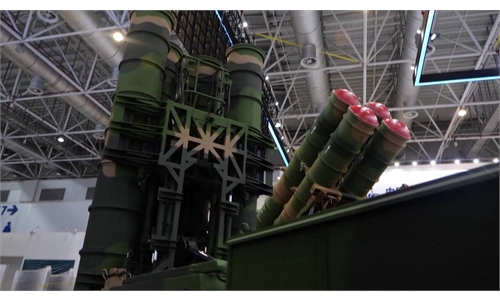
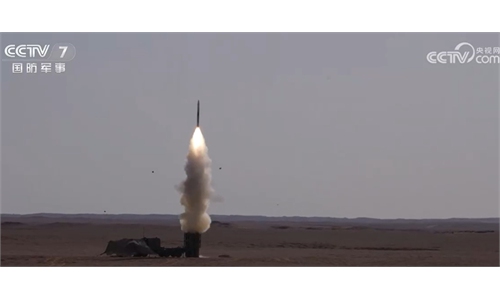
China's HQ-9B air defense missile intercepts new maneuvering missiles in test
Maneuverability, actuation system highlighted in mission
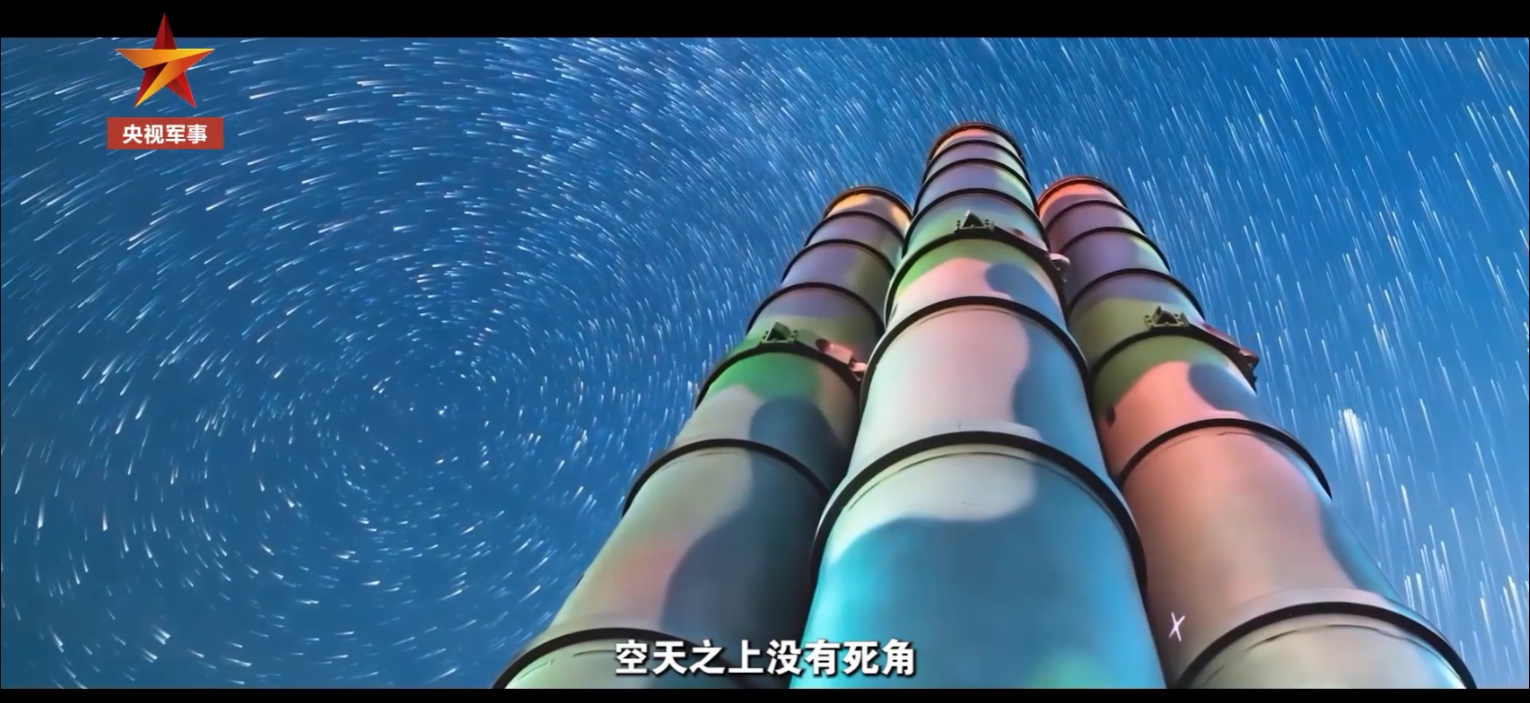
Photo: CCTV
The operation, involving China's HQ-9B surface-to-air missile system, saw the Central Theater Command Air Force's "Shenwei Missile Battalion" successfully intercept two new types of missile targets.
"On the day of the mission, we hadn't yet been assigned which targets we would engage. We knew there were several types of targets, including ballistic missiles, but we didn't know that our unit would be the one tasked with intercepting them," Shi Shidong, a member of the battalion, was quoted by CCTV as saying in the report.
When one of the incoming missiles suddenly changed direction and rapidly descended, personnel from the Central Theater Command Air Force's ground-to-air missile force, involving the HQ-9B surface-to-air missile system, reacted within seconds and launched an interceptor before the engagement window closed, CCTV reported.
"It suddenly descended sharply. If you fail to act for two seconds, or even one second, and do not launch in advance, you could miss the window," Shi said. The unit's quick decision-making ensured the emergency launch successfully intercepted the target.
The report also highlighted the importance of an integrated command and information-sharing system in shortening response times.
Military commentator Song Zhongping told the Global Times that intercepting a maneuvering ballistic missile places additional demands on the HQ-9B's guidance and maneuvering capabilities. The system uses a combination of active radar and inertial guidance, he said.
"Intercepting a maneuvering ballistic missile becomes more difficult. On the one hand, the active radar seeker must accurately track and lock onto the warhead of the incoming ballistic missile. At the same time, the interceptor itself must maneuver rapidly to keep up with changes in the target's trajectory," Song told the Global Times, before noting that the interceptor must maintain a lock and respond quickly when the target changes course, or it could miss the opportunity to engage.
"This places high demands on the HQ-9B's maneuverability and its actuation system. It needs to react as quickly as possible, including through thrust-vector control, to track a ballistic missile that has changed its trajectory and effectively intercept it," he said.
Hu Yang, another member of the battalion, told CCTV that the interval between receiving a target warning from higher-level command and completing an interception could be as short as two minutes.
Song said this reflected the development of an integrated network for information sharing and command, which enables rapid early warnings, target tracking and allocation.
"The system allows different air defense missile units to be connected. Targets can be assigned to the most suitable interceptor, with priority given to the nearest available unit, so that an engagement can be carried out in the most effective way," he said.
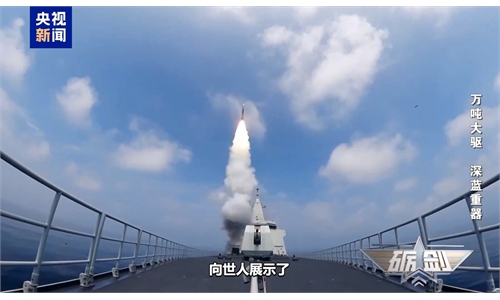
According to CCTV, the unit has intercepted various types of targets and destroyed multiple types of missiles during training and exercises in recent years. In another engagement involving maritime targets, it simultaneously countered multiple incoming missiles approaching at both high and low altitudes.
Military expert Zhang Xuefeng told CCTV that China's ground-based air defense missile systems had reached the forefront of the world's top-tier systems.
At the 2025 military parade marking the 80th anniversary of the victory in the Chinese People's War of Resistance Against Japanese Aggression, China displayed a range of advanced air and missile defense systems, including the HQ-9B, HQ-9C, HQ-19 and HQ-29. These systems can contribute to a layered, multi-stage air and missile defense network, with integrated information support further improving interception efficiency, Zhang noted.
Song echoed the viewpoint, saying improvements in information technology and intelligent systems, as well as the integration of different weapons systems and the coordination of their coverage ranges made it practical.
The successful intercept test also raised the possibility that the HQ-9B can intercept hypersonic missiles. Song said this depends on the flight trajectory of the particular weapon.
"Hypersonic missiles do travel at very high speeds. When using systems such as the HQ-9B and HQ-9C to intercept them, the approach would rely more on head-on interception. This places high demand on detecting and locking onto hypersonic targets and tracking their changing trajectories," Song said.
"As the PLA air and missile defense system continues to improve, intercepting hypersonic weapons in the true sense is also possible," he said.
RELATED ARTICLES