Chinese private rocket launches 18 satellites, boosting low-orbit internet constellation
By Published: Nov 03, 2026 09:17 AM

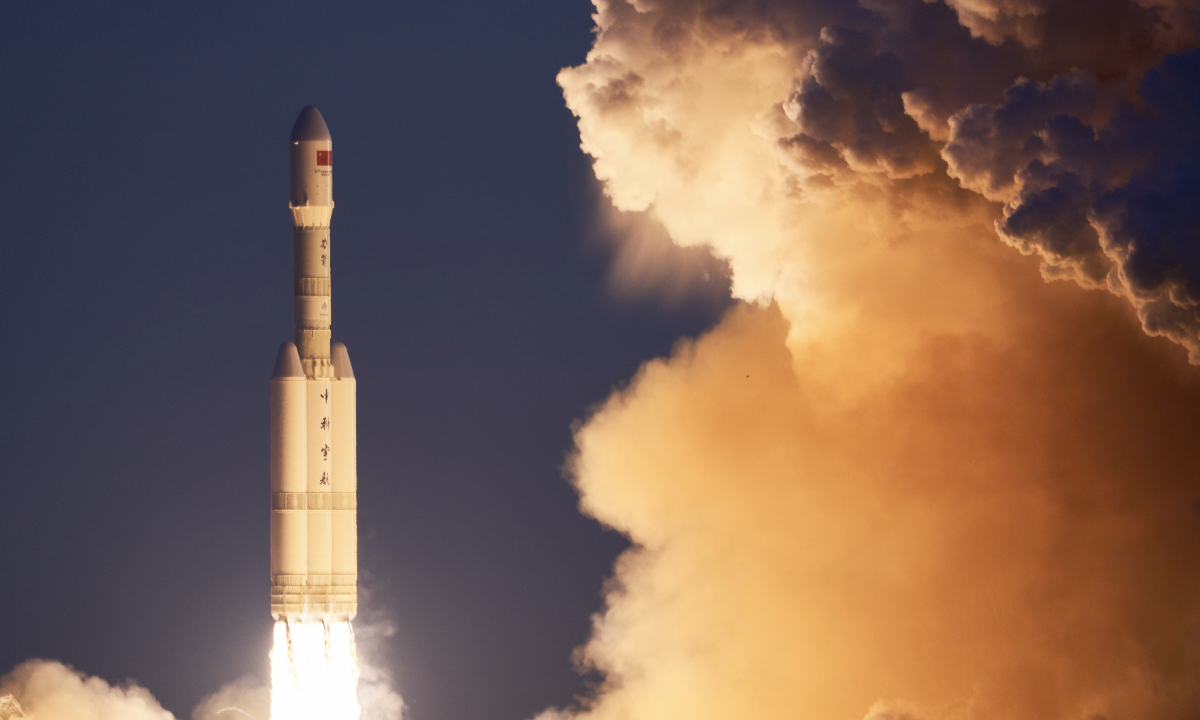
Photo: courtesy of the CAS Space
China’s privately developed Kinetica-2 Y2 liquid-propellant carrier rocket successfully launched 18 satellites into their planned orbits on Tuesday, marking a significant step in the participation of private aerospace enterprises in the country’s large-scale deployment of low-Earth orbit satellite internet constellations.The rocket blasted off at 8:15 am on Tuesday from the Dongfeng Commercial Space Innovation Experimental Zone in Northwest China, carrying the 21st batch satellites of the polar-orbit constellation under China’s Qianfan satellite internet project, according to CAS Space, the rocket’s developer.
The mission marked the second flight of the Kinetica-2 rocket and its first deployment mission for a large-scale satellite internet constellation, demonstrating the growing capabilities of China’s private commercial space sector to support national space infrastructure projects.
Yang Haoliang, chief designer and commander-in-chief of the Kinetica-2 rocket program, told the Global Times that China’s low-orbit satellite internet has entered a critical period of intensive deployment, with substantial demand for launch services as the country accelerates the construction of satellite constellations.
“High-frequency, highly reliable and low-cost launch capacity is essential to ensuring the steady development of satellite internet infrastructure,” Yang said.
He noted that the latest mission represented a crucial operational test of the rocket’s adaptability to large-scale satellite constellation deployment.
Developed independently by CAS Space, Kinetica-2 is a liquid-propellant carrier rocket featuring what the company describes as China’s first “universal booster core” configuration.
The rocket has a payload capacity of eight tons to a 500-kilometer sun-synchronous orbit and 12 tons to a 200-kilometer low-Earth orbit, making it suitable for large-scale satellite deployment and low-cost cargo transportation.
The successful mission followed Kinetica-2’s maiden flight in March, which sent the prototype Qingzhou cargo spacecraft into orbit, demonstrating the rocket’s potential to serve both major national space programs and commercial launch customers.
Yang said CAS Space would continue improving the rocket’s reliability, production capacity and launch frequency to establish a stable, efficient and economical commercial launch service system.
The company is also developing an upper stage to expand the rocket’s orbital reach, while advancing research into clustered booster recovery technologies to further reduce launch costs.
Tuesday’s mission marked the 18th launch of the Kinetica rocket family. According to CAS Space, the series has now delivered one spacecraft and 139 satellites into space, with a cumulative payload mass exceeding 27 tons. The Kinetica-2 rocket alone has placed more than nine tons of payloads into orbit across its first two missions.
According to a report published on the Shanghai municipal government’s official website on October 28, China’s Qianfan satellite internet constellation had launched 256 low-Earth orbit broadband satellites, with plans to add another 68 satellites and increase the cumulative number to 324 by the end of 2026, laying the groundwork for commercial operations.
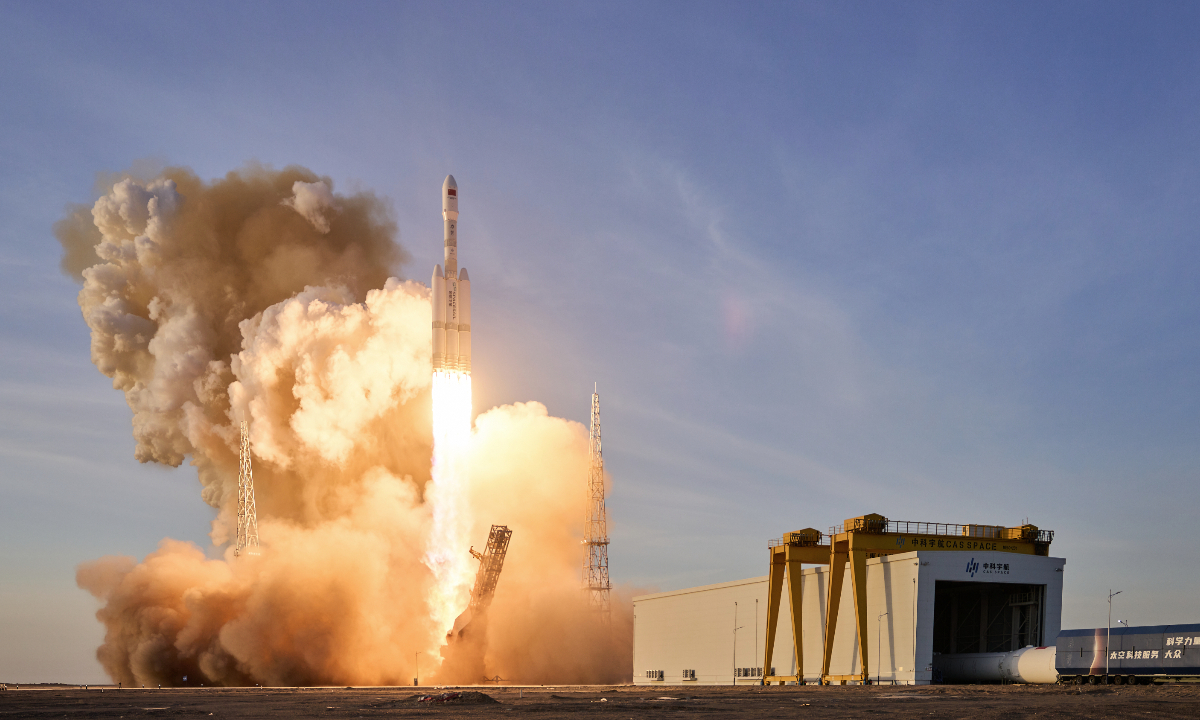
Photo: courtesy of the CAS Space
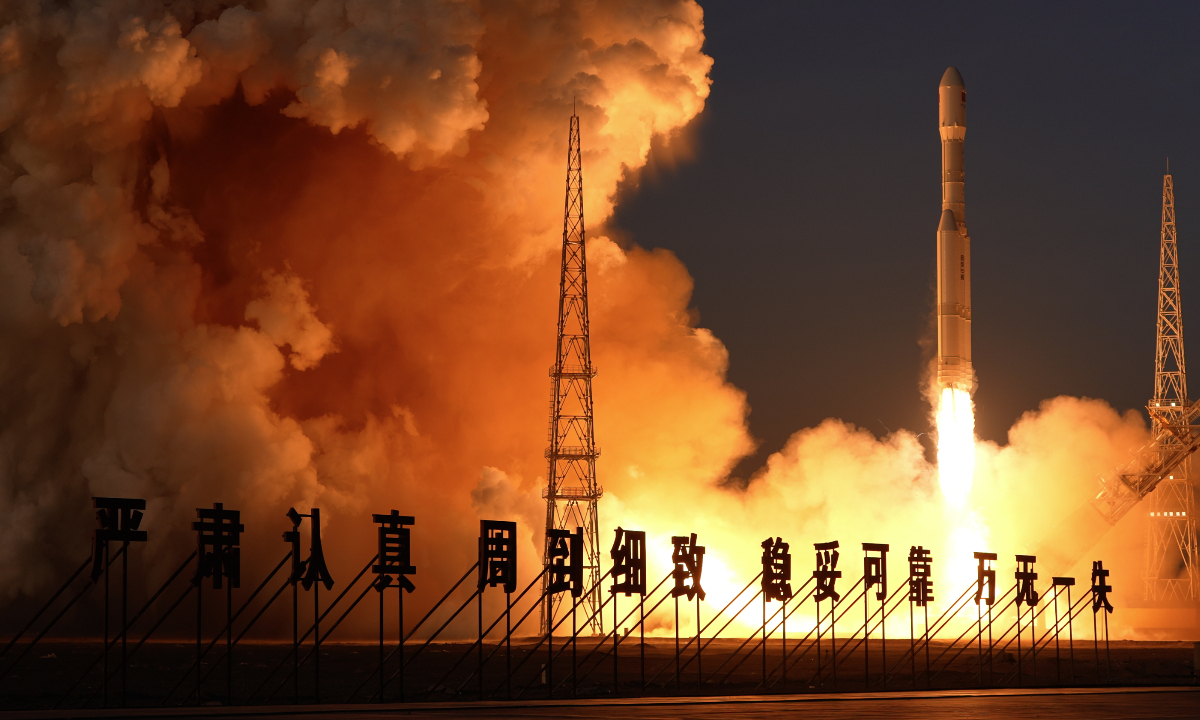
Photo: courtesy of the CAS Space
