Why foreign firms are betting on China again
By By Published: Nov 04, 2026 06:08 PM

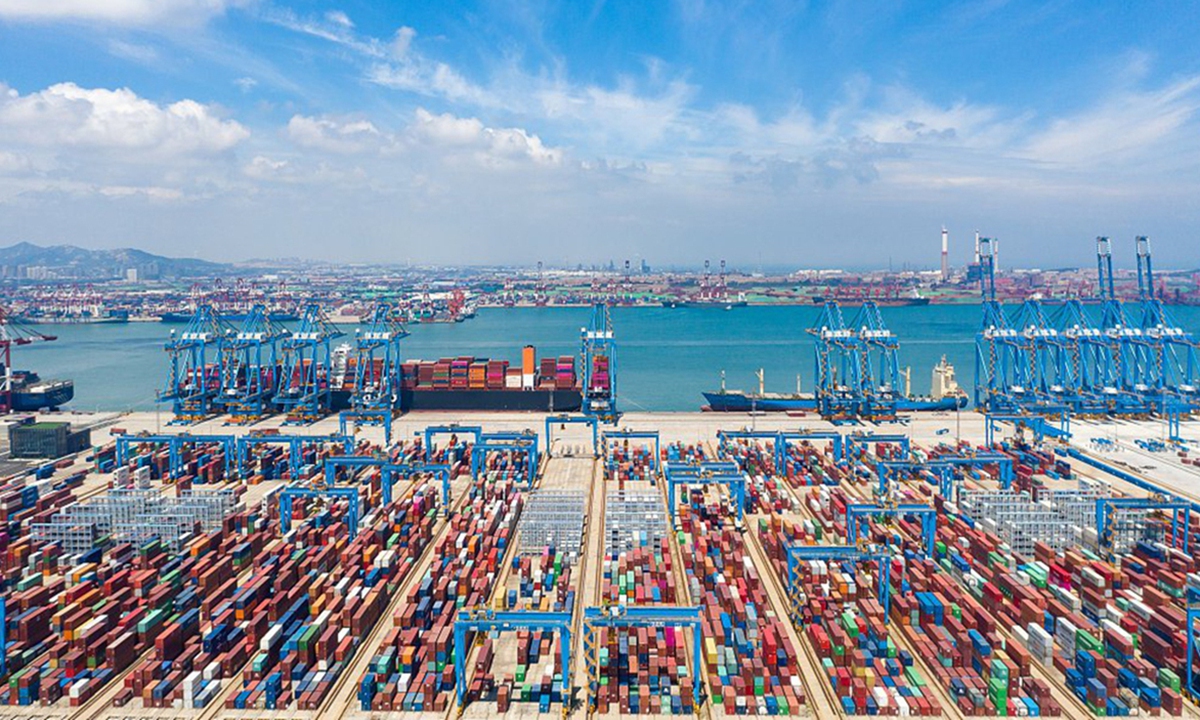
Chinese economy Photo: VCG
When I read the news, one figure in particular caught my attention. Bloomberg reported on Tuesday that JPMorgan's revenue from its China business has grown by 20 percent for two consecutive years, and that the bank plans to double the size of its operations in China by 2030. Additionally, Morgan Stanley has taken part in several Chinese equity financings this year, while Goldman Sachs reports that its China business has reached a record high and is optimistic about 2027.
In recent years, Western media have repeatedly sounded the alarm about a "collapse" of China's economy. Headlines about foreign companies pulling out and supply chains shifting elsewhere have been ubiquitous. So why are Wall Street firms making money in China again?
The past few years have brought a changing economic environment, rising geopolitical risks and supply chain restructuring. Many foreign companies grew uneasy; some scaled back their operations, others delayed investment and some moved business elsewhere. They contended not only with short-term fluctuations in demand, but also with deep concerns about policy direction, rising costs and international relations.
China is the world's largest developing country. Development is never a smooth, uninterrupted journey; fluctuations and setbacks are normal. What matters is taking the long view, which requires patience, resilience and a clear-eyed assessment of the country's long-term prospects.
Companies that stayed have found that, despite the external storms, China still offers hard-to-replace advantages. Few countries can provide a market on the scale of China's.
From a growth-potential perspective, China is one of the world's most dynamic major markets. Even a small share of a unified market of more than a billion people can sustain a multinational company for years.
Chinese consumers are highly receptive to new things, and industries evolve at remarkable speed. A company testing a new product or business model in Beijing, Shanghai, Guangzhou or Shenzhen today may find it spreading across the internet tomorrow.
The most important advantage lies in China's manufacturing ecosystem. This advantage cannot be summed up by simply stating that "the market is large." A product's entire journey - from raw materials and components to equipment, engineering and logistics - can often be managed within a few hundred kilometers.
Capital is a shrewd judge. Faced with a market of this size and such high levels of production and commercial activity, who would willingly turn away from the opportunity?
The recovery in business for Wall Street's investment banks is another sign that activity in China's capital markets is picking up. Companies still need to raise funds, issue shares and pursue equity transactions - and those needs are growing. Financial institutions, naturally, have opportunities to benefit. What's more, and most crucially, this market is increasingly opening its doors to foreign investment.
So, what does it mean to "seize opportunities amid change"? The key is to take the long view. China's market will not simply return to the breakneck growth of several years ago. The economy's foundations are changing, consumer preferences are shifting and the rules of competition are evolving. Companies need to evolve, too.
True long-term commitment does not mean gritting one's teeth and hanging on at all costs. It means assessing the risks while still being willing to put down roots: complying with regulations, developing local talent, and building close partnerships with local companies. When an opportunity emerges, a company that has done this will be ready to seize it.
This process also reflects foreign companies' and investors' growing understanding of China's economic transition and the policy changes that accompany it. That process will continue. Companies that chose not to leave in the past few years are now beginning to see returns. Their experience suggests that investing through a downturn and keeping a clear head when others are gripped by fear can pay off. The real test ahead is whether companies can adapt to the transition, put down genuine roots and stay focused amid short-term volatility.
The author is a senior editor with the People's Daily. dinggang@globaltimes.com.cn. Follow him on X @dinggangchina
RELATED ARTICLES