ARTS / CULTURE & LEISURE
As AIGC voices become common, what remains uniquely human?
When AI learns to speak
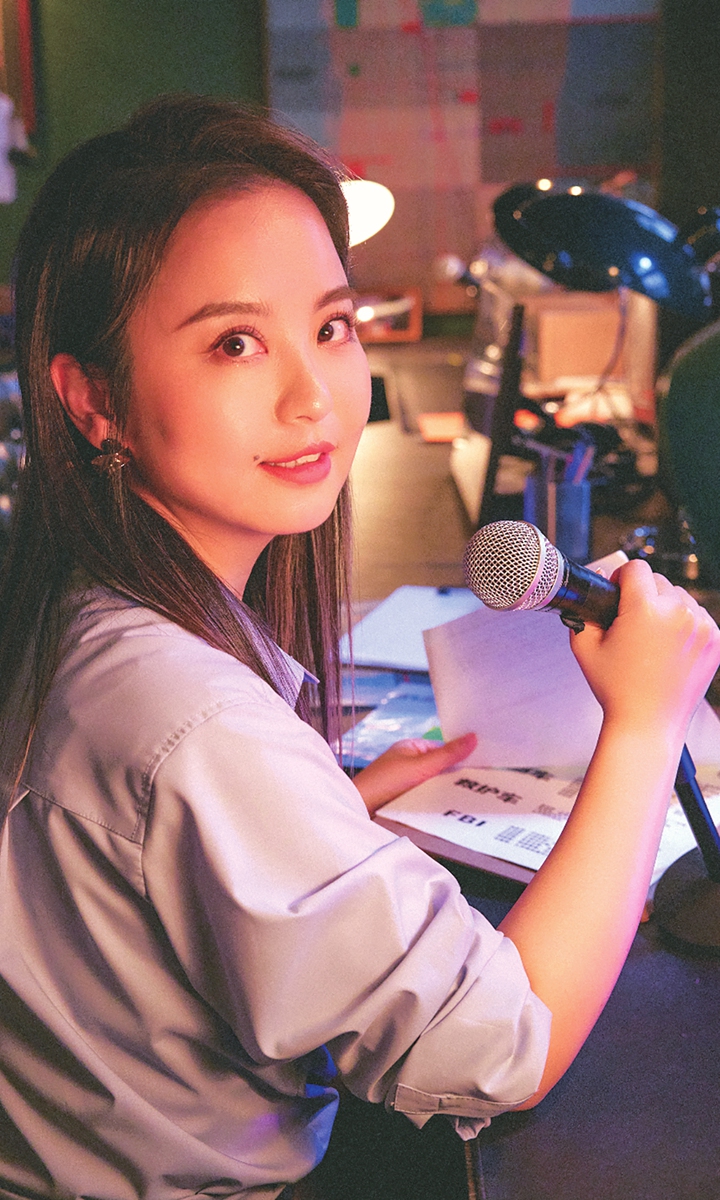
Mizai Photo: Courtesy of Mizai
An AI-generated version of a familiar voice has been appearing across Chinese social media, promoting products, narrating short videos and lending its voice to content ranging from food advertisements to entertainment clips.For listeners of the true-crime podcast Black Cat Detective Agency, the voice may sound familiar. It belongs to Mizai, the show's host, whose distinctive delivery has become widely recognizable. But hearing an AI replica of her voice promoting a frying pan or a dress on Douyin, the Chinese version of TikTok, can be an odd experience for some longtime followers.
Mizai herself is not particularly bothered. She has voluntarily licensed her voice for AI applications, seeing the synthetic version as a digital extension of herself - one that can take on work elsewhere while she continues hosting her own program.
"I see it as a clone of my voice doing its own job somewhere else, while I continue doing mine in my own program. The two do not interfere with each other," she told the Global Times.
Her experience also reflects the choices and challenges facing voice content creators as AI-generated speech becomes more accessible. To explore this topic more deeply, the Global Times spoke with several industry practitioners about their experiences with AI voice technology, from licensing opportunities to concerns over ownership and the future of human performance in the AI era.
A life of its own
Mizai's involvement with AI began when she was invited to provide voice samples for an AI podcast feature on Doubao, an AI application developed by ByteDance. Her AI voice was later made available in other ByteDance products, including Jianying, a popular video-editing app.
Since then, many users have been able to select her AI-generated voice to narrate their videos on various platforms, using it for everything from product promotions to other short-form content.
The response from her audience has been mixed. Some longtime listeners complain that hearing a familiar voice in commercial videos unrelated to her podcast disrupts their listening experience. A few even stopped following the show, while others urged her to take action against what they assumed was unauthorized use.
Mizai said she understands why some listeners feel uncomfortable, even as she sees the arrangement as a practical way to make use of her voice.
Her decision was partly driven by the fact that recordings of her voice were already publicly available online. Rather than risk someone cloning it without permission, she preferred to authorize its use through a major platform under a contract with defined terms.
For audiobook narrator Man Chao, licensing his voice also represents an opportunity, though his reasons are rather different.
With more than a decade of experience in broadcasting and over 200 audiobooks under his belt, he agreed to provide around 100 hours of recordings for ByteDance's AI voice development project.
The prospect of leaving something behind greatly influenced his choice. He imagines a future in which AI could preserve a person's voice and manner of speaking long after their death. "I hope that when my daughter is old and gray, she can still communicate with a digital version of me at my prime," he told the Global Times.
Who owns a voice?
Not every voice content creator is ready to enter into such arrangements.
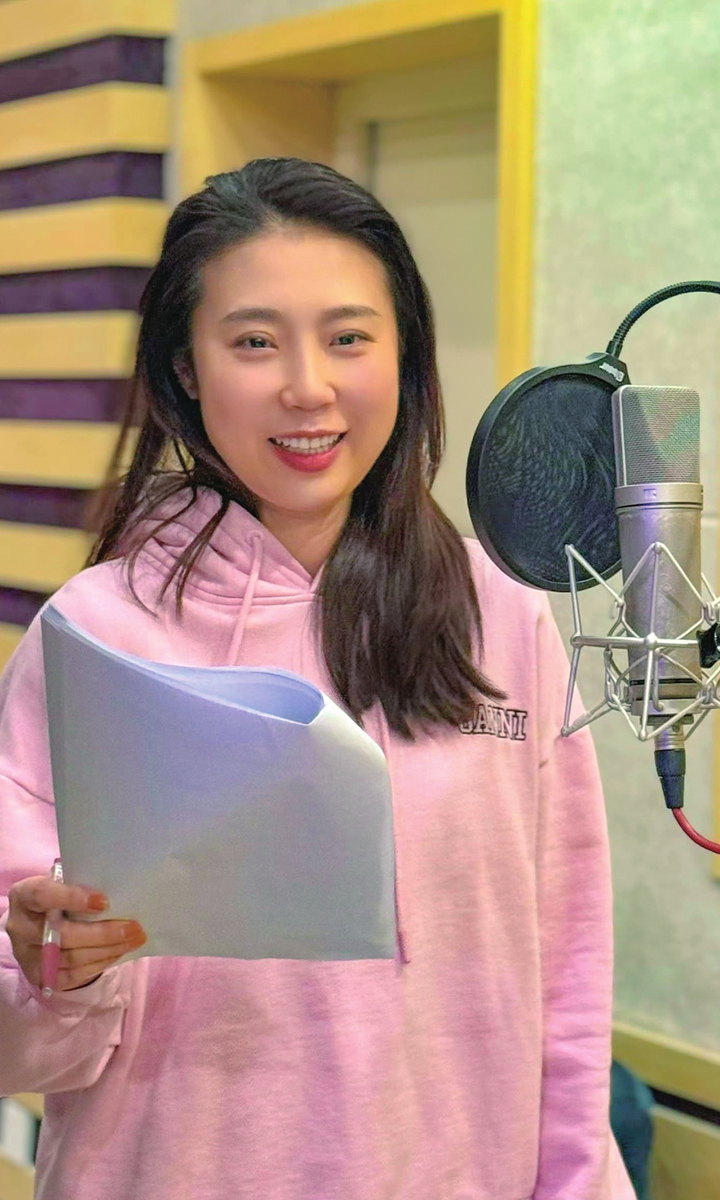
Ji Guanlin Photo: Courtesy of Ji Guanlin
Chinese voice actor Ji Guanlin, known for her work in film, television and animation, including Empresses in the Palace and the Chinese-dubbed version of Titanic released in the mainland, has taken a more cautious approach.She has received several invitations from AI companies and platforms to license her voice, but has yet to enter into any actual cooperation. Her hesitation stems not from opposition to the technology itself, but from a desire for clearer safeguards concerning legal protection, platform supervision, commercial use and performers' interests.
Ji and many of her colleagues have encountered cases in which their voices were used in videos and audio content without permission. Some performers have spoken out publicly, while others have pursued legal remedies.
"I have never opposed AI. AI is a neutral new technology. What I oppose is the misuse and unauthorized appropriation of people's voices," she told the Global Times.
She hopes to see clearer regulations and stronger enforcement, alongside more transparent licensing and commercial arrangements.
Irreplaceable expression
Beyond questions of ownership, AI voice technology is also reshaping content creation and the work of voice content creators.
Mizai sees considerable potential in the technology, particularly in lowering barriers to making audio and video content. Tasks that once required an entire production team may eventually be handled by one person with AI tools, giving more people the opportunity to tell their stories.
She also sees potential in accessibility applications, from helping visually impaired people listen to books to restoring the voices of those who have lost the ability to speak.
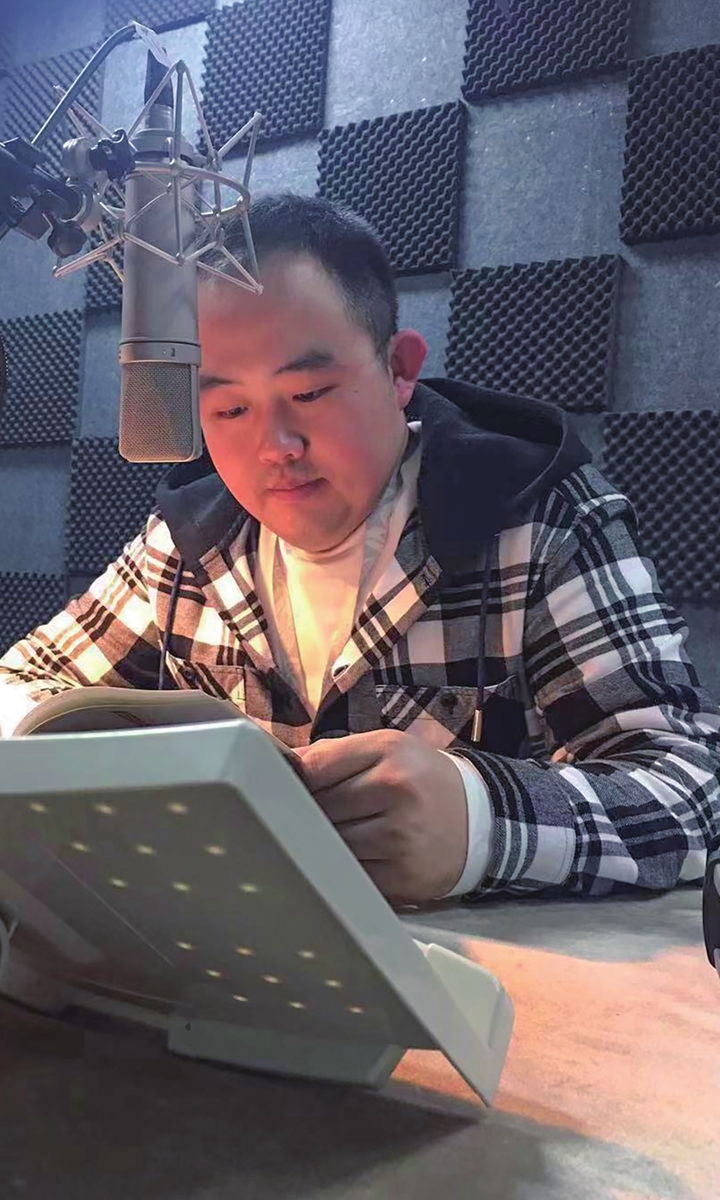
Man Chao Photo: Courtesy of Man Chao
For Man Chao, AI's impact raises questions about professional competition. He said it could eventually replace some less-skilled practitioners, while experienced narrators may retain an edge through the depth and variety of their performances.Still, all three interviewees said they believe human performers will remain irreplaceable as AI-generated voices become increasingly sophisticated. Mizai said that while AI can reproduce vocal characteristics, it cannot fully capture the natural shifts in emotion and expression of a human performance.
Man Chao holds a similar view. Although he provided around 100 hours of recordings for AI voice development, he noted the resulting synthetic voice still falls short of his own. The recordings can help AI imitate his voice and delivery, but cannot reproduce the full range and nuances of his performance.
Ji likewise sees a distinction in the subtle variations that emerge naturally during acting. An actor may deliver the same line several times, with each take carrying slight differences in emotion, rhythm and expression that often arise from an immediate response. "Art is rooted in the natural expression of emotion, while industrial production relies on precise calculation," she said.
RELATED ARTICLES