ARTS / CULTURE & LEISURE
Chinese and Elon Musk-linked AI films stumble at box office and with critics, exposing storytelling gap
Core problem lies in disconnect between content, market: expert
By Published: Oct 29, 2026 10:22 PM

Two high-profile artificial intelligence (AI) film projects in China and the US have encountered disappointing market and critical responses within days of each other, with audiences and insiders saying weak storytelling is the main problem.
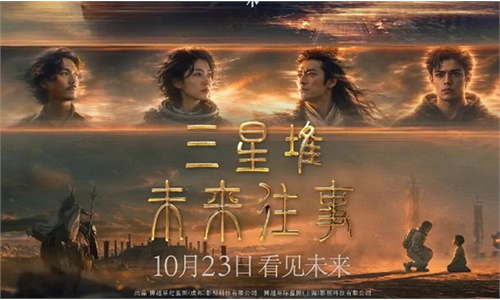
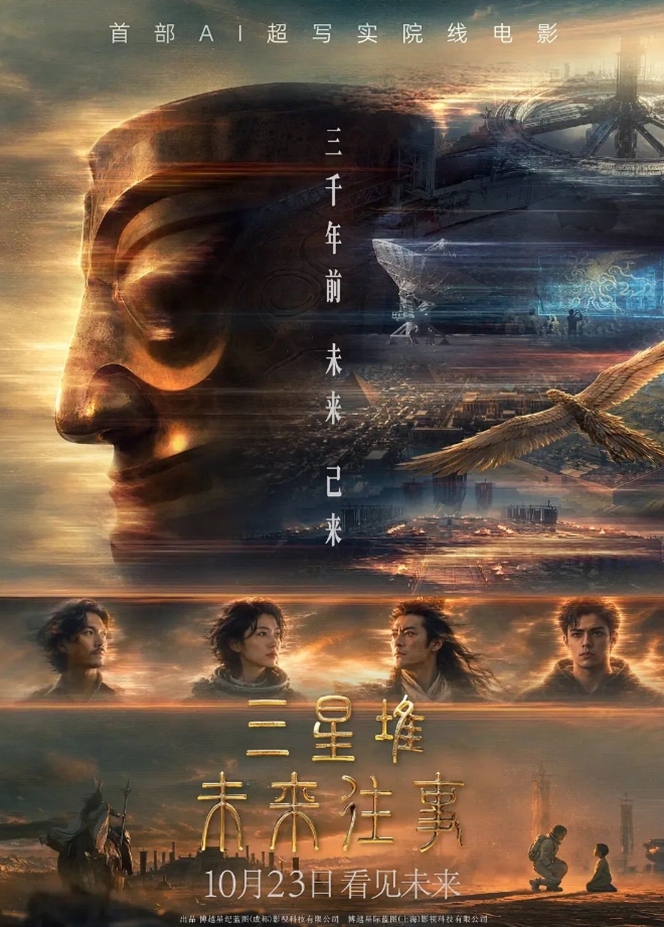
Sanxingdui, China's first fully AI-produced feature film to receive the country's film screening permit, has struggled at the domestic box office since its theatrical release on October 23.
As of Thursday, its cumulative box office revenue had reached approximately 1.42 million yuan ($213,000), while the audience occupancy rate had fallen to 0.2 percent, according to Chinese ticketing platform Maoyan.
With production costs estimated at tens of millions of yuan, theatrical receipts have recovered less than a tenth of the reported budget, showing the commercial risks of bringing AI-generated content to the big screen.
A Beijing-based moviegoer surnamed Zhang told the Global Times that watching an AI film in a cinema for the first time was a novelty. "But the film Sanxingdui still had a heavy 'AI flavor,' and the plot was scattered and fragmented," Zhang said.
Meanwhile, Grok Imagine, the AI video-generation tool developed by Elon Musk's xAI, released the first seven-minute installment of its The Odyssey series on Musk's social media platform X.
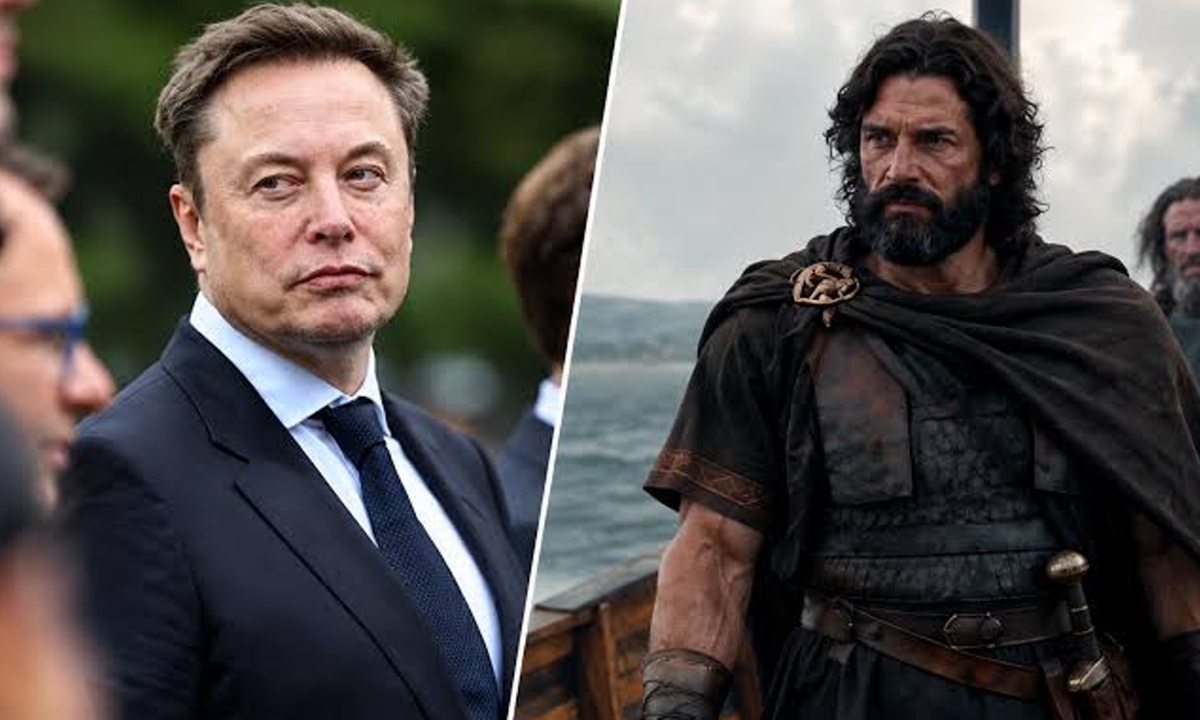
Musk has said he intends to produce a feature-length AI film by the end of 2026 that remains faithful to the spirit of Homer's work. But the first episode drew criticism for its visuals and storytelling, with foreign media describing the output as "soulless slop."
Although the two projects differ in scale, cultural context and distribution, their parallel struggles suggest that AI filmmaking faces a problem more fundamental than improving image quality or generating increasingly realistic digital characters.
"The core problem is not the technology, but the disconnect between content and the market," Feng Anrong, a director who runs an AI production studio, told the Global Times on Thursday.
Feng argued that both films placed too much emphasis on technological novelty while neglecting the basic requirements of popular entertainment, including a coherent plot, engaging characters and emotional resonance.
"Moviegoers go to the cinema for a complete, compelling and emotionally engaging story, not for a technology demonstration," he said.
Sanxingdui draws on the ancient Sanxingdui culture in Southwest China's Sichuan Province, known for its distinctive bronze masks and other artifacts. The site has become a prominent cultural tourism destination and a source of inspiration for efforts to bring China's archaeological heritage to a broader audience.
Musk's The Odyssey, by contrast, draws on one of the world's most enduring literary works. Yet its difficulties point to the risks of treating fidelity to historical details as a substitute for artistic interpretation.
Zhang Peng, a cultural researcher and associate professor at Nanjing Normal University, told the Global Times that the artistic significance of Homer's epic lies not simply in reconstructing clothing, appearances or historical settings, but in the struggles between human beings and divine forces, and among honor, desire and the longing for home.
"Technology cannot compensate for weak storytelling," Zhang said. He argued that an approach centered on reproducing familiar visual patterns can produce technically polished images, but they lack a distinctive creative perspective.
"An audience does not empathize with a character simply because the character is played by a real person. It empathizes with the character's choices, sacrifices and fate," Zhang said.
The more immediate challenge, experts say, is that AI filmmaking has yet to establish a mature production model for feature-length narratives.
Short videos can often rely on striking imagery, atmosphere or a novel visual style to capture attention. A feature film, typically extending beyond 90 minutes, demands sustained narrative development, consistent characterization, carefully controlled pacing and convincing emotional arcs.
Zhang cautioned against concluding that AI is inherently suited only to short-form content. Instead, he said, recent setbacks expose weaknesses in long-form narrative control and production workflows.
He argued that filmmakers should prioritize creative development over simply increasing model capabilities.
"I was optimistic about the next three to five years, particularly for lower- and mid-budget science fiction, fantasy and animation projects with distinctive visual worlds and tightly controlled creative direction. AI could possibly reduce the cost of producing spectacular imagery without necessarily sacrificing emotional depth," Zhang said.
The two experts pointed out that the setbacks of Sanxingdui and The Odyssey do not necessarily signal the failure of AI filmmaking. They instead offer an early test of whether the technology can evolve from a tool for producing impressive images into a sustainable form of cinematic expression.
Feng argued that the industry's long-term prospects depend on generating genuine incremental demand rather than relying on publicity, investment or isolated box-office successes.
"One or two blockbuster hits cannot revive an entire sector," he said. "True industry prosperity means expanding the overall market."
Sanxingdui, China's first fully AI-produced feature film to receive the country's film screening permit, has struggled at the domestic box office since its theatrical release on October 23.
As of Thursday, its cumulative box office revenue had reached approximately 1.42 million yuan ($213,000), while the audience occupancy rate had fallen to 0.2 percent, according to Chinese ticketing platform Maoyan.
With production costs estimated at tens of millions of yuan, theatrical receipts have recovered less than a tenth of the reported budget, showing the commercial risks of bringing AI-generated content to the big screen.
A Beijing-based moviegoer surnamed Zhang told the Global Times that watching an AI film in a cinema for the first time was a novelty. "But the film Sanxingdui still had a heavy 'AI flavor,' and the plot was scattered and fragmented," Zhang said.
Meanwhile, Grok Imagine, the AI video-generation tool developed by Elon Musk's xAI, released the first seven-minute installment of its The Odyssey series on Musk's social media platform X.
Photo: Sina Weibo
The project followed Musk's public criticism of Christopher Nolan's forthcoming live-action adaptation of Homer's epic The Odyssey, which he accused of sacrificing historical authenticity for political correctness.Musk has said he intends to produce a feature-length AI film by the end of 2026 that remains faithful to the spirit of Homer's work. But the first episode drew criticism for its visuals and storytelling, with foreign media describing the output as "soulless slop."
Although the two projects differ in scale, cultural context and distribution, their parallel struggles suggest that AI filmmaking faces a problem more fundamental than improving image quality or generating increasingly realistic digital characters.
"The core problem is not the technology, but the disconnect between content and the market," Feng Anrong, a director who runs an AI production studio, told the Global Times on Thursday.
Feng argued that both films placed too much emphasis on technological novelty while neglecting the basic requirements of popular entertainment, including a coherent plot, engaging characters and emotional resonance.
"Moviegoers go to the cinema for a complete, compelling and emotionally engaging story, not for a technology demonstration," he said.
Sanxingdui draws on the ancient Sanxingdui culture in Southwest China's Sichuan Province, known for its distinctive bronze masks and other artifacts. The site has become a prominent cultural tourism destination and a source of inspiration for efforts to bring China's archaeological heritage to a broader audience.
Promotional material for China's first fully AI-generated feature film Sanxingdui Photo: Courtesy of Bona Film Group
"The film sought to combine that cultural appeal with AI-generated filmmaking, but its fragmented narrative and loosely connected plot points weakened its ability to sustain audience interest," Feng said.Musk's The Odyssey, by contrast, draws on one of the world's most enduring literary works. Yet its difficulties point to the risks of treating fidelity to historical details as a substitute for artistic interpretation.
Zhang Peng, a cultural researcher and associate professor at Nanjing Normal University, told the Global Times that the artistic significance of Homer's epic lies not simply in reconstructing clothing, appearances or historical settings, but in the struggles between human beings and divine forces, and among honor, desire and the longing for home.
"Technology cannot compensate for weak storytelling," Zhang said. He argued that an approach centered on reproducing familiar visual patterns can produce technically polished images, but they lack a distinctive creative perspective.
"An audience does not empathize with a character simply because the character is played by a real person. It empathizes with the character's choices, sacrifices and fate," Zhang said.
The more immediate challenge, experts say, is that AI filmmaking has yet to establish a mature production model for feature-length narratives.
Short videos can often rely on striking imagery, atmosphere or a novel visual style to capture attention. A feature film, typically extending beyond 90 minutes, demands sustained narrative development, consistent characterization, carefully controlled pacing and convincing emotional arcs.
Zhang cautioned against concluding that AI is inherently suited only to short-form content. Instead, he said, recent setbacks expose weaknesses in long-form narrative control and production workflows.
He argued that filmmakers should prioritize creative development over simply increasing model capabilities.
"I was optimistic about the next three to five years, particularly for lower- and mid-budget science fiction, fantasy and animation projects with distinctive visual worlds and tightly controlled creative direction. AI could possibly reduce the cost of producing spectacular imagery without necessarily sacrificing emotional depth," Zhang said.
The two experts pointed out that the setbacks of Sanxingdui and The Odyssey do not necessarily signal the failure of AI filmmaking. They instead offer an early test of whether the technology can evolve from a tool for producing impressive images into a sustainable form of cinematic expression.
Feng argued that the industry's long-term prospects depend on generating genuine incremental demand rather than relying on publicity, investment or isolated box-office successes.
"One or two blockbuster hits cannot revive an entire sector," he said. "True industry prosperity means expanding the overall market."
RELATED ARTICLES