When Singles’ Day shoppers start stocking up on AI tokens, the time has changed: Global Times editorial
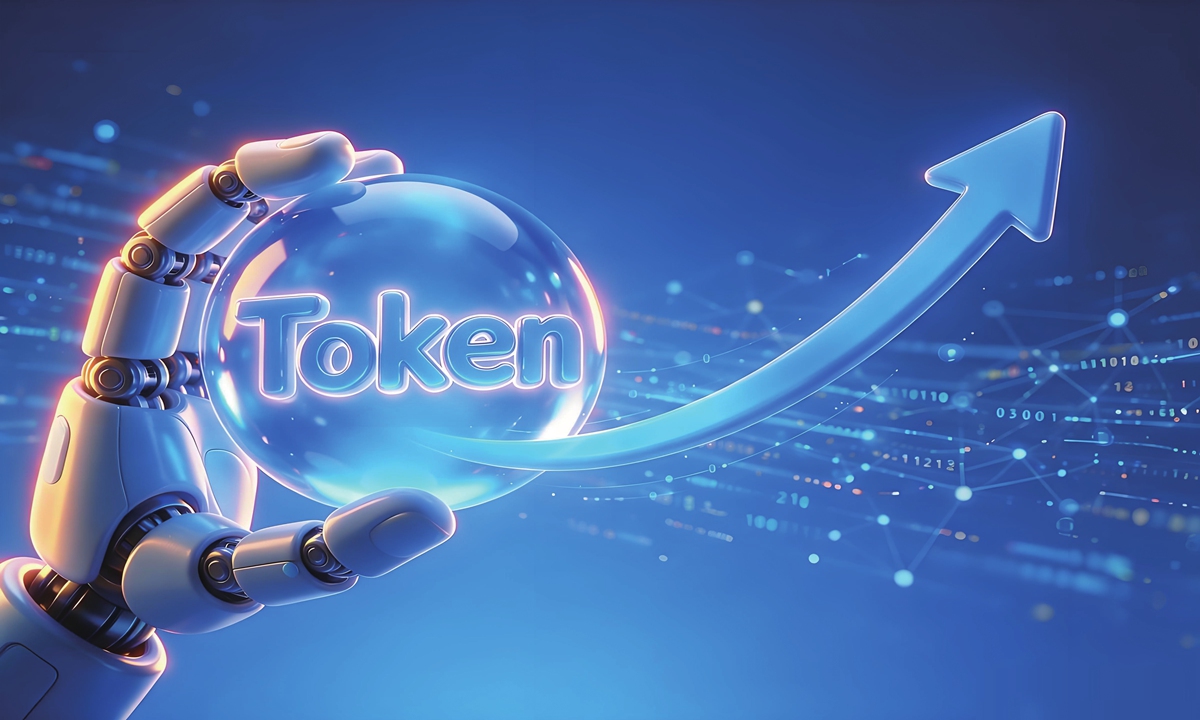
Concept picture of Token Photo: VCG
As ordinary Chinese consumers embrace AI and enjoy the convenience of stockpiling tokens through e-commerce livestreams, and as humanoid robots and green manufacturing emerge as new showcases of China's intelligent manufacturing capabilities and Chinese modernization, an increasing number of Western media outlets and scholars are coming to recognize a remarkable reality: "The future is in China."
This year's Double 11, or Singles' Day, shopping festival has brought a new item to Chinese consumers' shopping lists: Token. Tmall and JD.com have each introduced AI token sections bringing together services from Alibaba Cloud, DeepSeek, Moonshot AI and Zhipu AI. One livestream even recorded sales of 2 trillion tokens in just half an hour. The fact that AI tokens have become one of the headline products on e-commerce platforms is a phenomenon rarely seen anywhere else in the world. Foreign media have taken notice, expressing both curiosity and astonishment.
There was a time when Americans were driving cars, watching television and eating fried chicken, while the "four big things" in Chinese households were watches, bicycles, sewing machines and radios. It was not until the late 1970s that televisions, refrigerators and washing machines began to find their way into a limited number of Chinese homes. In those days, the West had the power to set the standard for what constituted "modern living," and its way of life was widely regarded as the model for the future. China's priority was to catch up with industrialization, bringing within reach of ordinary households products that had long been commonplace elsewhere.
Few could have imagined that, decades later, China would be at the forefront of the widespread adoption of smart devices, mobile payments and digital services. Fewer even could have predicted that China would become a force in defining new forms of consumption, new standards and even new ways of life in the latest wave of digital transformation.
The same transformation is also unfolding in digital technology. A new digital product or concept would often first take shape in Silicon Valley before gradually spreading to the rest of the world. But the appearance of tokens on Singles' Day shopping shelves has challenged this long-established pattern. Tokens are no longer simply another overseas concept or business model replicated in China. Instead, the token-based consumption has emerged from the combined forces of China's vast digital consumer market, highly active user base and mature industrial ecosystem.
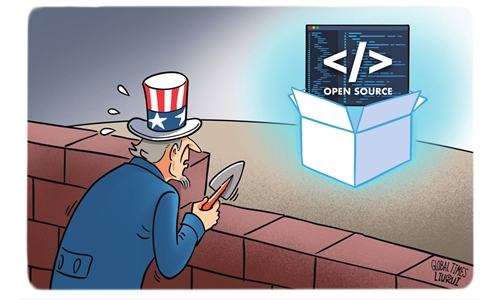
Just a few years ago, some Western commentators were still quick to question China's capacity for digital innovation, arguing that it could make only incremental advances in applications but would never forge its own path in foundational technologies. Yet the rapid uptake of open-source large language models, the gradual deployment of humanoid robots in industrial settings, and now the arrival of digital resources in the mass consumer market tell a different story. The world is witnessing an innovation hub capable of continually defining new demands and creating new applications.
As ordinary Chinese consumers embrace AI and enjoy the convenience of stockpiling tokens through e-commerce livestreams, and as humanoid robots and green manufacturing emerge as new showcases of China's intelligent manufacturing capabilities and Chinese modernization, an increasing number of Western media outlets and scholars are coming to recognize a remarkable reality: "The future is in China."
Today, AI is not only directly driving consumption of smart devices and related hardware, but the "AI Plus" initiative is also deeply empowering the rapid development of sectors such as education, healthcare, elderly care, culture and tourism, employment, and consumer services.
As AI enters millions of households and empowers thousands of industries, a more competitive AI consumer ecosystem will bring more affordable tokens and a wider range of application scenarios. Underpinning this transformation is China's rapid progress in AI foundation models, cloud computing, and the chip application ecosystem.
China is developing distinctive competitive advantages in the global AI race. According to OpenRouter, a global AI model aggregation platform, Chinese large language models have outpaced their US counterparts in token usage for 27 consecutive weeks, including the week of October 26 to November 1.
More than one-third of the tokens used by enterprises in the Global South countries come from Chinese models. Increasingly, the decisive factor in AI competition is whether companies can consistently deliver reliable, practical AI services to businesses and consumers at reasonable costs, and whether technological advances can be translated into productivity gains across industries.
Why has China been among the first to develop an ecosystem for token consumption? The answer is simple: the public's high level of acceptance has accelerated the development of the ecosystem, while a mature ecosystem has, in turn, further reinforced positive public attitudes. A 2025 KPMG survey covering 47 countries found that Chinese people were among the most optimistic about AI.
From electronic payments to e-commerce and food delivery, from short videos to intelligent driving, and now to access to highly cost-effective AI tokens, Chinese consumers have undoubtedly been at the forefront of enjoying the benefits of the intelligent era. This positive, self-reinforcing ecosystem is the natural outcome of China's remarkable rise in comprehensive national strength and the broad improvement in its population's educational and cultural attainment over the past several decades.
From the "four big things" and "three big things" that once symbolized household prosperity to the integration of digital technologies into everyday consumption today, the Chinese people's pursuit of a better life has never changed. What has changed is our ability and approach to fulfill that aspiration.
Today, we are turning the possibilities of a new era of digital civilization into experiences that benefit billions of people globally. This transformation has not been driven by exploitation, coercion, or the erection of barriers, but by practical efforts to ensure that ordinary people can genuinely and equally share in the benefits of technological progress.
RELATED ARTICLES