China, Canada agree to expand trade ties at JETC meeting; expert says closer cooperation helps strengthen global trade stability

A worker prepares a Canadian health products booth at the Food and Agricultural Products Exhibition Area of the ninth China International Import Expo (CIIE) in Shanghai on November 1, 2026. Photo: VCG
China and Canada have agreed to deepen trade and investment cooperation across traditional and emerging sectors, from energy and agriculture to advanced manufacturing, while extending key market access arrangements through 2028, as the two countries build on recent progress in bilateral economic ties, according to China’s Ministry of Commerce (MOFCOM) and the Government of Canada.
These commitments emerged from the 29th meeting of the China-Canada Joint Economic and Trade Commission (JETC), co-chaired in Beijing on Tuesday by Chinese Commerce Minister Wang Wentao and Canadian International Trade Minister Maninder Sidhu. The talks marked the commission's first ministerial-level meeting and took place during Sidhu's visit to China from Tuesday to Friday.
China is ready to work with Canada to make full use of the JETC as the main channel for resolving trade differences and advancing cooperation, while continuing to shorten the list of problems and expand the list of cooperation, Wang said, according to a MOFCOM statement released on Wednesday.
Wang called for consolidating cooperation in traditional sectors such as oil and gas, agricultural and aquatic products, and consumer goods, while further expanding cooperation in emerging areas including new materials, advanced manufacturing, clean energy and smart agriculture.
Following the meeting, the two sides signed a memorandum of understanding on establishing a China-Canada business leaders' roundtable, according to MOFCOM.
The JETC dates back to a bilateral trade agreement signed in 1973, which established a mechanism to address trade issues and explore opportunities for cooperation. During Canadian Prime Minister Mark Carney's visit to China in January, the two sides agreed to upgrade the JETC to a mechanism led by their trade ministers, with meetings to be held at least once a year and additional meetings convened as needed.
The latest meeting represents another step in translating the understandings reached during Carney's January visit into concrete measures, Liu Dan, a research fellow at the Center for Regional and Country Studies at Guangdong University of Foreign Studies, told the Global Times on Thursday.
Liu noted that the meeting and upcoming APEC engagements offered further opportunities to build on the agreements reached earlier this year.
Sidhu described the momentum in Canada-China relations as encouraging, pointing to progress in implementing the leaders' consensus and expanding cooperation across various fields, according to MOFCOM.
Canada is willing to continue addressing trade issues and advancing cooperation through the JETC while encouraging businesses from both countries to expand trade and investment ties, Sidhu said. He also welcomed greater Chinese business participation in Canada's modern agriculture, manufacturing, financial services and energy sectors.
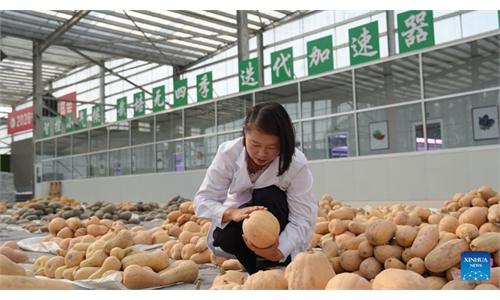
The two countries also agreed to extend favorable market access for Canadian canola meal, peas, lobsters and crabs for another two years, through the end of 2028, according to a statement released by the Canadian government on Wednesday. Canada will also extend existing tariff remission measures for certain Chinese steel and aluminum products not manufactured domestically in Canada for the same period.
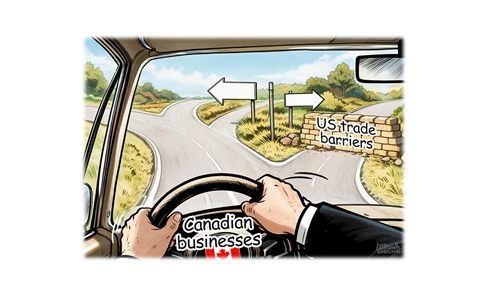
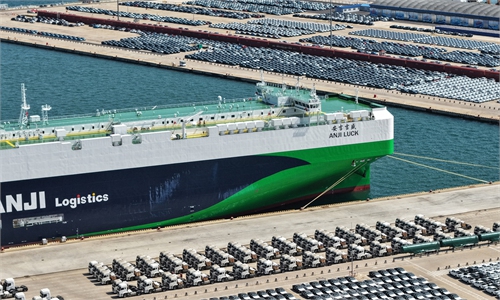
The extensions build on a preliminary trade arrangement reached during Carney's visit to China in January. Under the arrangement, Canada agreed to allow 49,000 Chinese electric vehicles annually at a 6.1 percent tariff, without the additional 100 percent surtax. China agreed to adjust relevant trade measures on Canadian canola seed and certain agricultural and aquatic products in accordance with its laws and regulations.
The extension is expected to provide greater certainty and predictability for Canadian farmers, seafood harvesters and exporters, while supporting increased exports to China, according to the Canadian government. Canada previously announced a target of increasing its exports to China by 50 percent by 2030.
Liu said that agriculture and energy have long been important pillars of China-Canada economic cooperation, with strong economic complementarity offering substantial scope for further growth. Meanwhile, emerging sectors like clean energy are already established areas of cooperation, backed by years of dialogue and engagement at various levels, she added.
China remained Canada's second-largest merchandise trading partner in 2025, after the US. Bilateral goods trade reached $80.39 billion in the first nine months of 2026, up 17.2 percent year-on-year, with China's imports from Canada rising 22.8 percent to $39.53 billion, according to Chinese customs data, underscoring the strong momentum in bilateral trade.
Beyond the bilateral benefits, closer economic cooperation between China, one of the world's largest markets, and Canada, a representative middle power, could help bring greater stability to global trade and send a positive signal amid international economic uncertainty, Liu said.
Sidhu's visit also includes Shanghai, where he is scheduled to meet officials, investors and business representatives at the China International Import Expo (CIIE), which runs from November 5 to 10. Canada is one of two guest countries of honor at this year's expo, marking its second time in the role since the inaugural event in 2018.
Canada is preparing its largest-ever presence at the expo, showcasing products and services across sectors including agri-food, consumer goods, health products, finance and professional services, according to the CIIE's official website.
RELATED ARTICLES