ARTS / CULTURE & LEISURE
Culture brings people together as universal language: senior Spanish cultural journalist
Literature beyond borders
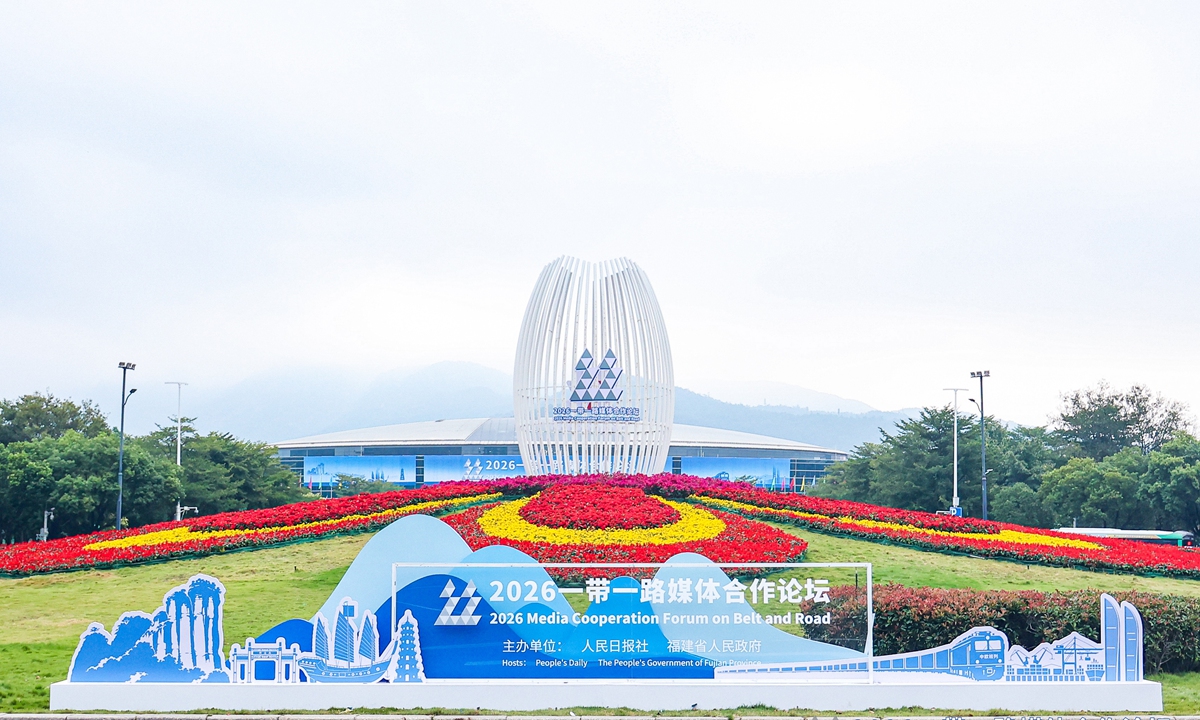
The venue of the 2026 Media Cooperation Forum on Belt and Road in Fuzhou, East China's Fujian Province Photo: Courtesy of organizers
"Books, films and music are the best ways for people from different countries to communicate," Xavi Ayén, head of the culture section of Spanish newspaper La Vanguardia, told the Global Times at the 2026 Media Cooperation Forum on Belt and Road in Fuzhou, East China's Fujian Province."As we have seen at this forum, empathy is very important. Culture is a universal language. Through films and literature, we understand the same emotions," he said.
The conference corridors were bustling with journalists, but Ayén, who has covered culture for more than three decades, took a moment to share with the Global Times on the power of cultural exchange.
Ayén began interviewing writers at the age of 25, starting with Nobel laureate Kenzaburo Oe. Since then, he has interviewed 32 Nobel Prize-winning authors and thousands of writers.
His visit to Fuzhou marked his first time in the city and his second trip to China this year. Only recently, he had spent more than two hours in Beijing interviewing Chinese Nobel Prize winner and writer Mo Yan.
Ayén said he was deeply impressed by the forum, which brought together journalists from many countries and offered opportunities to make new friends and challenge preconceived ideas. He said he was delighted to be part of the event and hoped the Belt and Road Initiative would continue to grow stronger year after year.
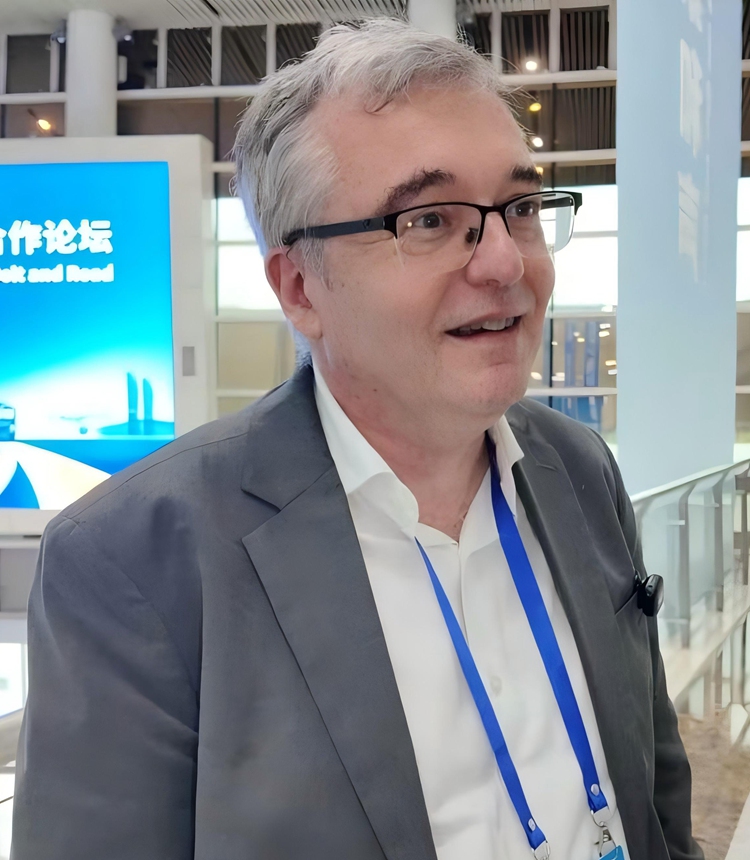
Xavi Ayén Photo: Yu Jiayin/Global Times
Beyond economic ties
For Ayén, however, the connections fostered by the initiative extend beyond trade routes and economic ties to create bridges between cultures.
While international links are important for cultural businesses, he said literature, film, music and theater play an especially significant role in bringing people from different countries closer together.
Such connections are also helping reshape European readers' perceptions of China.
Although some stereotypes remain, Ayén said, literature and other forms of cultural exchange are offering a more nuanced picture of the country, including its modern development.
He also noted that Confucius Institutes in Spain regularly organize activities such as visits by Chinese writers, providing more opportunities for cultural exchanges.
Of the Nobel laureates Ayén has interviewed, two encounters stand out.
The first was his recent conversation with Mo Yan in Beijing, which lasted more than two hours. Ayén described it as a wonderful experience and recalled that he found the writer is a warm and approachable person.
The interview took place at the Museum of Modern Chinese Literature, where Mo Yan spoke at length about his hometown of Gaomi in East China's Shandong Province.
Mo Yan explained how the film Red Sorghum, based on his novel of the same name, had transformed life in his village. Many tourists now visit the area to see the places where the stories in the film and book unfolded, Ayén noted, illustrating how literature can have a tangible impact on people's lives.
Interviewing a writer should never be confined to a sofa and a recording device. Ayén said he likes to ask writers to take him around their neighborhoods or to places that have particular significance to their lives and work.
During his interview with Mo Yan, for example, they visited several places in Beijing. What matters to him, he explained, is not only talking with writers but also experiencing the everyday life of the cities they inhabit.
As for how to get a writer talking, Ayén explained thorough preparation is essential. Before an interview, he makes a point of familiarizing himself with the writer's books, often beginning his preparations several months in advance.
Another unforgettable encounter took place years ago in Mexico City, when Ayén secured an exclusive interview with Colombian novelist Gabriel García Márquez. According to Ayén, it was the only interview that García Márquez had given to a journalist in the final 20 years of his life, and the last one he ever gave.
During their conversation, the novelist revealed that he had permanently stopped writing. The news attracted widespread attention, with media outlets in China, Europe and the US reporting on the interview.
Ayén explained how he had managed to secure the rare opportunity with a literary giant who had kept the media at a distance for two decades.
Rather than approaching García Márquez in the conventional role of a journalist, he brought him a gift from a friend in Barcelona and sought to establish a personal connection.
He first met the novelist's wife, and the gifts and greetings eventually helped persuade her to agree to the interview.
Original books
As an active participant in cultural exchange, Ayén also brought his own book to China.
Those Boom Years, which explores the Latin American literary movement of the 1960s and 1970s, was translated into Chinese and published in China this year.
Showing the Chinese cover of the book on his phone, he said that although he could not read a single Chinese character, he hoped the translation had captured the meaning he wanted to convey.
From Latin American literature to contemporary Chinese writing, Ayén sees a growing exchange between the two literary worlds.
Latin American and Chinese writers are increasingly influencing one another, he said.
In his reading of contemporary Chinese literature, he has found a striking degree of creativity and willingness to break established literary conventions.
He said he is particularly interested in how Chinese writers are blending realism with elements of the strange and the fantastical.
Ayén hopes that more Chinese writers will be translated into Spanish and other European languages, as he considers their works fascinating and highly original.
As people continued to move through the corridors at the forum, Ayén said he was still looking forward to discovering more during his visit. It was only his second day in Fujian, after all.
After more than three decades covering culture, he remains convinced that literature, film and music can bring people together across borders. For him, they are a universal language that needs no translation.
RELATED ARTICLES