Social media plug-in called "Bedbug Map"
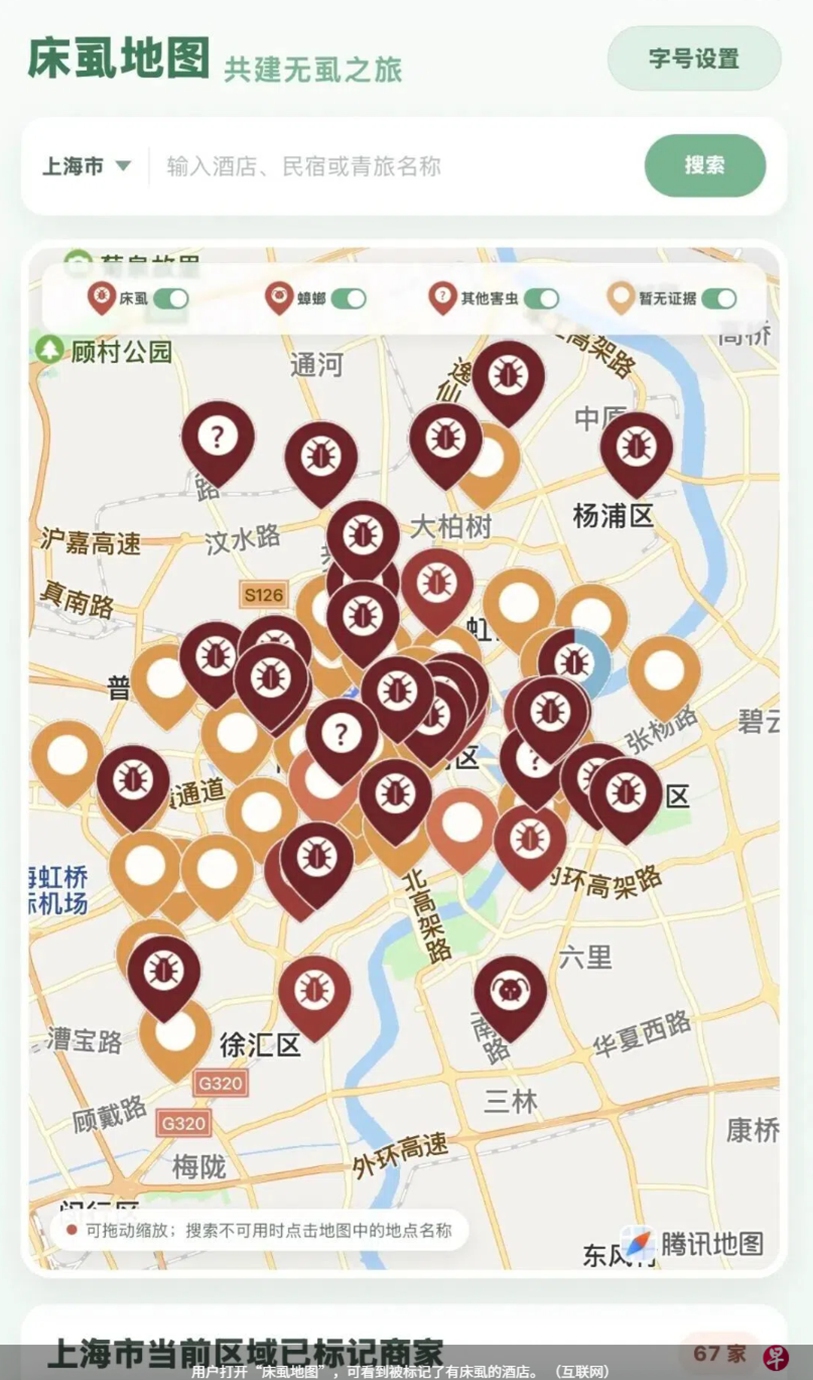
A social media plug-in called "Bedbug Map," which allows users to report hotels possibly infested with bedbugs and other pests, has gone viral in China, attracting over 200,000 users and generating reports involving more than 600 hotels nationwide within one month of its launch.Officially launched on September 21, the plug-in allows users to mark the locations of hotels where they reportedly encountered bedbugs. Its interactive map uses different colored symbols to indicate bedbugs, cockroaches and other pests as well as locations. Users can upload photographs and descriptions of their experiences. However, the platform said that the information is for reference only and cannot be guaranteed to be accurate.
The popularity of the plug-in reflects public concerns about bedbug infestations in hotels. Searches for hotel-related bedbug reports have surged across Chinese social media, with numerous travelers sharing their negative experiences.
While many users welcome the initiative as a way to encourage hotels to improve hygiene, others raise concerns that unverified reports could unfairly damage businesses' reputations.
The issue has triggered complaints from hotels. On October 23, the plug-in's appeals section showed that four hotels had submitted documents, including business licenses, pest-control photographs and third-party disinfection records.
A staff worker at Beijing Guangzhou Hotel said that a guest demanded a refund of nearly 3,000 yuan for a four-night stay, claiming to have suffered insect bites two days after checking out. The hotel later discovered that the guest was encouraged online to report the hotel on "Bedbug Map."
The hotel said that it maintained monthly pest-control records and had commissioned a professional third-party agency to inspect the room in question, along with 24 randomly selected rooms. No bedbugs were found.
The debate highlights the challenge of protecting consumers while safeguarding businesses' reputation. While crowd-sourced reporting can encourage greater accountability, reliable verification is essential to ensure that public information is accurate and fair. Ultimately, the incident may also push China's hotel industry to strengthen hygiene management and establish more transparent, authoritative inspection standards, according to a commentary published by the Guangming Daily.
Global Times
RELATED ARTICLES