Powering the free trade port: Linglong-1 advances as Hainan Nuclear Power continues to support island’s electricity supply
Powering the free trade port
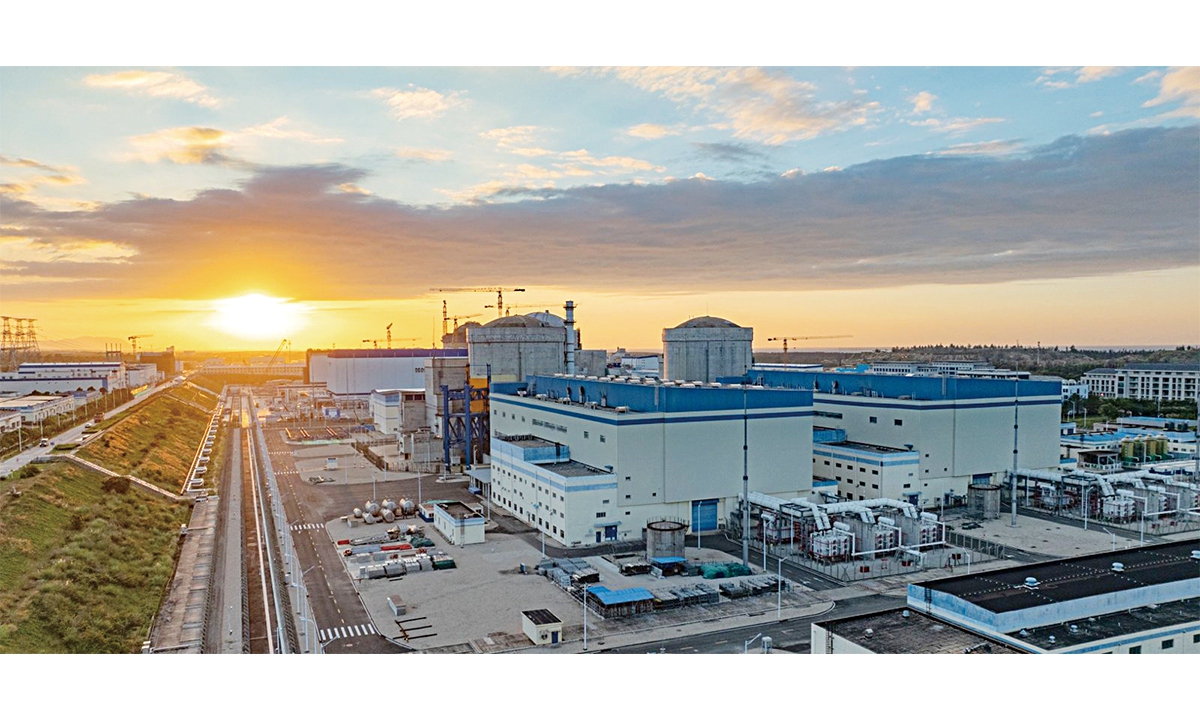
The Changjiang Nuclear Power Base on Hainan's western coast Photos on this page: Courtesy of Hainan Nuclear Power Co
For years, keeping the "lights" on was a challenge for China's Hainan Free Trade Port, an island with a relatively small power grid and a limited mix of energy sources. That has changed significantly over the past decade, with nuclear power emerging as a key source of electricity for the island.On Hainan's western coast, Hainan Nuclear Power Co Ltd is entering a new phase of development. On August 12, 2016, Unit 2 of Hainan Nuclear Power's Phase I project entered commercial operation, marking the full completion of the project. This year marks a decade since Hainan Nuclear Power's Phase I project was fully commissioned. "Before 2015, Hainan faced electricity shortages due to insufficient power generation capacity. Once Hainan Nuclear Power started feeding electricity into the grid, power outages became much less common," said a staff member at Hainan Nuclear Power Co Ltd. Since the nuclear power units were connected to the grid, they have become a cornerstone of energy security for the island.
Hainan Nuclear Power Co Ltd was established in 2008, when a group of nuclear industry workers headed to the island to begin construction on a coastal stretch of undeveloped land. The project faced a range of challenges, including the island's hot and humid climate, frequent typhoons, extreme drought, and logistical constraints.
Over the past decade, Hainan Nuclear Power has played a key role in ensuring electricity supply during peak summer demand and public holidays, responding to typhoons, heavy rain, and other extreme weather events, and supporting major events such as the Boao Forum for Asia and satellite launches at Wenchang.
Now the base brings together several generations of nuclear technology. Its existing fleet consists of two 650-megawatt CNP650 units, two 1,200-megawatt Hualong One reactors and the 125-megawatt Linglong-1 project. The combination of improved second-generation, third-generation and small modular reactor technologies makes Changjiang one of the few nuclear power bases in China with large, medium and small reactor types at a single site.
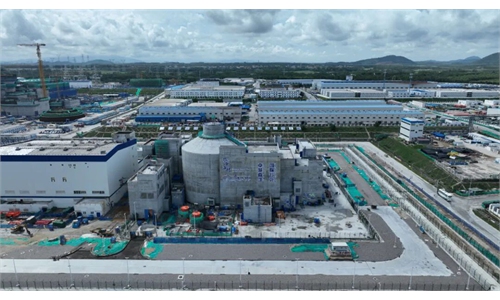
Alongside its two operating reactors and two Hualong One units, the world's first land-based commercial small modular reactor demonstration project, Linglong-1, is under construction.
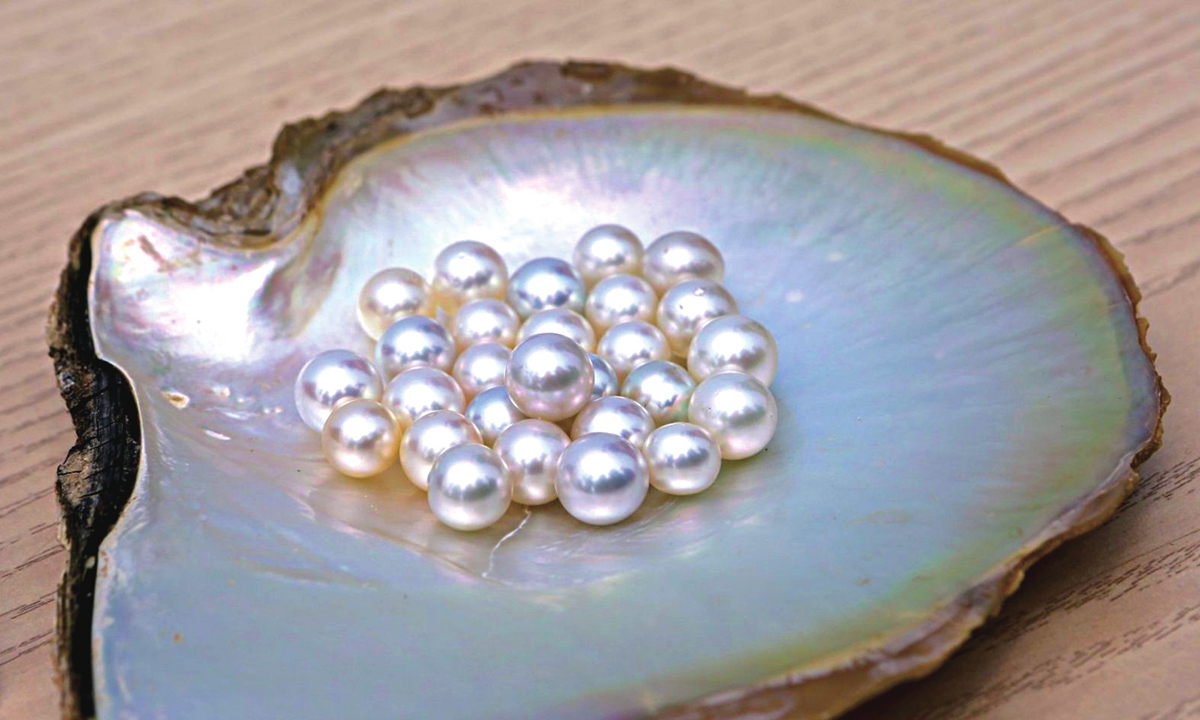
Pearls cultivated from white-winged pearl oysters in the Hainan Nuclear Power Plant area
First of its kindLinglong-1 is the world's first land-based commercial small modular reactor (SMR) to begin construction. It is also the first land-based commercial SMR to pass a safety review by the International Atomic Energy Agency.
Construction began on July 13, 2021. The core module was completed in 2023, followed by the installation of the reactor building's outer dome in 2024. The project has attracted coverage from international media including Reuters and World Nuclear News, which have examined its technological advances and modular construction, as well as its commercial prospects and the challenges of wider deployment.
Developed by the China National Nuclear Corporation (CNNC) using proprietary technology, Linglong-1 is designed to generate 125 megawatts of electricity. Its potential uses extend beyond power generation. The reactor can provide district heating and industrial steam, support seawater desalination and oil extraction, and potentially replace coal-fired combined heat and power units.
Once operational, Linglong-1 is expected to generate around 1 billion kilowatt-hours of electricity annually, enough to meet the needs of approximately 526,000 households. It is also expected to reduce carbon dioxide emissions by about 880,000 tons a year. Southeast Asian countries have expressed interest in SMR technology. In September 2025, around 20 trainees from Thailand visited Hainan Nuclear Power for an SMR training program conducted entirely in English.

A little calf and an egret roam around the Hainan Nuclear Power Plant area.
Tropical coastline challengesBuilding and operating a nuclear power plant on a tropical island brings its own set of challenges. From the start of construction on the Phase I project to Unit 1's commissioning in August 2016, tens of typhoons made influence in Hainan. Strong winds and heavy rain repeatedly disrupted construction, forcing work at height to stop and requiring tower cranes, scaffolding and other temporary structures to be reinforced. Flooding and waterlogging also posed risks to construction sites, buildings and roads.
Even after the units began operation, typhoons continued to test the resilience of the project, but they never dampened the determination of Hainan Nuclear Power's builders. When Super Typhoon Yagi struck Hainan in September 2024, Hainan Nuclear Power activated its emergency response plan and kept more than 500 emergency and operations personnel on site. Teams monitored key equipment around the clock and adjusted reactor output in accordance with grid dispatch instructions, helping maintain electricity supply during the storm and support recovery afterward.
Marine debris presents another operational risk. Typhoons can stir up coastal waters and carry seaweed and floating waste into the plant's intake channels. The debris can clog filters and affect the cooling-water system, which is essential to plant operation.
One particular challenge is Phaeocystis globosa, a marine alga that forms transparent, sticky colonies. These colonies are difficult to remove and can break apart easily during cleanup, making conventional removal methods less effective.
Guan Shouxin of Hainan Nuclear Power's Science and Technology Innovation Department said the team is working to trace the source of blooms, improve early monitoring and warning systems, and refine treatment methods. Red tides have also affected coastal waters in Hainan, causing losses to offshore fish farms.
If validated through engineering trials, the methods could offer a reference for coastal power plants in Guangdong and Hainan provinces as well as Guangxi Zhuang Autonomous Region, Guan told the Global Times.
The base is also exploring ways to make use of nuclear waste heat. One project focuses on silver-lipped pearl oysters, with research teams making progress in artificial mass breeding and high-survival-rate cultivation. Individual oysters have grown to reach 7 to 10 centimeters in shell diameter, while the largest pearls have reached 18 millimeters in diameter, meeting international premium-quality standards. The work has helped fill a gap in domestic cultivation.
Projects focused on the comprehensive utilization and industrial application of nuclear energy are also moving forward, contributing to the development of the Hainan Free Trade Port. These include lithium carbonate production, equipment for producing sodium hypochlorite through hydrogen-free seawater electrolysis, zirconium-hafnium separation and nuclear-grade gloves. The lithium carbonate project has entered full-scale construction, with trial production scheduled for December.
By August, the two Phase I units had generated more than 97 billion kilowatt-hours of electricity. This is equivalent to saving 29.1 million tons of standard coal and avoiding approximately 75 million tons of carbon dioxide emissions.
From helping secure Hainan's electricity supply to advancing small modular reactor technology, the Changjiang base is taking on a broader role in the island's energy development. Its experience also highlights the challenges of operating nuclear facilities in a tropical marine environment, while pointing to new possibilities for nuclear energy in industrial applications and international cooperation.
RELATED ARTICLES