Quad launches Malabar drills off Japan; expert says training fuels regional tensions as Japan risks overestimating own strength
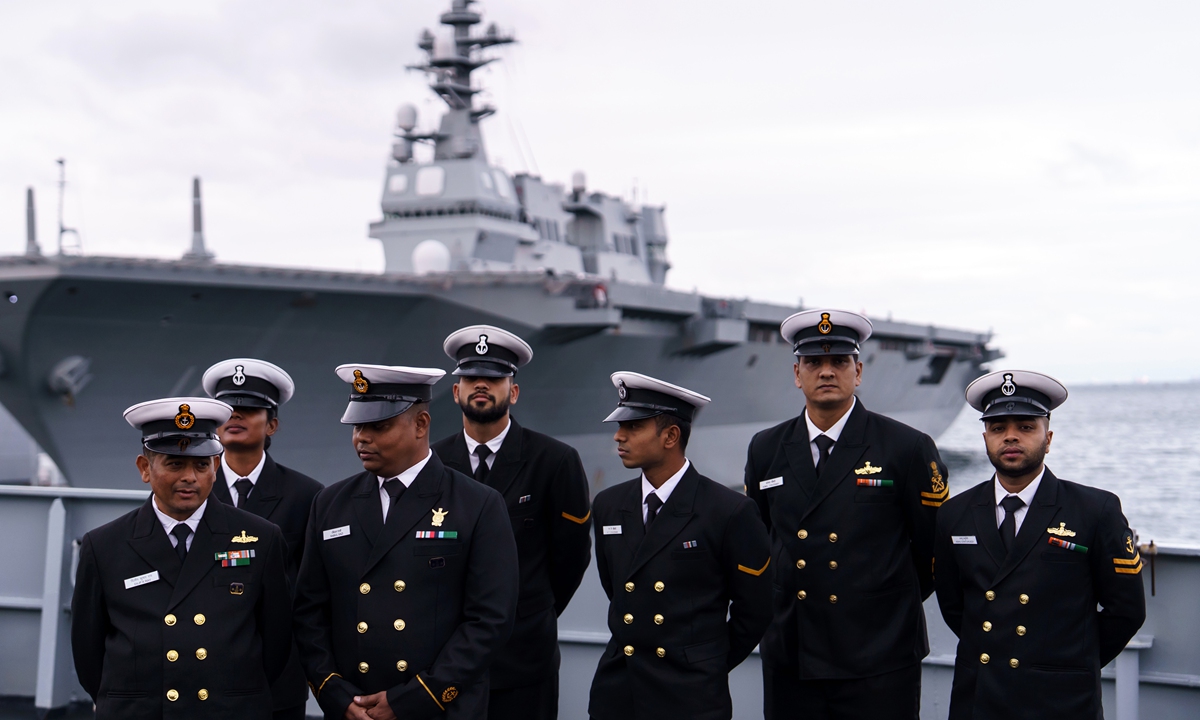
Armed forces officers stand aboard a naval vessel at the Yokosuka base in Japan on November 5, 2026, as the US, Japan, India and Australia launch the Malabar 2026 joint maritime exercise. Photo: VCG
Elements of armed forces from the US, Japan, India and Australia launched the Malabar 2026 maritime exercise on Thursday, with anti-submarine and anti-surface warfare drills scheduled in the Pacific Ocean south of Japan's Kanto region through November 12. Japan's Kyodo News claimed that the exercise aims to strengthen cooperation among the four members of the Quad security grouping with China in mind.
According to the Japan Maritime Self-Defense Force (JMSDF), participating units include Japan's JS Ise and JS Mogami, an attack submarine, and a P-1 maritime patrol aircraft. The US Navy is deploying an amphibious transport dock (LPD) and a P-8A patrol aircraft, while India is represented by the frigate INS Sahyadri. Australia is contributing the frigate HMAS Stuart from its Navy and a Royal Australian Air Force P-8A aircraft. The planned drills include anti-submarine warfare, anti-surface warfare and other tactical exercises.
The JMSDF claimed the exercise was intended to improve its tactical capabilities and strengthen cooperation with the other participating forces, describing the drills as part of efforts to realize a "Free and Open Indo-Pacific."
Song Zhongping, a Chinese military affairs expert, told the Global Times on Friday that anti-submarine warfare appears to be a key focus of the exercise, with the participating countries seeking to enhance their ability to conduct coordinated operations involving aircraft and surface vessels. Although the four countries have not explicitly identified China as a target, the location, participating equipment and training activities suggest that the drills appear to be aimed at Chinese submarine operations, as suggested by Japanese media, Song said.
While such drills could enhance the four countries' joint anti-submarine capabilities, they also provide China with an opportunity to study their tactics and technologies, Song said. Chinese naval elements routinely conduct training beyond the island chains in the western Pacific, and China's military also has the capability to counter potential threats posed by such military activities, he added.
India's Ministry of Defence claimed in a press release on Thursday that the exercise would enhance operational coordination, strengthen interoperability and facilitate exchanges of professional expertise through a series of engagements in harbor and at sea.
Song said it looks like India has different strategic priorities from the other three countries, as its primary focus is on its interests in the Indian Ocean rather than the western Pacific or the South China Sea. By participating in the drills, India seeks to learn from the experience of the US, Japan and Australia and address shortcomings in its own equipment and operational capabilities.
The Malabar drills began as a bilateral naval exercise between India and the US in 1992. Japan joined in 2015, while Australia returned to the exercise in 2020, bringing all four Quad countries into the drills, according to India's Ministry of Defence.
Song warned that the Malabar drills should not be simply viewed as routine military exercises, as their combat-oriented nature would inevitably heighten tensions in the region.
"Japan is seeking to use the multinational drills to deter China, but such an approach risks leading Tokyo into a serious strategic miscalculation by mistaking the combined military capabilities of the participating countries for Japan's own strength," Song noted.
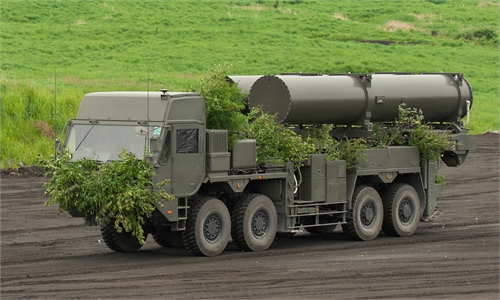
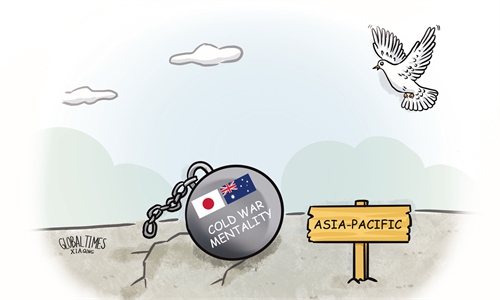
The Asia-Pacific is a high ground for peace and development. Those who follow the prevailing trend of peace can go far, while those who insist on stoking bloc confrontation find no support. Japan has courted and catered to countries outside the region to conduct so-called joint exercises, developed and deployed intermediate and long-range missiles, continuously beefed up military deployment in its southwestern islands, and accelerated remilitarization, becoming a real threat to regional security, Chinese Defense Ministry spokesperson Zhang Xiaogang said at a press conference on October 29.
Chen Xi, another spokesperson for the ministry, on Friday said that Japan's reported plan to promote the defense industry as part of its economic policy is a smokescreen for accelerating its remilitarization. Chen said Japan's right-wing forces were reviving its military-industrial complex, pushing society toward war preparedness and the economy toward militarization, posing systemic risks to the Japanese people and global peace and stability. The spokesperson urged the international community to remain vigilant and prevent Japan from restarting its "war machine" and returning to the path of expansionism.
RELATED ARTICLES