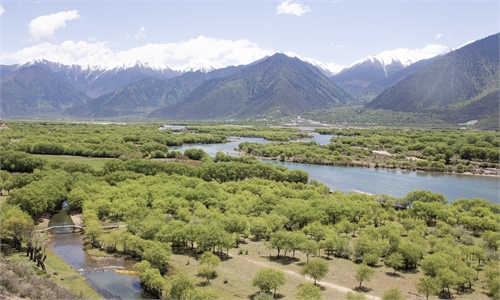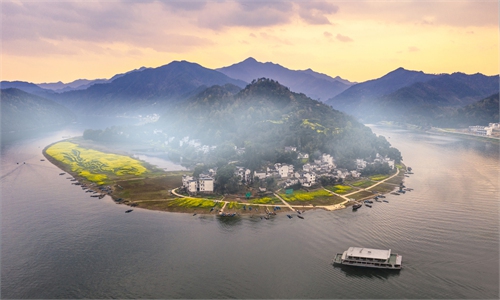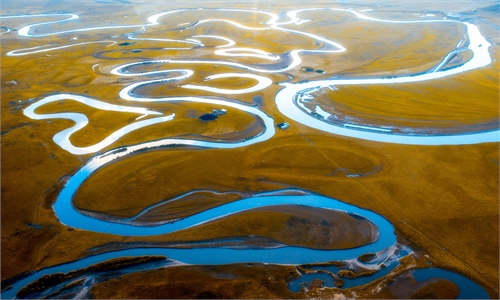
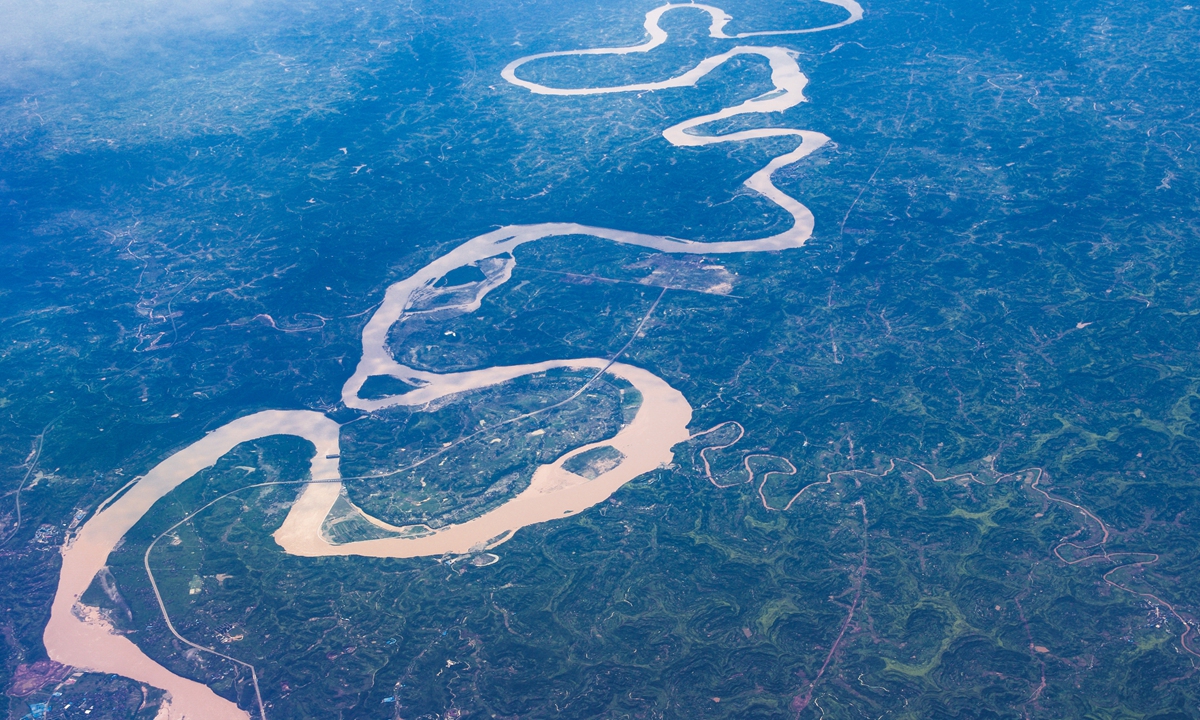
The Yellow River winds through the Jin-Shaan Grand Canyon between North China's Shanxi Province and Northwest China's Shaanxi Province. Photos on this page: VCG, IC
As the weather turns chill, nature paints the Yellow River in vivid colors. Along its winding course, restored wetlands, green hills and golden farmlands form a changing landscape.
In Sanmenxia, Central China's Henan Province, white swans return to spend the winter. Farther downstream, migratory birds gather in the wetlands of the Yellow River Delta in East China's Shandong Province.
From the Qinghai-Xizang Plateau to the Bohai Sea, Yellow River, China's second-longest river, is witnessing an ecological transformation, as environmental restoration and green development reshape both its landscape and the lives of people along its banks.
The changes come as China marks 80 years of Yellow River management. On Monday, the country stressed efforts to continuously improve protection and coordination to make the Yellow River even more beautiful. Solid efforts are called to be made to promote ecological protection and high-quality development in the Yellow River Basin.
The Yellow River flows 5,464 kilometers through nine provinces and autonomous regions, crossing deserts and loess lands, before emptying into the Bohai Sea in Shandong.
For centuries, the Yellow River was notorious for its devastating floods, frequent changes of course and heavy sediment loads. Decades of comprehensive management have significantly changed that picture.
By 2025, the basin's soil and water conservation rate had reached 69.75 percent, with approximately 290,500 square kilometers of soil erosion areas initially brought under control. Additionally, the river's main stream had maintained Class II water quality for four consecutive years, reflecting continued improvements in the basin's ecological environment.
The ecological benefits of a healthy Yellow River are also reaching areas beyond the river basin. At Daihai Lake in Ulaanqab, North China's Inner Mongolia Autonomous Region, an ambitious water diversion project has helped replenish an inland lake that had long suffered from shrinking water levels.
Wei Lei, deputy director of the Daihai Nature Reserve Service Center, told the Global Times during a recent interview that water from the Yellow River, approximately 160 kilometers away, is transported through three pumping stations. The project began supplying water in September 2022.
Alongside ecological water replenishment, local authorities have promoted water-saving agriculture, restored wetland vegetation and reduced pollution. Some farmers have switched to less water-intensive crops, while others have found new income opportunities through tourism and related services.
"Ecological restoration often depends on nature itself. What we can do is minimize human disturbance," Wei said. The changes at Daihai demonstrate how water conservation, ecological restoration and adjustments to local economic activities can work together to improve fragile environments.
In Northwest China's Ningxia Hui Autonomous Region, the eastern foothills of the Helan Mountains offer another example of the economic opportunities created by greener development.
Once dominated by barren land, the area has emerged as one of China's major wine-producing regions, with extensive vineyards replacing stretches of wasteland. The development of the wine industry has also stimulated tourism, hospitality and rural employment.
In Haoyuan village, more than 75 percent of the local workforce is engaged in wine-related activities. Meanwhile, smart irrigation systems, agricultural waste recycling and other technologies are helping wineries improve resource efficiency and reduce their environmental footprint, according to the Xinhua News Agency.
The Yellow River's development also has a digital dimension. The National Supercomputing Center in Jinan, Shandong Province, provides computing power for weather forecasting, climate prediction, industrial simulations and research into new materials and energy.
The center has joined partners in 11 cities across the nine provincial-level regions along the river to establish a Yellow River Basin computing network alliance, enabling computing resources to be connected and shared. These digital "brains" are supporting scientific research and industrial innovation along the river.
At the Yellow River's eastern end, agricultural innovation is breathing new life into saline-alkali land in Dongying, Shandong Province. Scientists and farmers have been developing salt-tolerant crop varieties and improving cultivation techniques to turn previously underused land into productive farmland, local media outlet sd.news.cn reported.
In October, a newly developed corn variety grown on moderately to heavily saline-alkali land produced a yield of 656.24 kilograms per mu (1 mu equals 666.67 square meters), illustrating the potential of agricultural technology to improve productivity while making better use of challenging land resources.
Beyond Dongying's farmland, the waters of the Yellow River also sustain wetlands vital to migratory birds. At the Shandong Yellow River Delta National Nature Reserve, the number of recorded bird species has risen from 187 when the reserve was established to 407. Millions of migratory birds stop here each migration season to rest and feed.
Their arrival is also drawing visitors to the river's mouth. At dawn and dusk, flocks rise above the wetlands in shifting formations known as "bird waves," attracting birdwatchers and photographers from across China. Where the Yellow River completes its journey to the sea, these seasonal gatherings bring wildlife and new activity to its shores.
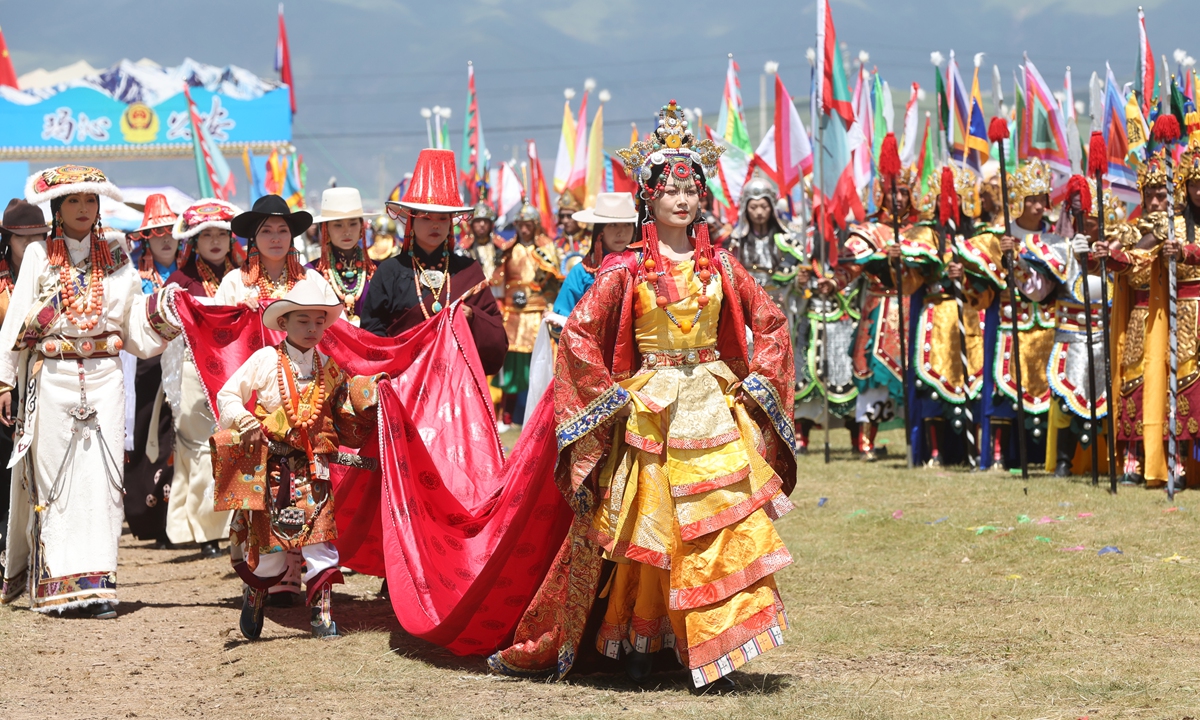
The opening ceremony of the 2026 Gesar Cultural Tourism Festival takes place in the Yellow River headwaters region in Maqin county, Golog Tibetan autonomous prefecture, Northwest China's Qinghai Province, on August 4, 2026.
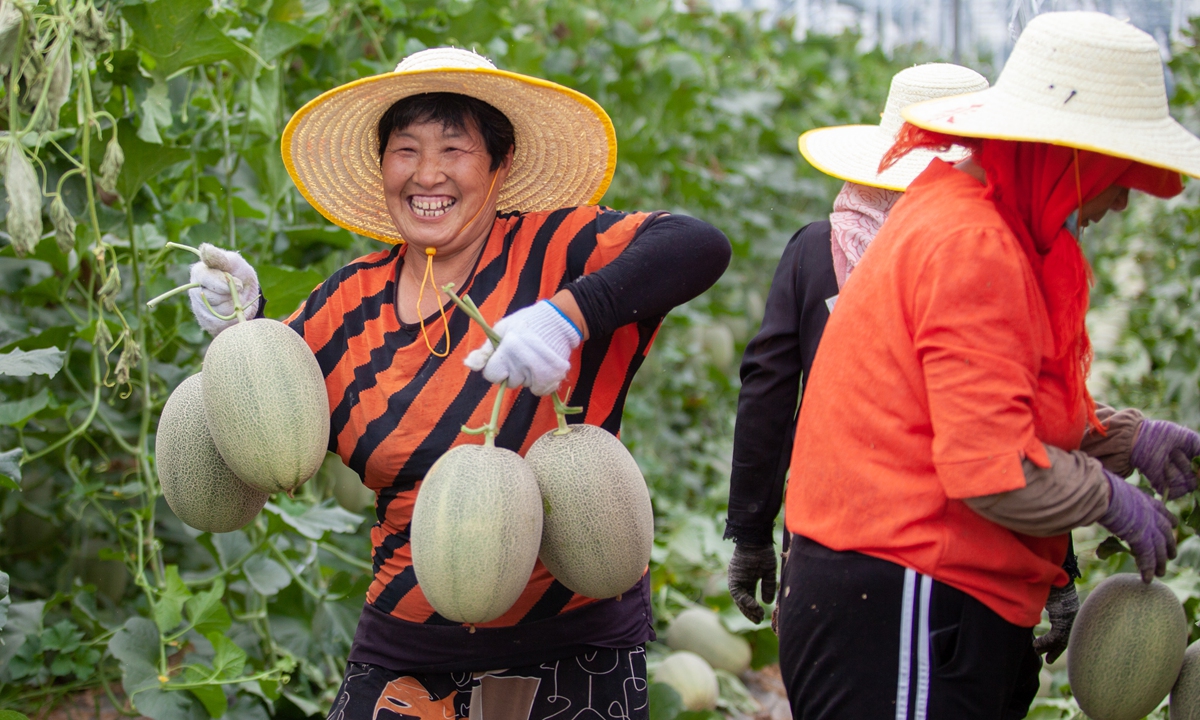
Farmers harvest Hami melons at an agricultural cooperative in Zibo, East China's Shandong Province, on July 6, 2026.

A technician inspects the server room at the Dongying Computing Center in the Dongying High-tech Industrial Development Zone, East China's Shandong Province.
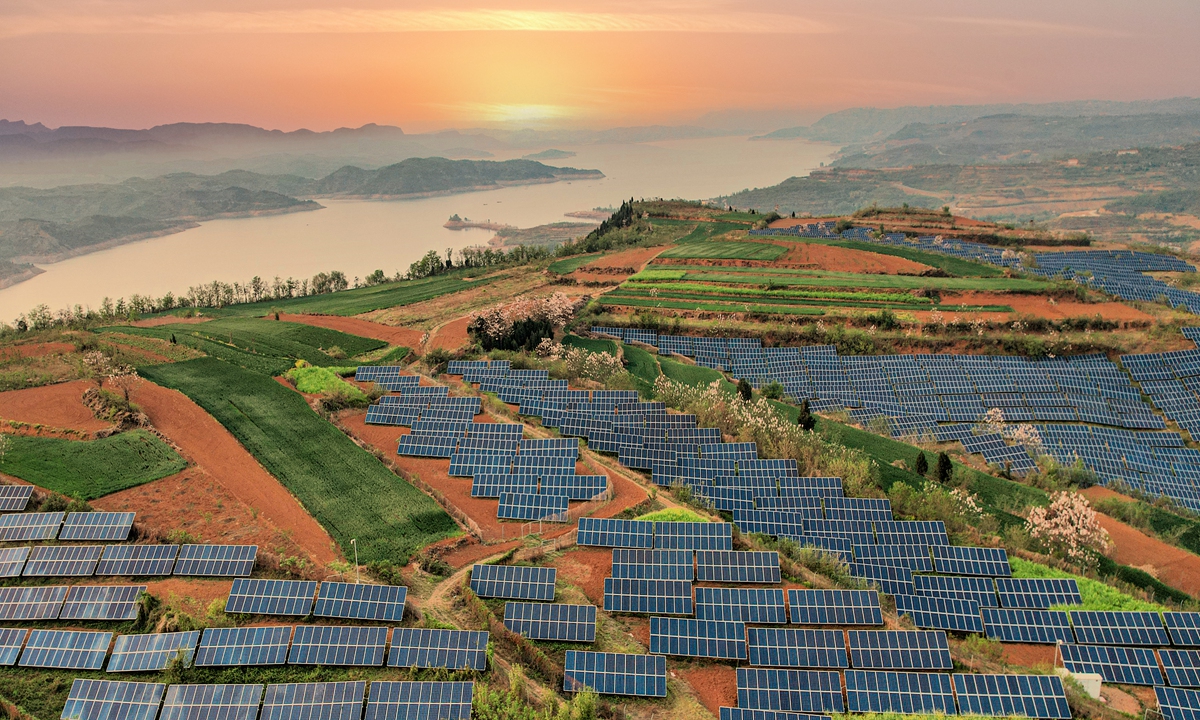
A photovoltaic power base beside the Yellow River glows under the setting sun in Cangtou town, Xin'an county, Luoyang, Central China's Henan Province.
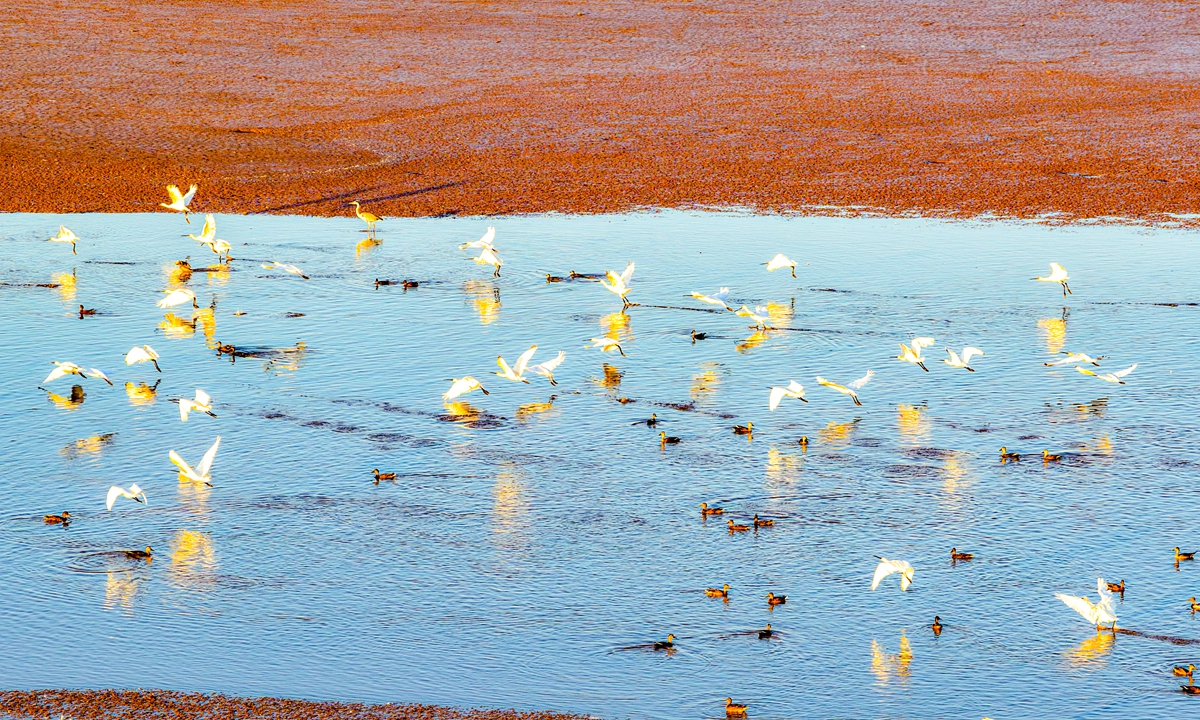
Migratory birds gather on exposed mudflats at Wuhai Lake after sediment flushed along the Yellow River lowers water levels in Wuhai, North China's Inner Mongolia Autonomous Region, on September 23, 2026.
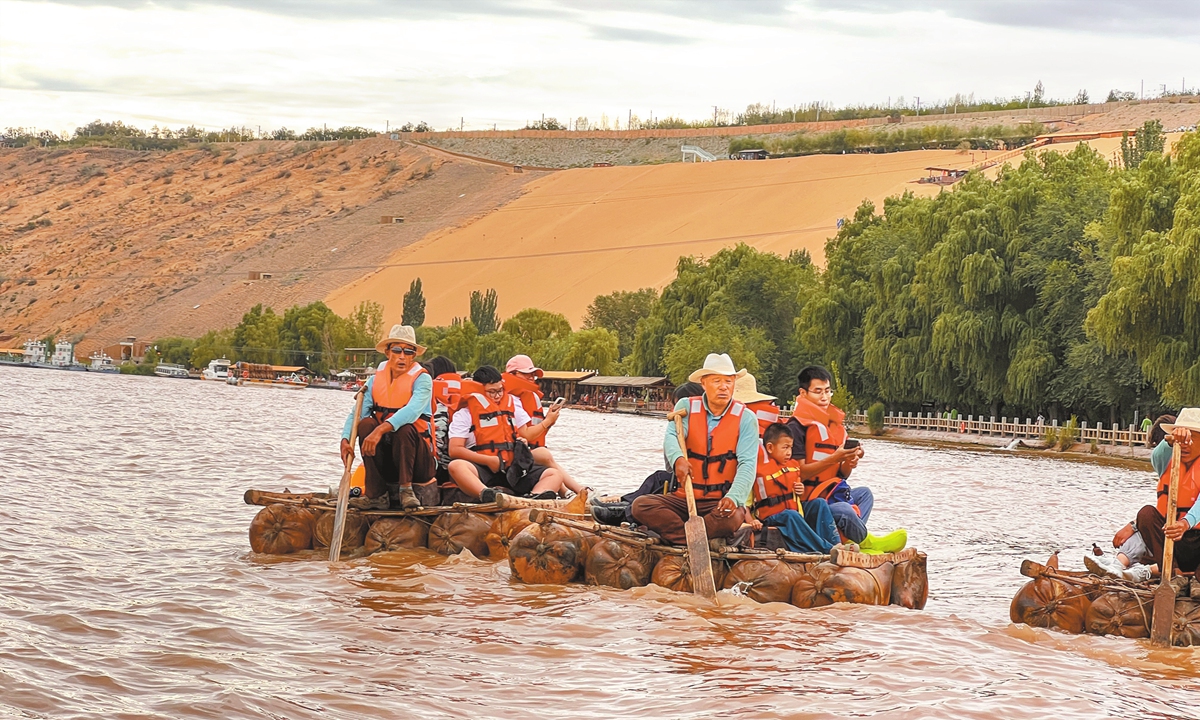
Tourists ride a sheepskin raft on the Yellow River alongside rolling desert dunes in Shapotou, Zhongwei, Northwest China's Ningxia Hui Autonomous Region.