Exclusive: Former Costa Rican president praises Chinese efforts in marine protection
Ideal candidate to host BBNJ secretariat, China moves in direction of ‘responsible economic use of ocean resources’
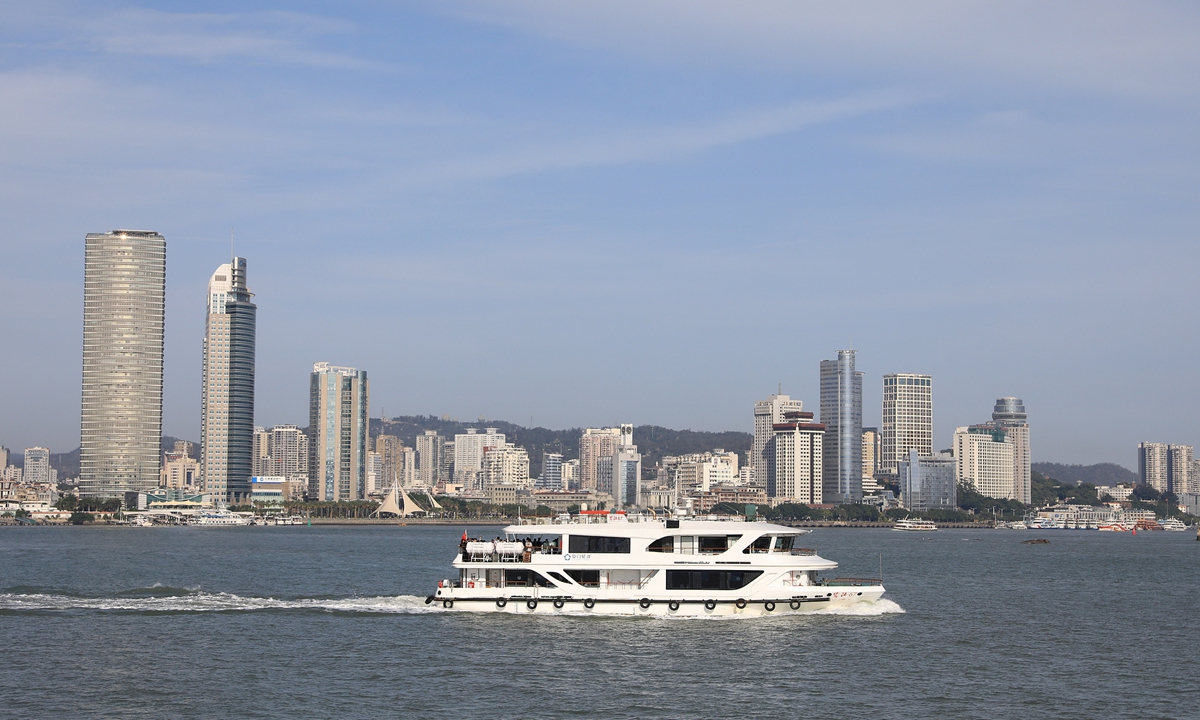
A cruise boat sails against the skyline of Xiamen in East China's Fujian Province. File photo: VCG
China's efforts to advance marine conservation, promote science-based ocean governance and strengthen international cooperation make it an ideal candidate to host the secretariat of the Agreement on the Conservation and Sustainable Use of Marine Biological Diversity of Areas Beyond National Jurisdiction (BBNJ), former Costa Rican president José María Figueres told the Global Times in Xiamen, East China's Fujian Province, during World Ocean Week.
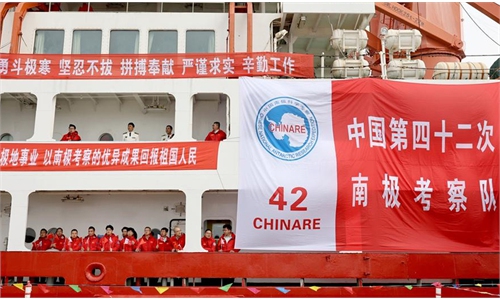
Explaining his assessment, he cited China's efforts to advance an environmental and ecological code, its role in the adoption of the Kunming-Montreal Global Biodiversity Framework, its proposal for a Marine Protected Area (MPA) in Antarctica and its efforts to establish dedicated legislation on Antarctic affairs.
Figueres said these efforts demonstrate China's leadership in environmental protection, particularly in safeguarding the ocean and its biodiversity.
China's move to elevate ecological and environmental issues to the level of a code reflects the importance it attaches to environmental protection and biodiversity, he said. He also highlighted the Global Biodiversity Framework, under which countries agreed to conserve 30 percent of the world's land and 30 percent of its oceans by 2030.
"I think that is a very practical and very good example of Chinese leadership working with the international community," Figueres said.
Before having arrived in Xiamen, Figueres attended a meeting of the Commission for the Conservation of Antarctic Marine Living Resources (CCAMLR) in Australia, which he described as a 27-member body whose decisions are made by consensus. He said China had put forward "an important suggestion" to establish a new MPA around the Cosmonauts Sea in East Antarctica, adding that participating countries were "very surprised, positively surprised" by China's proposal and its efforts to secure support for it.
"China is moving along in that direction of greater protection based on science, and also based on a responsible economic use of the resources that the ocean has," Figueres said.
Figueres also noted China's efforts to develop legislation specifically addressing Antarctic affairs. Chinese lawmakers voted on Friday to adopt the Law on Antarctic Activities and Environmental Protection, which will take effect on January 1, 2027. Figueres said that, to his knowledge, no other country had legislation specifically addressing Antarctica.
The law has seven chapters, covering general provisions, Antarctic activity permits, Antarctic environmental protection, inspection, observation and examination, safeguards and supervision, legal liabilities, and supplementary provisions, the Xinhua News Agency reported on Friday.
The law strengthens oversight of Antarctic expeditions, requiring permits and environmental impact assessments for activities such as expeditions, tourism and shipping. It also obliges participants to protect local wildlife, properly dispose of waste and prevent marine pollution, while setting penalties for violations.
Beyond China's international initiatives, Figueres also praised Xiamen as an example of how coastal development can be balanced with marine biodiversity protection. He said the improvement in the waters of Xiamen Bay reflected the results of long-term planning, consistent policy implementation and clearly defined conservation goals.

Former Costa Rican president José María Figueres Photo: Shen Sheng/Global Times
RELATED ARTICLES