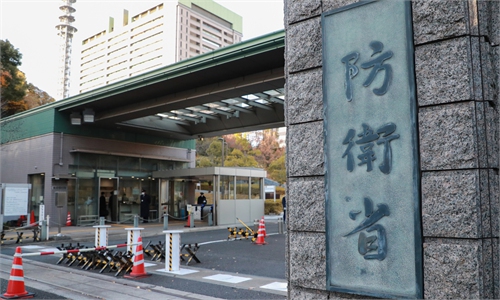
Manila becomes a testing ground for Japan to break though postwar defense constraints
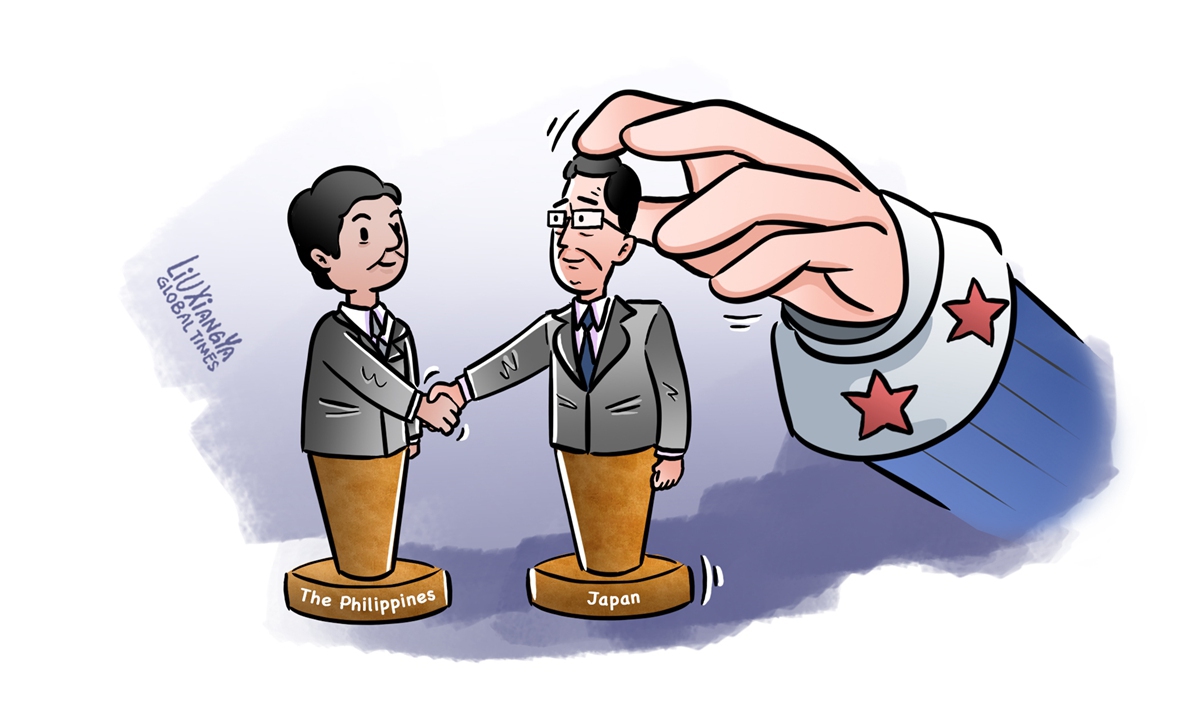
Japan, the Philippines Illustration: Liu Xiangya/GT
The Philippines has emerged as the latest testing ground for Japan's attempts to extend its military network overseas under the guise of "security aid."
According to Japanese and Philippine media reports, Japan on Monday agreed to provide radar systems to the Philippine Navy and surveillance and reconnaissance drones to its air force, which is worth 4.3 billion yen ($27.2 million), representing Japan's largest Official Security Assistance (OSA) grant to date.
Jiji Press reported that this marks the first transfer of a complete defense equipment system under the framework. Previously, assistance was limited to dual-use products and parts. It is also reported that Tokyo is considering replicating this practice to other countries. From dual-use components to complete defense systems, the boundaries governing Japan's overseas transfers of military equipment are being pushed back.
Wang Qiang, a Chinese military expert, noted that Japan's provision of radar systems and drones to the Philippines is a significant departure from its "exclusively defense-oriented" policy, potentially paving the way for the future transfer of lethal weapons. This is not an isolated assistance project, but part of Japan's broader efforts to break through its postwar defense constraints and expand its military capabilities.
In recent years, Japan has accelerated the development of offensive weapons and revised limits on defense equipment exports, while loudly advocating for the building of bilateral and multilateral security networks with so-called "like-minded countries." By leveraging the US alliance network in the Asia-pacific region, Japan seeks to rally partners, strengthen military coordination, elevate its position in the regional security architecture and extend its military influence. The Philippines, both a US treaty ally and a long-standing economic partner of Japan, has naturally become an ideal foothold for this strategy.
As part of Tokyo's broader strategic push, defense cooperation between Japan and the Philippines is deepening. The two countries have reportedly agreed to begin talks on a deal that would allow Tokyo to provide used destroyers to Manila's navy. What is presented as security cooperation is increasingly becoming a convenient channel for Japan to loosen its postwar military constraints and re-establish an overseas military presence.
The greater concern lies in the wider military network Japan is seeking to build through these equipment provisions. Wang noted that Japan occupies a key position at the northern end of the First Island Chain, while the Philippines is an important strategic foothold at its southern end. By supplying radar systems and drones, Japan is helping the Philippines strengthen its maritime and aerial surveillance and intelligence-gathering capabilities, while facilitating the integration of relevant information into Japan's and potentially the US military's intelligence networks in the western Pacific. This could potentially strengthen surveillance of Chinese naval and air activities. In other words, Japan is not simply supplying a few pieces of equipment; it is using partner countries to construct a more targeted regional military cooperation network. The expansion of this military network is hardly a recipe for greater regional security.
Japan repeatedly claims to be safeguarding regional peace, yet its actions involve drawing countries into closer military alignment and introducing new variables into an already sensitive security environment. What gives a country that continues to export military equipment and build military networks the right to present itself as a guardian of regional stability?
Lü Chao, a Chinese expert on Northeast Asian affairs at the Liaoning Academy of Social Sciences, told the Global Times that Japan used Official Development Assistance (ODA) to support the economic and social development of neighboring developing countries in the past. Today, however, Japan is increasingly using OSA to export defense equipment overseas.
The name on the aid package has changed, but the logic of Japan's military expansion is becoming increasingly apparent. Established in 2023, OSA provides a new vehicle for Japan to give its militarist legacy a fresh overseas foothold under the guise of security cooperation, pushing the Asia-Pacific further toward military tensions.
Today's "first" could soon become tomorrow's precedent. If Japan's defense transfers begin with radar systems and drones, what might come next under the guise of "security assistance"? When a country repeatedly repackages the dismantling of its postwar constraints as "policy innovation" and dresses up military expansion as a contribution to regional stability, the international community has little reason to continue giving it the benefit of the doubt.
RELATED ARTICLES