Chinese foreign ministry spokesperson Mao Ning
China's Foreign Ministry on Thursday criticized a joint bid by Belgium and Chile to host the secretariat of the Biodiversity Beyond National Jurisdiction (BBNJ) Agreement, saying the proposal fails to meet at least six requirements, including treaty provisions, procedural fairness, and international practice. The Foreign Ministry spokesperson stressed that China, as one of the agreement's first signatories and parties and its largest financial contributor, has the willingness, capability and confidence to provide strong support for the secretariat's operations.
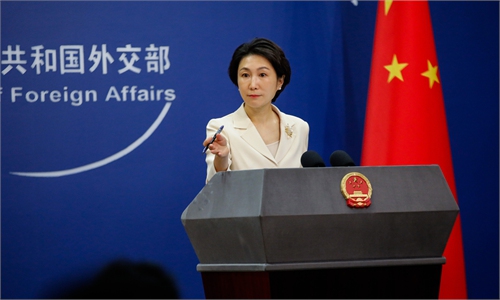
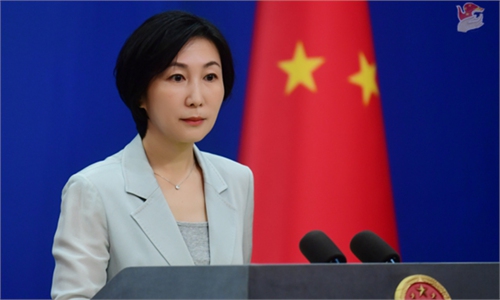
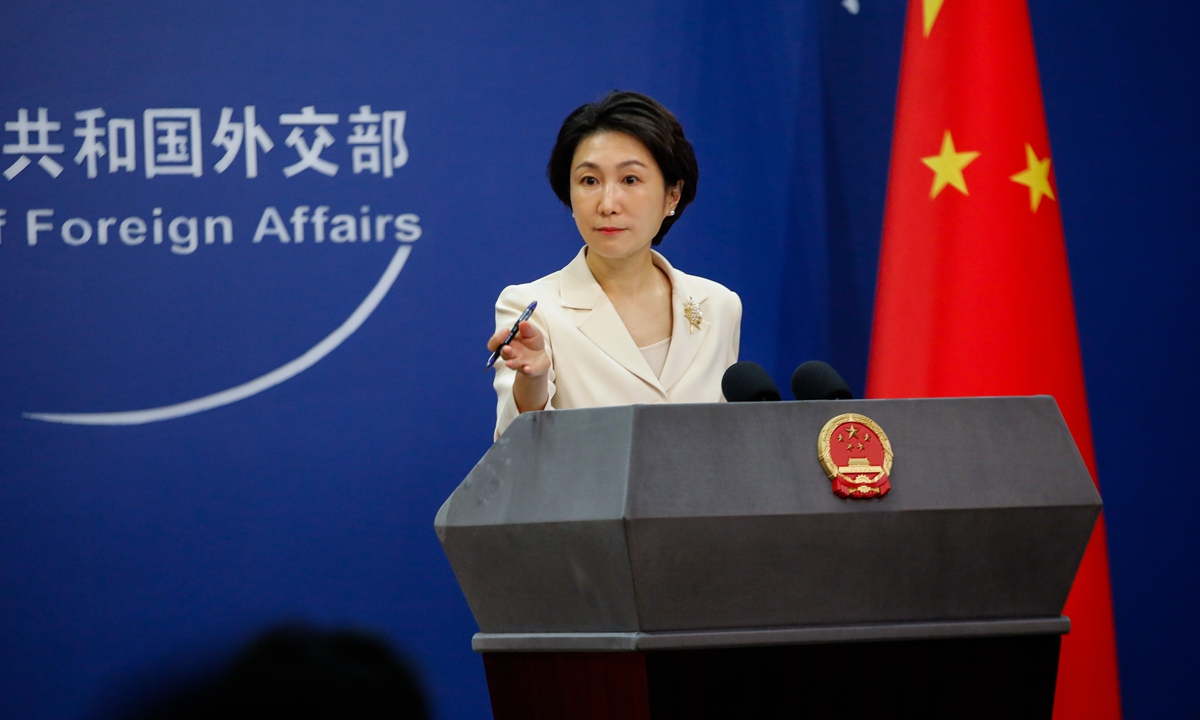
The remarks were made by FM spokesperson Mao Ning at a regular press briefing on Thursday, in response to a question about Belgium and Chile's November 6 announcement of a joint bid to host the BBNJ Agreement secretariat. Under the proposal, the secretariat would be based in Valparaiso, Chile, while its Clearing-House Mechanism would be located in Brussels, Belgium, which would also host meetings of the agreement's subsidiary bodies.
Since the beginning of this year, China has nominated Xiamen, East China's Fujian Province, as a candidate city to host the BBNJ Agreement secretariat, winning support from a majority of the agreement's parties within a short period, Mao said.
On November 6, Belgium and Chile announced their joint bid without consulting the broader membership of the agreement, publicly proposing that the secretariat be based in Valparaiso, the Clearing-House Mechanism in Brussels, and meetings of the subsidiary bodies also be held in Brussels, Mao said.
The move seeks to unilaterally decide matters that should fall under the authority of the Conference of the Parties (COP), and fails to meet at least six requirements, Mao said.
First, the proposal is inconsistent with the provisions of the agreement, Mao said. Under the agreement, decisions on the location of the secretariat, the specific arrangements for establishing and operating the Clearing-House Mechanism, and the venues for meetings of subsidiary bodies must all be made by the COP. The Clearing-House Mechanism must also be managed by the secretariat. By privately striking a deal on matters that should be collectively decided by the parties, Belgium and Chile have violated the agreement's provisions and shown disrespect for the authority of the COP, Mao said.
Second, the proposal is inconsistent with procedural fairness. The selection of the secretariat's location and the establishment of the Clearing-House Mechanism are two distinct issues that should be decided separately and collectively by the COP. By bundling the two issues together, Belgium and Chile are attempting to force countries to accept them as a package, violating established procedural rules and effectively "holding the parties hostage," Mao said.
Third, the proposal is inconsistent with international practice. Managing the Clearing-House Mechanism is an important responsibility of the BBNJ Agreement secretariat. In practice, under international treaties such as the Convention on Biological Diversity, secretariats and their clearing-house mechanisms are located in the same place. Separating the BBNJ Agreement secretariat and its Clearing-House Mechanism across the Atlantic, as proposed by Belgium and Chile, would undoubtedly increase operating costs, undermine management efficiency and impose additional financial burdens on the parties, Mao said.
Fourth, the proposal is inconsistent with geographical balance. For a long time, the vast majority of major international institutions have been based in Europe, with none located in Asia, Mao said. Developing countries have long called for correcting historical injustices in the distribution of international institutions to make it fairer and more equitable. Establishing the agreement's Clearing-House Mechanism in Brussels, a landlocked city that already hosts the headquarters of NATO and the European Union, would further widen the digital divide facing developing countries and run counter to the common interests of the Global South, Mao said.
Fifth, the proposal is inconsistent with fair competition. The mission of the BBNJ Agreement secretariat is to contribute to global ocean governance, and the competition to host it should be conducted fairly and amicably, in the spirit of friendly competition. However, the Belgium-Chile proposal has politicized the bidding process and turned it into a contest between political blocs, undermining the principles of fair, friendly and healthy competition and running counter to the very essence of multilateralism, Mao said.
Sixth, the proposal is inconsistent with the original commitments and intentions of the two countries. Chile originally sought to host the secretariat on behalf of the Global South, but under the new arrangement, it would no longer undertake the secretariat's substantive functions. Belgium, meanwhile, is seeking only to control the Clearing-House Mechanism, effectively abandoning its bid to host the secretariat itself, Mao said.
Mao stressed that the adoption and entry into force of the BBNJ Agreement represent a victory for multilateralism, and that its implementation should serve and advance the common well-being of all humanity.
"We call on the international community to choose a location for the secretariat that is truly most conducive to its efficient operation and the effective implementation of the agreement," Mao said.
China firmly supports multilateralism and the cause of the United Nations, and remains committed to improving global ocean governance, Mao said.
"As one of the first signatories and parties to the agreement, and its largest financial contributor, China has the willingness, capability and confidence to provide strong support and safeguards for the operation of the secretariat. We have made full preparations," Mao said.
China looks forward to working with all parties to steer the selection of the secretariat's location in the right direction and safeguard the overall and fundamental interests of the international community, particularly developing countries, Mao added.
Global Times