ARTS / CULTURE & LEISURE
Nearly 1,400 cultural relics from National Museum of China go on display in Shenzhen ahead of APEC
Where China's past meets its future
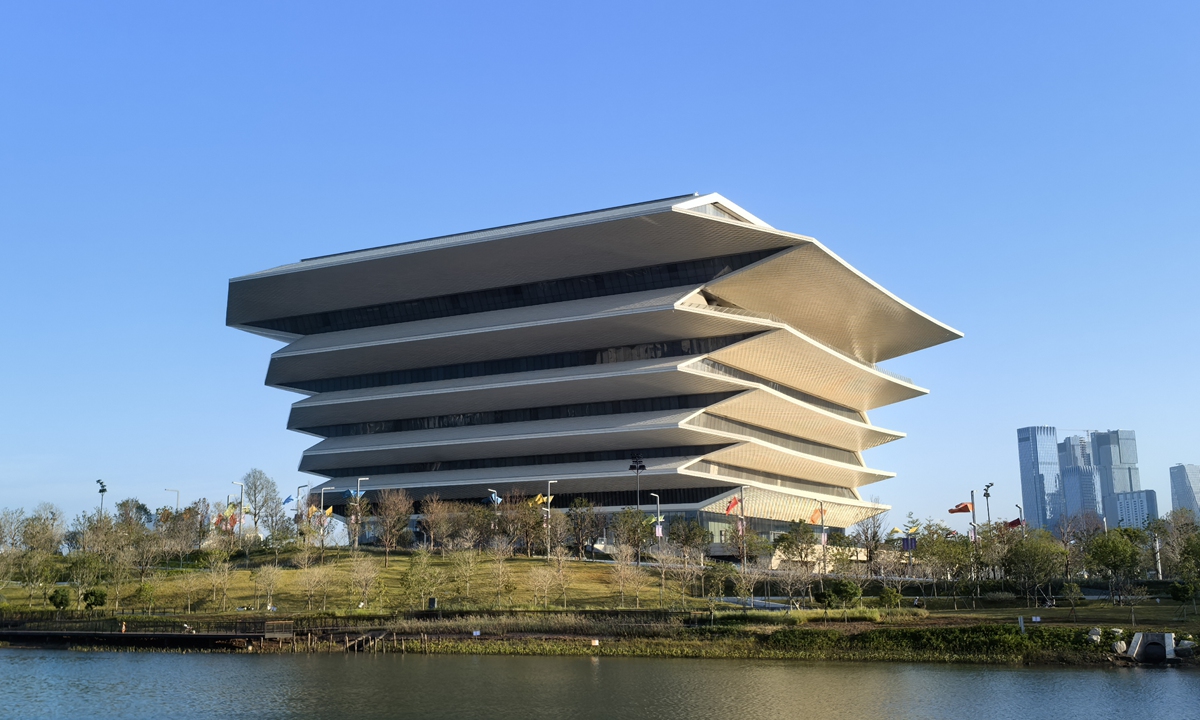
The Qianhai Museum in Shenzhen Photos on the page: VCG
As Shenzhen in South China's Guangdong Province prepares to host the 33rd APEC Economic Leaders' Meeting, its newly opened Qianhai Museum is offering visitors from home and abroad a window into China's rich cultural heritage and contemporary achievements, while providing a platform for international cultural exchange.Jointly established by the Shenzhen Municipal People's Government and the National Museum of China (NMC), the Qianhai Museum is a new branch of the Shenzhen Museum. It opened with four major exhibitions, featuring nearly 1,400 cultural relics from the NMC that are being displayed in the Guangdong-Hong Kong-Macao Greater Bay Area for the first time, Zhang Qingyun, a publicity officer at the Shenzhen Museum, told the Global Times.
Designed to be a comprehensive, open, smart and international museum, the institution aims to become a new cultural landmark in the Guangdong-Hong Kong-Macao Greater Bay Area and a hub for international cultural exchange, Zhang noted.
Through exhibitions, research, public education, digital innovation and international exchange, it seeks to bridge China's cultural traditions with contemporary life, showcase the Greater Bay Area's shared cultural heritage and development, and foster dialogue and mutual understanding among different civilizations, she said.
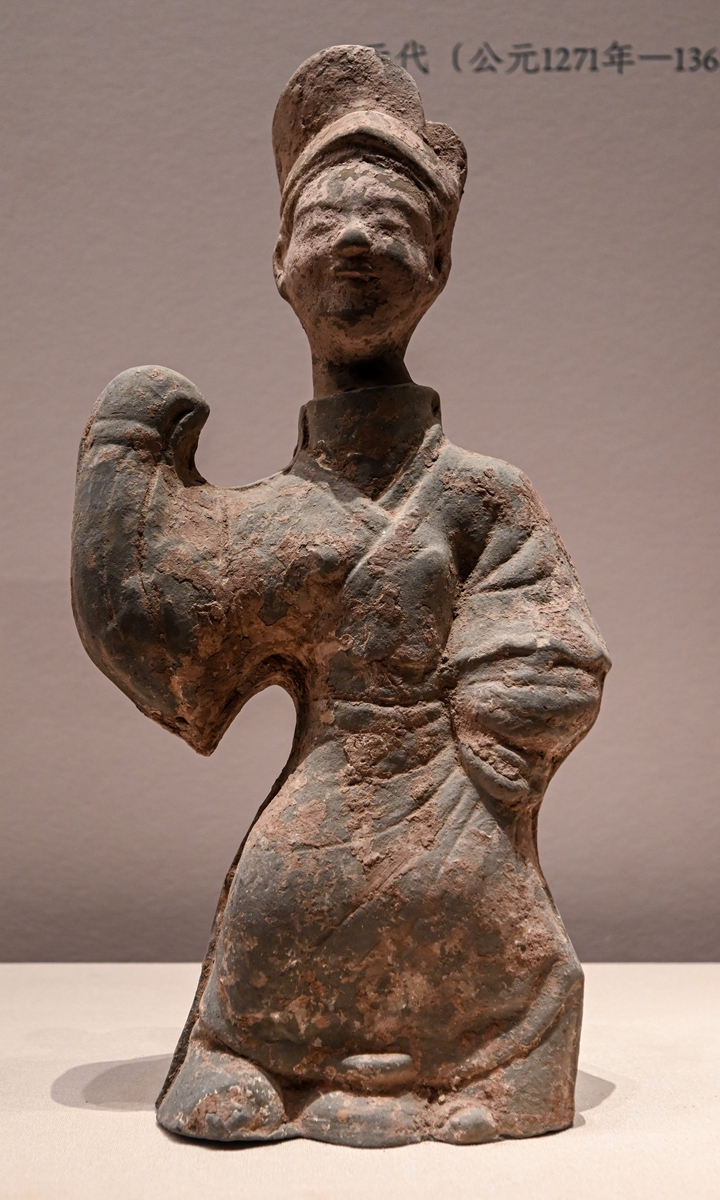
A pottery dancing figurine Photos on the page: VCG
Liu Lei, director of the Culture, Media, Tourism and Sports Bureau of Shenzhen Municipality, told reporters at an earlier media briefing that through cultural heritage, we seek to connect the Asia-Pacific; through culture, we embrace the world.We believe this beacon of our times, which bridges history and the future and brings together mountains, seas and humanity, will shine even brighter by seizing the significant opportunities for international exchange presented by the APEC meeting, Liu said.
China will host the 33rd APEC Economic Leaders' Meeting on November 18 and 19 in Shenzhen. It marks the country's third time hosting of the event following Shanghai in 2001 and Beijing in 2014. The theme of this year's summit is "Building an Asia-Pacific Community to Prosper Together," while China has identified openness, innovation and cooperation as the three priority areas for this year's APEC cooperation, according to the Xinhua News Agency.
Shenzhen was one of China's first special economic zones and has evolved over the past four decades into a global hub for innovation and advanced manufacturing. It is home to tech heavyweights such as Huawei, BYD, and UBTECH, along with a vibrant community of startups spanning sectors from AI to new energy.
A growing tree
With a total floor area of 126,000 square meters, the Qianhai Museum draws inspiration from the traditional Chinese architectural style of multi-tiered, sweeping eaves, reinterpreting them through a series of layered, gently extending rooflines that evoke the image of a growing tree, Zhang said. At night, the illuminated building resembles a coastal beacon, set between the mountains and the sea. Its outdoor terrace also provides visitors with a public space to relax, read a book or simply take in panoramic views of Qianhai Bay.
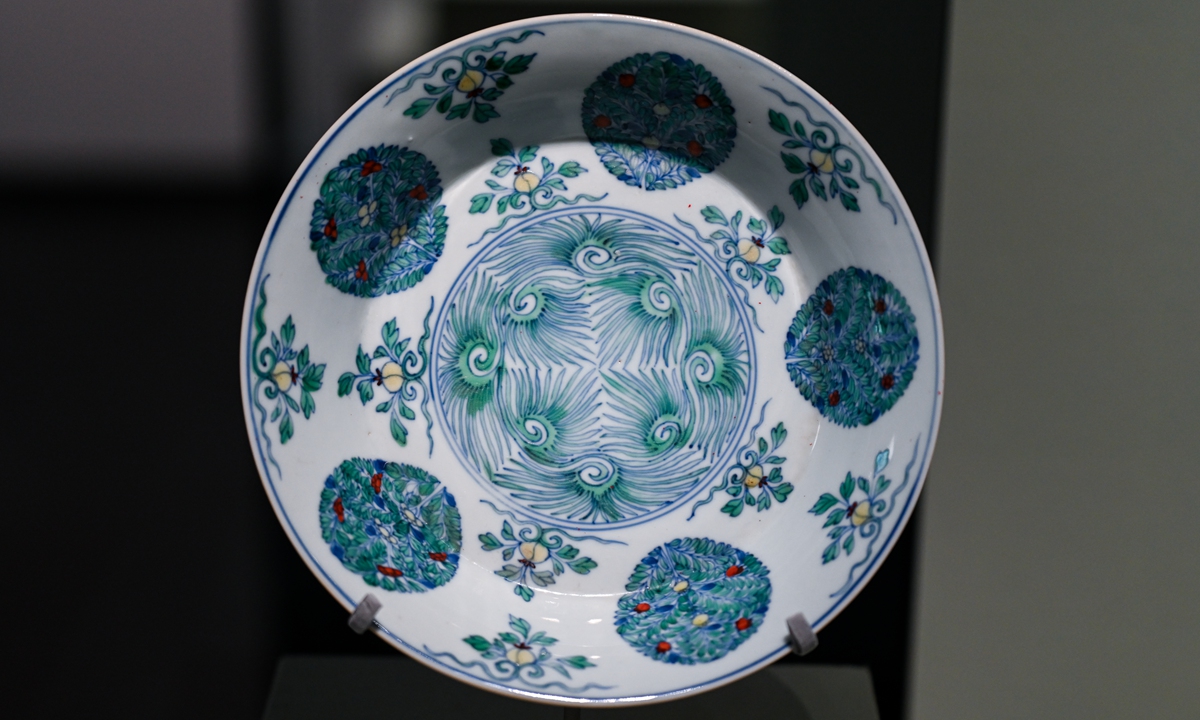
Cultural relics on display at the Qianhai Museum Photos on the page: VCG
The four ongoing exhibitions include a brief history of ancient China, ancient Chinese porcelain, ancient Chinese jade and a digital show on Chinese civilization.Over 100 national first-grade artifacts from the NMC have made their debut in Shenzhen, including 10 of the museum's best-known treasures, such as gilt-silver cockscomb-shaped ewer with deer design from the Liao Dynasty (916-1125). It also marks the first time since 1949 that national-level museum collections have been sent outside Beijing for a large-scale touring exhibition.
Huang Chen, director of the Shenzhen Museum, said that the large-scale touring exhibition at the Qianhai Museum is closely tied to the latter's mission and the historical role of the Qianhai Shenzhen-Hong Kong Modern Service Industry Cooperation Zone. The Qianhai Museum is dedicated to promoting Chinese civilization across the Greater Bay Area and the Asia-Pacific region. The Qianhai cooperation zone serves as a national-level strategic platform rooted in the Greater Bay Area, with a reach spanning the Asia-Pacific and the wider world, Huang noted.
Such exhibitions also help bring high-quality cultural resources closer to the public and make cultural heritage more accessible, carrying forward China's millennia-old cultural traditions while enabling the world to gain a better understanding of China, Huang said.
Enrich cultural identity
The opening of the Qianhai Museum coincides with the 27th Shenzhen Reading Month and the 6th Guangdong-Hong Kong-Macao Greater Bay Area Culture and Arts Festival, together creating a vibrant cultural atmosphere as Shenzhen prepares to host the APEC meeting.
Yu Jinlong, a Beijing-based cultural scholar, told the Global Times that these events offer a glimpse into the cultural spirit that defines Shenzhen: open and inclusive, rooted in tradition yet constantly looking toward the future. Long known for its economic dynamism and pioneering spirit, Shenzhen is also working to enrich its cultural identity by bringing China's millennia-old civilization into dialogue with contemporary life and creating new ways for the public to engage with culture. Its cultural initiatives also reflect a broader vision that extends beyond the city itself, connecting Shenzhen with the Greater Bay Area and the wider world, Yu said.
As the city prepares to welcome the APEC meeting, these efforts demonstrate how Shenzhen is turning an international gathering into an opportunity for cultural exchange and dialogue, while also taking on the role of telling the stories of Shenzhen, the Greater Bay Area and China, he said.
The efforts reflect a city confident in its cultural roots, ambitious in its global outlook and determined to grow in step with the country's development, he added.
RELATED ARTICLES