ARTS / CULTURE & LEISURE
China Great Wall Museum reopens, conveys wisdom of Chinese and collective strength
Integrating architecture with the landscape
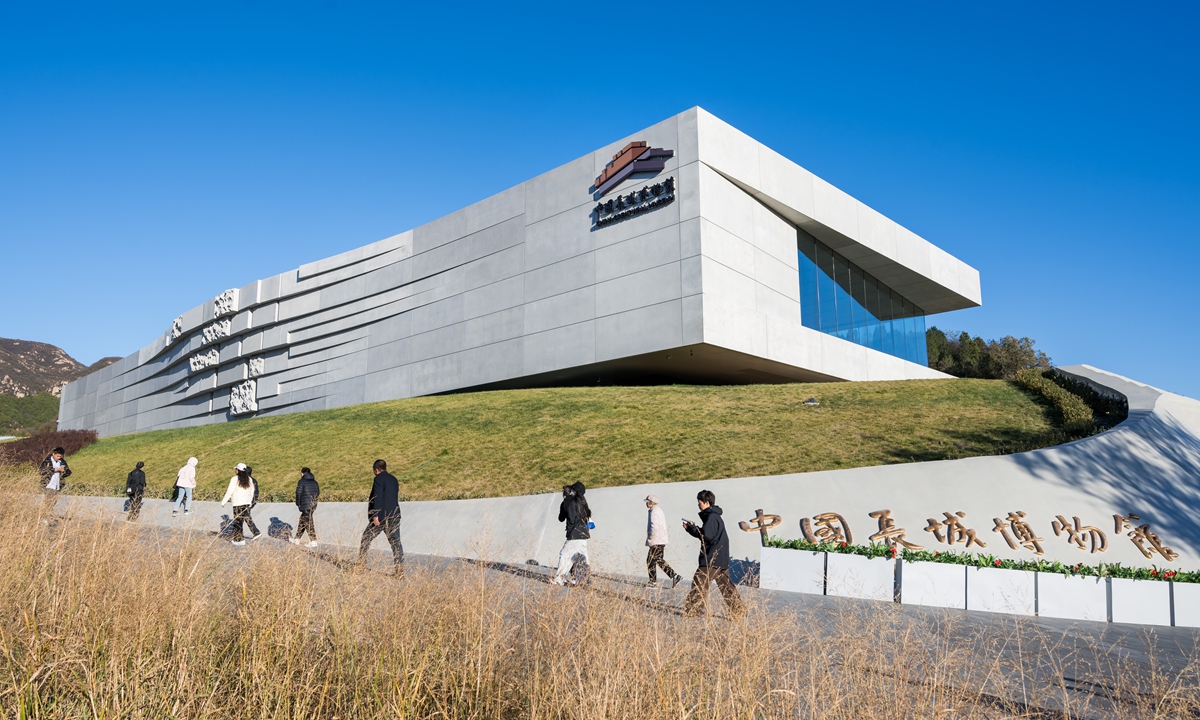
Visitors walk outside the China Great Wall Museum on October 24, 2026. Photos on this page: Chen Tao/Global Times
After more than three years of renovation and upgrades, the China Great Wall Museum (CGWM) officially reopened on Saturday at the foot of the Badaling section of the Great Wall in Beijing's Yanqing district.Nestled next to the Badaling Railway Station, the revamped museum features an exterior design inspired by iconic elements of the Great Wall, including its ramparts and mountain ridgelines, making it appear as a natural extension of the surrounding landscape.
Li Yinong, chief architect of the new museum, told the Global Times on Wednesday that the museum serves both as a guardian of the Great Wall and as a showcase of contemporary Chinese construction technology.
Through an unobtrusive design approach, its exterior walls blend seamlessly with the mountain retaining walls, creating a harmonious integration with the natural landscape and a dialogue with the Great Wall itself, noted Li. Viewed from a nearby watchtower along the Great Wall, the two-floor building appears to recede into the mountains, quietly safeguarding the historic monument while preserving the surrounding environment, she said.
The original museum opened in 1994 and was closed for renovation in April 2022. The Great Wall was built over more than two millennia, from the Spring and Autumn Period (770 BC-476 BC) to the Ming Dynasty (1368-1644). Today, surviving sections total more than 21,000 kilometers, spanning across 15-provincial-level regions. In 1987, it was designated a UNESCO World Heritage Site.
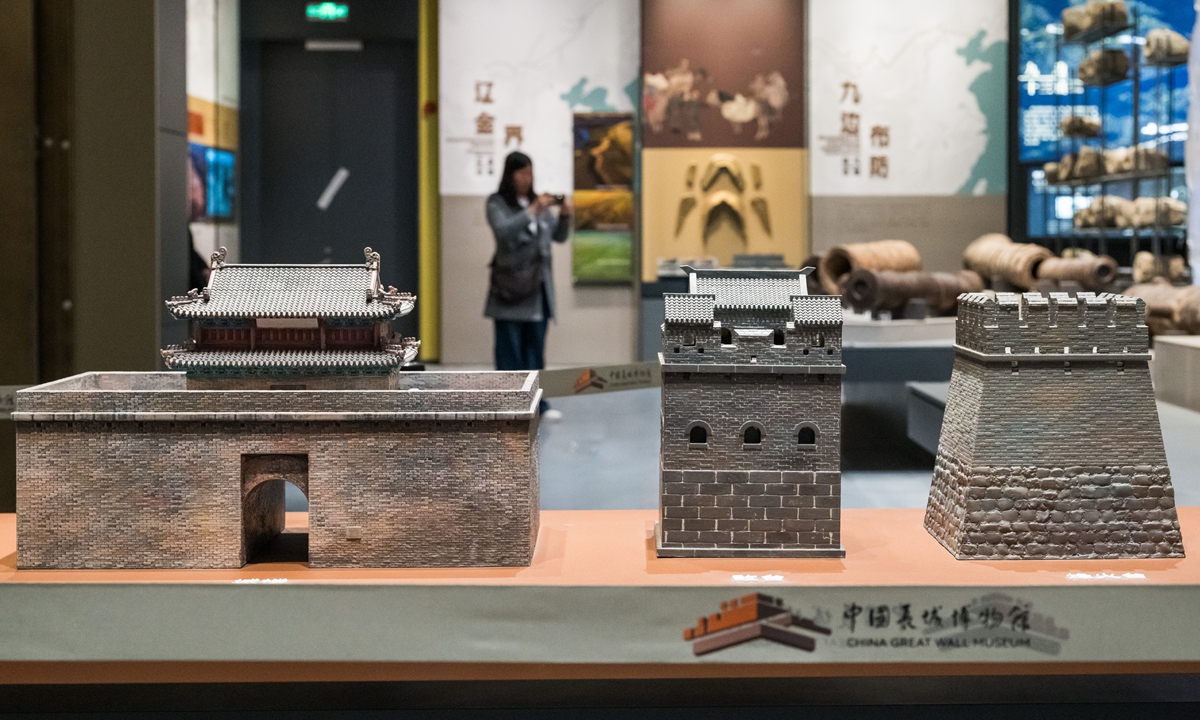
From left: Models of a Great Wall gate tower, watchtower and beacon tower on display Photos on this page: Chen Tao/Global Times
Stories of conservationCovering an area of 16,000 square meters, the new museum has a total floor area of about four times that of the original, while its height has been reduced from 16 meters to 9 meters. The renovation has created more exhibition space while minimizing the building's visual presence, embodying the utmost respect for the Great Wall.
Zhang Wenyong, exhibition curator of the CGWM, told the Global Times that the museum's three main exhibition halls explore the history of the Great Wall's construction, its role in connecting peoples of different ethnic groups, and the stories of its protection and inheritance.
The museum displays over 700 cultural relics and artifacts, including 10 classified as national first-grade cultural relics. Through these collections, it tells the story of how the Great Wall became an important symbol of Chinese civilization, reflecting its continuity, innovation, unity, inclusiveness and peaceful nature, while highlighting the Great Wall's role in shaping a sense of community among the Chinese nation, according to the museum. The museum's centerpiece is a cannon about 1.7 meters long, cast during the Ming Dynasty, guide Ling Jie told the Global Times. The cannon was typically mounted at Great Wall passes and made rare use of copper-clad iron. With iron on the inside, which has a high melting point and is resistant to melting, and copper on the outside, which dissipates heat quickly, the design helped reduce the risk of the cannon exploding during firing, Ling said.
There is a hall dedicated to the protection of the Great Wall, Zhang said. "The museum will collect and preserve physical materials related to Great Wall conservation. Drawing on materials held by local Great Wall conservation volunteers and archaeological workers, it aims to help the public understand how people living along the Great Wall have taken concrete action to protect it and honor their commitment to its preservation."
Zhang noted that the story of Shixia village is on display in the hall.
Leveraging the Great Wall's fame, Shixia village near Badaling has developed branded homestays and recreational agriculture, carving out a path for rural cultural and tourism development. Today, 80 percent of Shixia's residents are volunteer protectors, demonstrating a community-wide commitment to this great cause.
The museum also plans to establish a Great Wall conservation research center, one of the missions of which will be to explore sustainable business models for preserving and promoting Great Wall culture, said Zhang.
The iconic Great Wall is China's most colossal cultural heritage structure. It is often described as the tangible embodiment of the virtues ingrained in the Chinese nation. These virtues encompass solidarity, patriotism, tenacity, unwavering self-improvement, advocacy for peace, openness, and inclusiveness, the Xinhua News Agency reported.
Spiritual symbol
The museum also displays seven artworks created collaboratively by renowned Chinese artists specially invited for the project. Blending traditional heritage with a contemporary spirit, the works offer artistic interpretations of the Great Wall's cultural significance.
Zou Feng, dean of the College of Art and Design at Beijing University of Technology, told the Global Times that any work of art is small in comparison with the Great Wall.
"Through these seven artworks, we hope to show that the Great Wall is not merely a defensive fortification, but also a spiritual symbol of the Chinese nation," Zou said.
The entrance hall, for example, features a design inspired by the traditional Chinese concept of a round heaven and a square earth, along with a monumental white marble sculpture of the Great Wall. Presented in a 180-degree panoramic format, the sculpture seeks to convey the wisdom and creativity of the Chinese people, as well as their patriotic spirit of unity and collective strength, said Zou, creator of the sculpture.
Another highlight of the design is a viewing space on the second floor where visitors can observe some of the Badaling Great Wall's watchtowers and beacon towers. Museum collections are usually displayed indoors, but this museum's greatest treasure lies outside, just behind the building, Li said.
Through a 7-meter-high floor-to-ceiling glass wall, this space offers visitors an unobstructed connection with nature and the Great Wall, allowing the museum and the historic structure to blend into one, she noted.
The museum is open to the public free of charge and closes on Tuesdays.
RELATED ARTICLES