Analysis: Nvidia CEO’s exit highlights mounting politicization of US tech; Washington may further tighten China curbs, but won’t stop Beijing’s innovation: experts
Washington may further tighten China curbs, but won’t stop China’s innovation: experts
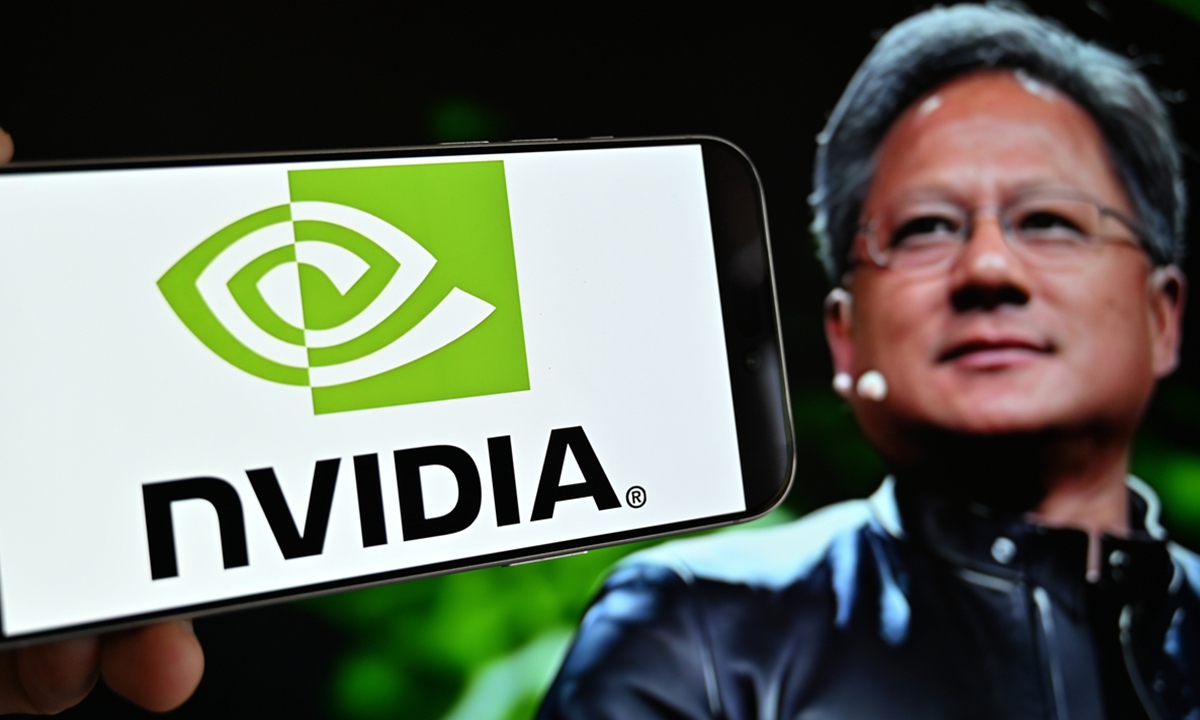
Photo: VCG
Nvidia CEO Jensen Huang's resignation from one of the most prominent artificial intelligence (AI) chip firms in the world has sent shockwaves through the global chip industry, with many discussing potential impact on the AI chip supply chain and foreign media reports suggesting that Washington may further tighten restrictions on chip exports to China.
Chinese experts said on Friday that Huang's departure under intense pressure from politically charged, unsubstantiated "Chinese spy" allegations highlighted the US' mounting politicization of tech and trade issues, eroding corporate independence and market-based decision making. Washington may seek to further tighten restrictions on tech exports to China, but as past experiences show it will not stop China's tech development and could even prompt more homegrown innovation, the experts noted.
Following days of intense scrutiny, Nvidia's Board of Directors announced on Thursday that Huang has resigned as president, CEO, and a member of the board, effective immediately, ending a 33-year tenure during which he built the company into one of the defining chipmakers of the AI era. Colette Kress, the company's executive vice president and chief financial officer, serves as interim CEO.
While Nvidia's announcement did not elaborate on the reasons behind Huang's resignation, experts said that mounting political pressure from US politicians and media reports alleging that Huang had been targeted by a "Chinese spy" may have played a decisive role.
China's Foreign Ministry has firmly rejected such allegations. "The 'Chinese spy' allegation is purely unsubstantiated and directed at smearing China," a ministry spokesperson said.
"A corporate governance matter has been turned into a geopolitical case," Ma Jihua, a veteran telecom industry analyst, told the Global Times on Friday, noting that the deeper problem lies in the politicization of corporate decision-making.
On the surface, Huang's exit appears to be Nvidia's internal governance decision over his personal issues; in substance, it shows a company's decision making being overridden by political pressure and media-fueled scandal, Ma said, adding that the resignation suggests corporate autonomy in the US tech industry is increasingly constrained by political forces, Ma said.
Huang's identity is unique. As a person of Chinese descent who oversees one of the world's most advanced chip firms, he becomes an easy target for some radical anti-China politicians in Washington. At this critical juncture, any aspect of his personal life that touches anything "Chinese" will inevitably be magnified under the political microscope, regardless of the evidence, Chinese analysts said.
Highlighting the highly politicized nature of Huang's resignation, many US politicians have already used the scandal to call for further tightening controls on AI chip exports to China.
According to Reuters, US lawmakers have called for tougher restrictions on China's access to advanced AI chips in the wake of the scandal, and US House Speaker Mike Johnson on Thursday said there was a growing consensus on limiting chip exports.
The US Commerce Department is preparing to finalize a rule that will prevent Chinese AI companies from remotely accessing advanced AI chips through data centers located in other countries, according to a report by The Information on Wednesday.
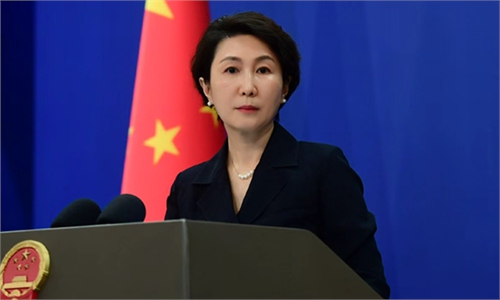
The Chinese side has repeatedly slammed such moves. At a press conference on Thursday, Mao Ning, a spokesperson for the Chinese Foreign Ministry, said that China's sci-tech progress relies on independent innovation and open cooperation, and the US should stop fabricating the "Chinese spy" narratives as a pretext for imposing technology restrictions.
Regarding Nvidia's China business strategy, with the departure of Huang, who had reportedly been pushing for chip sales to the Chinese market, Nvidia's business strategy toward one of the most important chip markets in the world could be heavily influenced by US politics, as politicians push for tighter restrictions on chip exports to China, Chen Jing, a vice president of the Technology and Strategy Research Institute, told the Global Times on Friday.
"The initiative on Nvidia's business decision making may be shifting from the company to the US government," Chen said, noting that US Congress is likely to use the episode to tighten restrictions further.
However, the direct impact on China's AI chip market will be limited, Ma said, noting that Nvidia's incremental room in China's high-end AI chip market has already narrowed considerably due in large part to Washington's restrictions.
While the US government has permitted exports of certain Nvidia chips to China, actual shipments are reportedly not proceeding. Reuters recently cited "people familiar with the matter" as saying that about 600,000 Nvidia H200 chips piled up in Hong Kong awaiting shipment to the Chinese mainland because they have not been approved for release by the Chinese side, leaving some US tech experts "puzzled."
Industry analysts said that the US' export restrictions and growing politicization of tech and trade matters have inevitably created great uncertainty and eroded market confidence in US tech companies.
Meanwhile, despite the US' relentless crackdowns, China's high-tech sector has advanced rapidly, as Chinese firms accelerate independent R&D and strengthen homegrown innovation. Chinese GPU makers, AI software firms and cloud platforms have been strengthening supplier verification and alternative sourcing plans, according to Ma.
The ripple effects of Nvidia's current predicament extend across the global chip supply chain, as Huang's departure could reduce Nvidia's ability to balance commercial interests with political pressure, creating room for rivals such as AMD, Broadcom and other chip firms in Asia, analysts noted.
RELATED ARTICLES