China-ASEAN FTA 3.0 to take effect, unlocking new opportunities in AI, green development, supply chain cooperation: MOFCOM
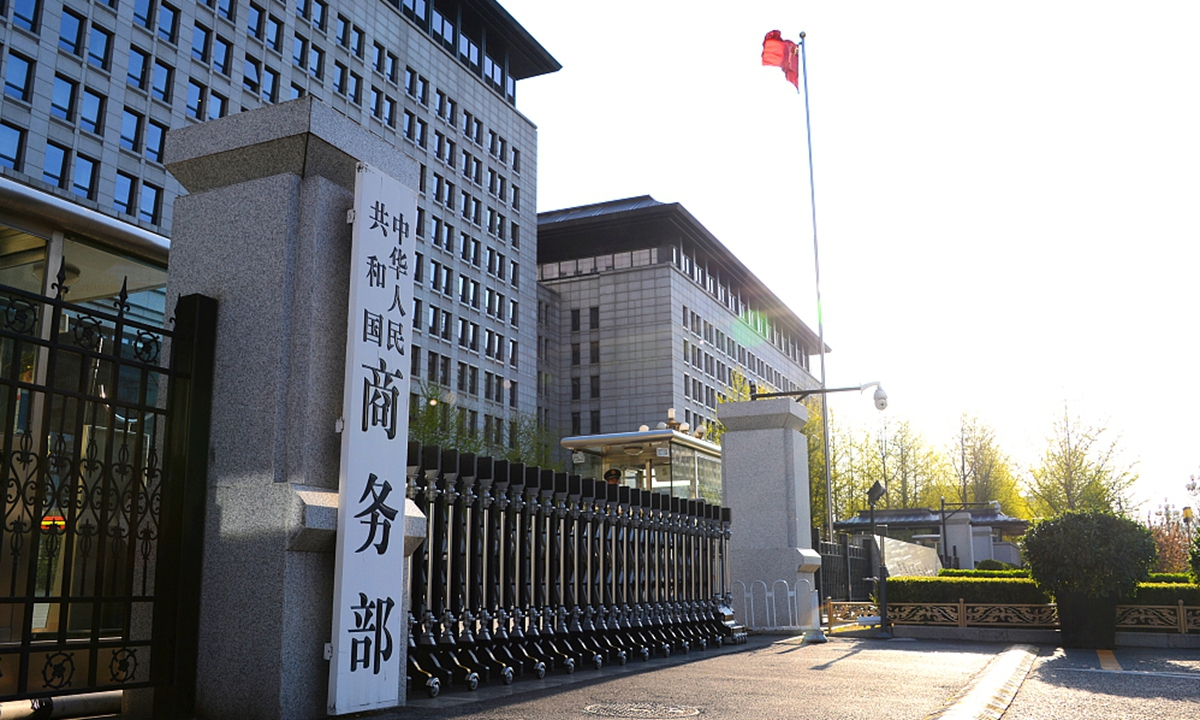
Ministry of Commerce of China File photo: VCG
The China-ASEAN Free Trade Area 3.0 Upgrade Protocol will enter into force on December 1, 2026. An official from China's Ministry of Commerce (MOFCOM) said on Monday that the upgraded deal goes beyond traditional trade and investment liberalization and facilitation of the 1.0 and 2.0 versions to cover emerging areas including digital economy, green development, standards cooperation and supply-chain connectivity, achieving a significant upgrade from "market opening" to "institutional cooperation".Speaking of what the 3.0 version of FTA brings to China and ASEAN and the world, the official said that in an uncertain global economic and trade environment, it will create a more open, convenient, safe, stable and predictable regional market and industrial chain and supply chain system, which will be a practical example of regional cooperation in addressing global challenges.
In term of how to conduct future work, the official said that the MOFCOM will support local governments and industries in organizing targeted outreach and training so that enterprises can fully understand the new rules and proactively seize the opportunities created by the upgraded protocol, adding that China will work with ASEAN through the China-ASEAN FTA Joint Committee to set up sub-committees on digital economy, green development, standards and small and medium-sized enterprises.
The two sides will review relevant provisions under the protocol's future work plan and hold further consultations on areas such as the digital economy and artificial intelligence (AI).
Meanwhile, the upgraded protocol is expected to create multiple new opportunities for enterprises across many fields, including the digital economy, green economy, supply-chain connectivity, as well as customs procedures and trade facilitation, the MOFCOM official said.
Regarding the digital economy, the two sides have established the highest-level economic and trade rules and cooperation arrangements in their respective treaty practices. Cooperation will cover both "hard connectivity" in logistics and digital infrastructure and "soft connectivity" in areas such as electronic invoices, electronic payments and electronic bills of lading. The protocol also includes cooperation on AI and other emerging technologies.
The official said that these measures will help build an open, secure, stable and predictable digital trade and investment environment, empowering a regional market of nearly 2.1 billion people and its industrial and supply chains.
In supply-chain connectivity, the protocol includes a standalone chapter on supply-chain cooperation for the first time in a free trade agreement between the two sides, with high-level commitments.
With the continuous deepening of the China-ASEAN FTA, China has remained ASEAN's largest trading partner for 17 consecutive years, while ASEAN has been China's largest trading partner for six consecutive years. By 2025, the trade volume between the two sides will exceed $1 trillion, an increase of 18 times compared to the initial stage of the China-ASEAN FTA in 2002, according to MOFCOM.
Global Times
RELATED ARTICLES