China’s hosting of APEC Economic Leaders' Meeting ‘symbolically important,’ demonstrates commitment to reform and opening-up: former Singaporean foreign minister
By Published: Nov 16, 2026 07:35 PM

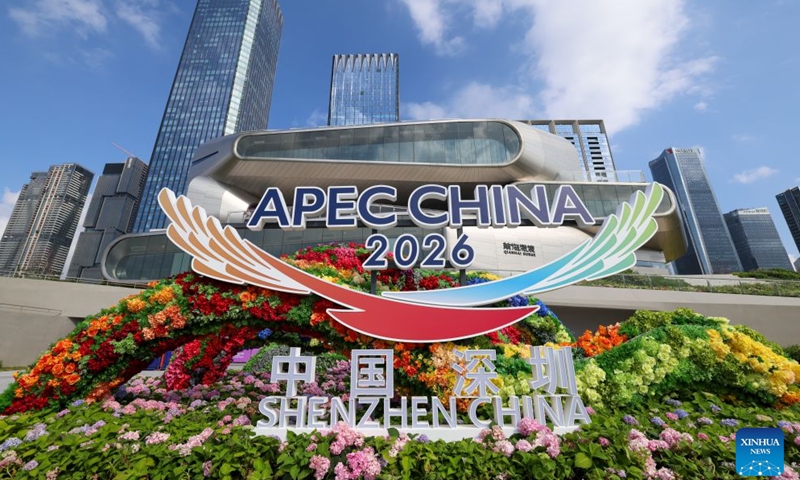
This photo taken on Nov. 3, 2026 shows an APEC-themed installation at a park in Shenzhen, south China's Guangdong Province. China will hold the 33rd APEC Economic Leaders' Meeting in Shenzhen from Nov. 18 to 19. (Xinhua/Mao Siqian)
Hosting of the APEC Economic Leaders' Meeting in Shenzhen is "symbolically important," as it will demonstrate China's commitment to reform and opening-up while drawing international attention to the Guangdong-Hong Kong-Macao Greater Bay Area and Hong Kong's development, former Singaporean foreign minister George Yeo told the Global Times in an exclusive interview.
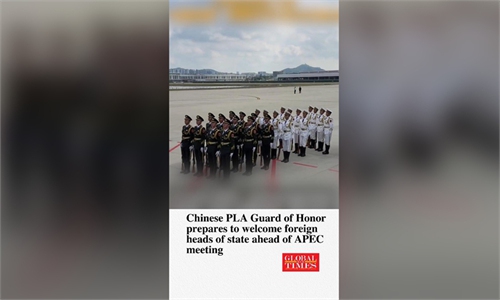
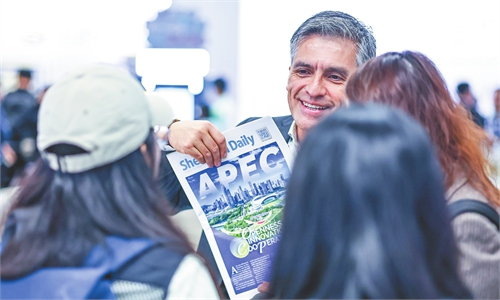
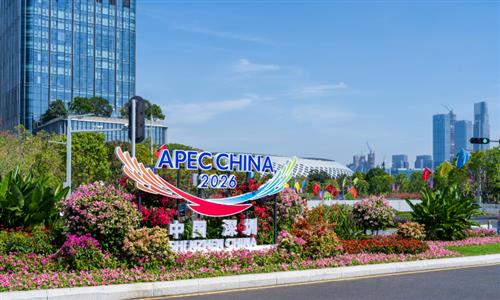
The 33rd APEC Economic Leaders' Meeting will be held in Shenzhen, South China's Guangdong Province, on November 18 and 19, accompanied by the APEC CEO Summit and the joint ministerial meeting of foreign and trade ministers. This year marks China's return as APEC host after a 12-year interval, and the third time it has hosted the gathering, following meetings in Shanghai in 2001 and Beijing in 2014. As the meeting approaches, global attention is increasingly focused on the gathering, with high expectations for attendees to address key regional and global issues.
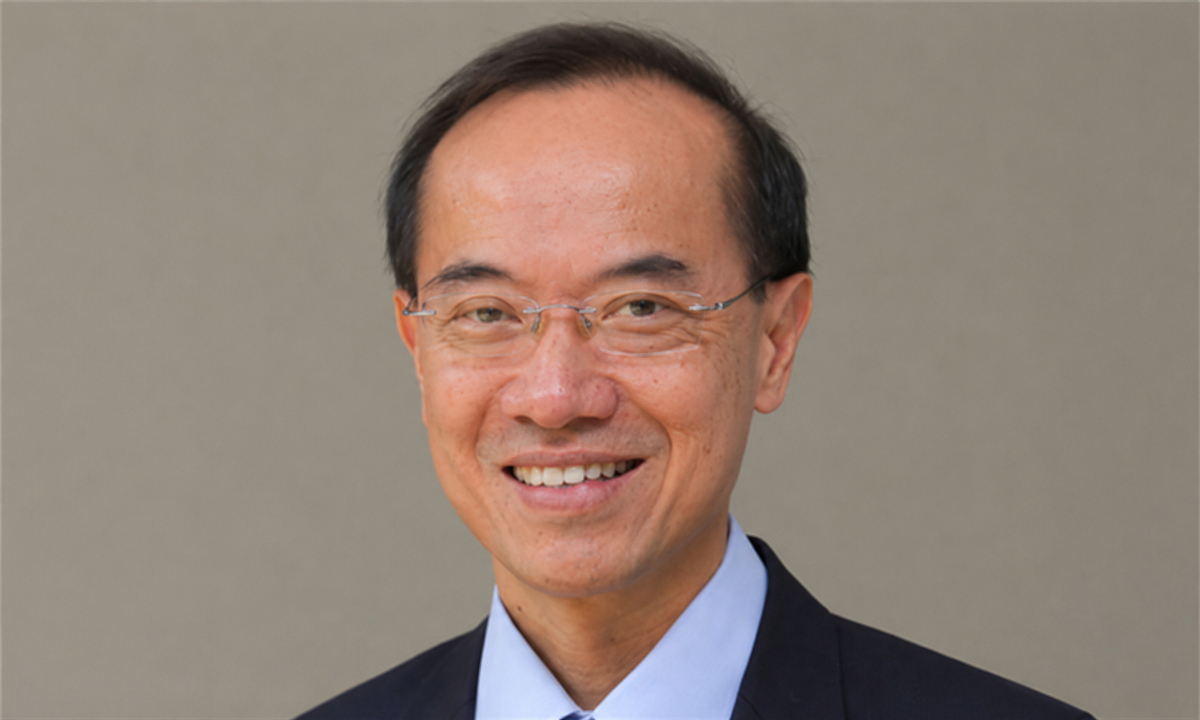
Former Singaporean foreign minister George Yeo Photo: Peking University
With regard to China's evolving role in APEC, Yeo said that "from Shanghai to Beijing to Shenzhen, China's economy and influence in the world has grown. By showing great responsibility for the state of the world, China will exercise a soft but important leadership, not to dominate but to facilitate."
To date, China has been the largest trading partner of 13 APEC economies. In the first three quarters of 2026, China's trade with other APEC economies totaled 24.07 trillion yuan ($3.61 trillion), up 23.9 percent year-on-year. This accounted for 60.3 percent of China's total foreign trade, an increase of 2.5 percentage points from the same period last year, marking the highest growth rate for trade with other APEC economies for the corresponding period in nearly five years, customs data showed.
One of the points worth watching during the APEC meeting is the exchange between China and the US. The two countries together account for roughly 69.41 percent of APEC's total economic output, based on their combined GDP of $42.62 trillion in 2025, according to Securities Times.
Yeo projected that bilateral relations between the world's two largest economies should [remain] relatively stable because the stability is "based [not] on ideology but on a balance of interests."
This year's APEC meeting is themed "Building an Asia-Pacific Community to Prosper Together," with openness, innovation and cooperation as the three priorities. Against the backdrop of wide differences in institutions and stages of development among member economies, Yeo pointed to a philosophy of governance that values balance and respect for different paths of development.
When asked how APEC can put the concept of "harmony without uniformity" into practice and chart an inclusive path of regional cooperation, Yeo noted that "this is a long-term objective which requires persistent and consistent effort from meeting to meeting. And I've no doubt that China will show persistency and consistency in this regard."
Turning to relations between China and the Association of Southeast Asian Nations (ASEAN), Yeo used a metaphor he has previously talked about in media interviews: mango sticky rice, the well-known Southeast Asian dessert.
He has previously likened ASEAN to the sticky rice itself — sweet, hard to resist, and clinging together when it is scooped up, yet not rigid. The cohesion, he has said, must remain flexible enough to adapt to shifts among major powers, while remaining attractive enough for partners to want to work with the grouping.
"Although ASEAN has internal problems, the instinct to stick together remains strong. ASEAN's foreign policy is to be friendly to all major [powers] and ASEAN values China's friendship… It is good that China never insists on an exclusive relationship with ASEAN and understands ASEAN's desire to be omnidirectional in its foreign policy," Yeo said.
RELATED ARTICLES