More than meetings, businesses are expanding investment in Chinese market
By Ma Jingjing and Published: Nov 17, 2026 07:57 AM

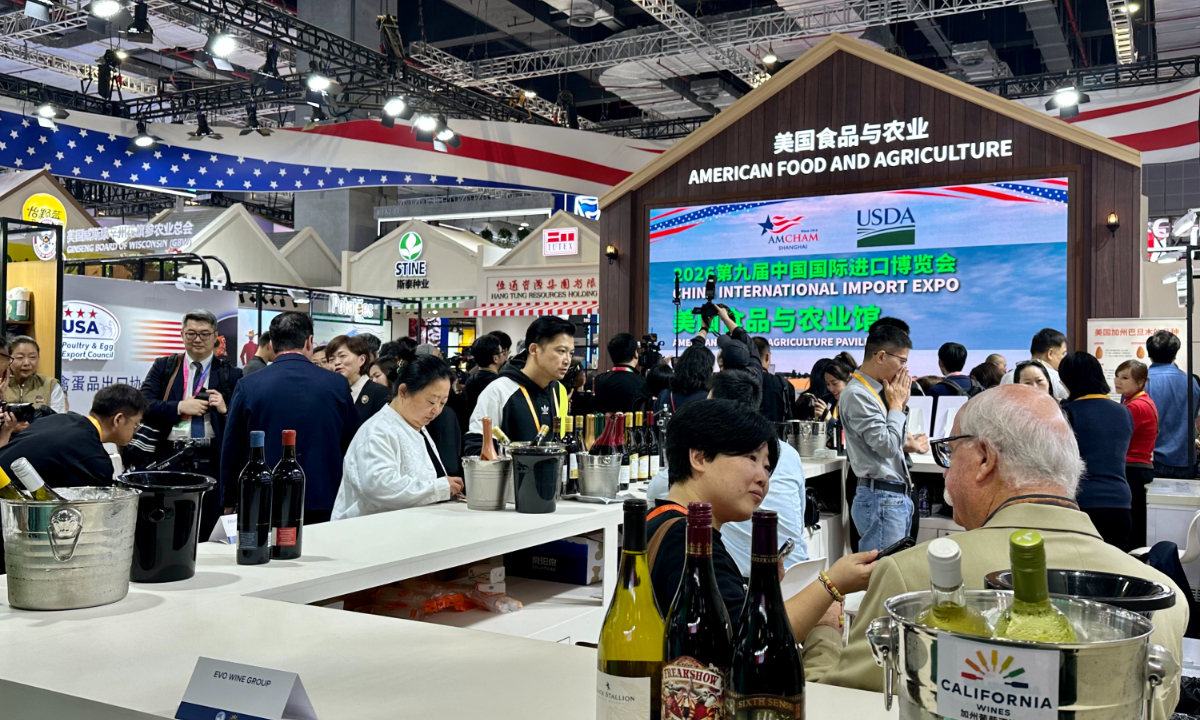
Visitors tour the American Food and Agriculture Pavilion at the 9th China International Import Expo in Shanghai on November 6, 2026. Photo: Ma Jingjing/GT
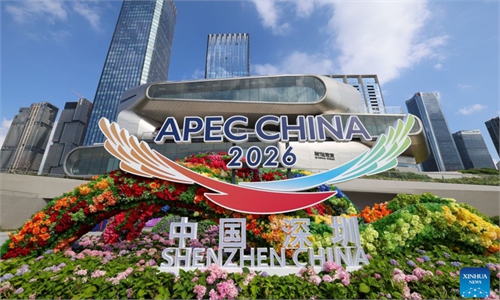
At the 9th China International Import Expo (CIIE) in Shanghai earlier this month, US companies took the largest exhibition area for the eighth straight year, with a record number of more than 40 US food and agricultural trade associations and companies attending the expo.At the Asia-Pacific Economic Cooperation (APEC) CEO Summit 2026, which is scheduled to be held from November 17 to 18 in Shenzhen, US companies are expected to make up the largest group among participating companies from economies other than China.
Why are more and more US businesses are visiting China recently? In interviews with the Global Times, some US business leaders are expressing strong confidence in the Chinese market and their firm commitment to further expand in the country. Experts noted that as the two countries implement the consensus reached by the leaders of the two countries to build a constructive strategic stability based on respect, fairness and reciprocity, businesses are becoming more confident in pursuing cooperation.
'Boundless' potential
The visits by US business leaders have also been warmly received by the Chinese side.
On November 12, Chinese Vice Premier He Lifeng, also a member of the Political Bureau of the Communist Party of China (CPC) Central Committee, met with Andrew Schlossberg, president and chief executive officer of Invesco, a US investment firm, at the Great Hall of the People in Beijing.
During the meeting, He said that China welcomes companies from all countries, including Invesco, to further deepen investment cooperation with China for mutual benefit and win-win outcomes.
Schlossberg said he is optimistic about China's economic prospects and is willing to continue deepening engagement in the Chinese market to expand pragmatic cooperation.
On November 10, Chen Jining, a member of the Political Bureau of the CPC Central Committee and secretary of the CPC Shanghai Municipal Committee, met with Jane Fraser, chair of the board and chief executive officer of US financial giant Citi, in Shanghai.
At the meeting, Chen welcomed Citi to better leverage its professional strengths and global network advantages to further expand financial business presence in Shanghai. Fraser said that the firm will firmly expand its business in China, including in Shanghai.
Highlighting such a commitment, from November 10 to 13, Citi held its 21st Annual Citi China Conference in Shanghai and Shenzhen. The event brought together around 1,500 global institutional investors, regulatory policymakers, and corporate leaders to discuss key forces shaping China and the global economy, and to share perspectives on macroeconomic trends, policy developments, innovation and emerging market opportunities, Citi said in a statement sent to the Global Times.
"China's market resilience, capacity for innovation and development potential are boundless, continuing to create attractive opportunities. Leveraging Citi's global network, we keep connecting China with the rest of the world - supporting multinational companies in seizing China's opportunities and enabling Chinese enterprises to expand globally," Zhang Wenjie, president of Citibank China, said in the statement.
Expanding investment
Beyond a series of meetings, US firms are showing their confidence by committing capital and capacity to the vast Chinese market.
On Monday, US logistics firm Federal Express Corp (FedEx) announced the official launch of FedEx Guangzhou Baiyun Airport International Cargo Terminal 4, a major investment that strengthens logistics connectivity between South China, the Guangdong-Hong Kong-Macao Greater Bay Area, and global markets, according to a statement from the company.
"China remains a strategic priority in the global growth strategy of FedEx. The launch of the FedEx Guangzhou Baiyun Airport International Cargo Terminal reflects our continued commitment to strengthening our presence and investment in the Chinese market," Poh-Yian Koh, president of FedEx China, said in the statement shared with the Global Times.
Beyond the vast market, China's mature industrial supply chains and innovation ecosystem are also attracting companies to expand local innovation.
Cathy Sparks, vice president of US sportswear giant Nike, told the Global Times that with its diverse and fast-evolving consumer needs, a thriving sports culture, a mature digital ecosystem and a complete industrial supply chain, China provides a vital foundation for Nike to identify emerging trends and deepen local innovation.
Agricultural trade is also an integral part of China-US bilateral economic and trade cooperation. At the 9th CIIE in Shanghai, the American Food & Agriculture Pavilion brought together a record number of more than 40 trade associations and companies this year, compared with 19 exhibitors at the 8th CIIE last year.
Carlos Salinas, executive director for East Asia at the US Soybean Export Council (USSEC), told the Global Times that the USSEC has long-standing partnerships and relationships with Chinese partners, and it will continue to expand those ties. "We really value that relationship and that friendship," Salinas said.
Positive sentiment among US businesses toward the Chinese market is also reflected in a recent survey.
The 2026 China Business Report released in September by the American Chamber of Commerce in Shanghai showed that business confidence bounced back markedly, with 58 percent of respondents expressing optimism about China's five-year business outlook, up 17 percentage points year-on-year.
Strengthening communication
Crucially, improving business sentiment is supported by positive engagement between the two sides and joint efforts to stabilize ties, Li Yong, a senior research fellow at the China Association of International Trade, told the Global Times on Monday.
"From a business perspective, companies' decisions are primarily driven by commercial interests and the pursuit of a stable and predictable business environment. The continued engagement of US businesses with China also reflects their confidence in the Chinese market and the benefits of bilateral cooperation," Li said.
In addition to high-level interactions, trade teams of the two countries have also maintained close communication. On Friday, China and the US held the first meeting of the trade council under the China-US economic and trade consultation mechanism via video link, according to the Chinese Ministry of Commerce (MOFCOM).
Guided by the important consensus reached by the two heads of state, the meeting focused on implementing the outcomes of previous rounds of bilateral economic and trade consultations. Both sides will continue to strengthen communication through the trade council, work to resolve their respective economic and trade concerns, further expand cooperation and shorten the list of issues, so as to help build a constructive China-US relationship of strategic stability based on respect, fairness and reciprocity, the MOFCOM said.
RELATED ARTICLES