Why Japan is worried more about who will talk to it at APEC than what APEC will discuss
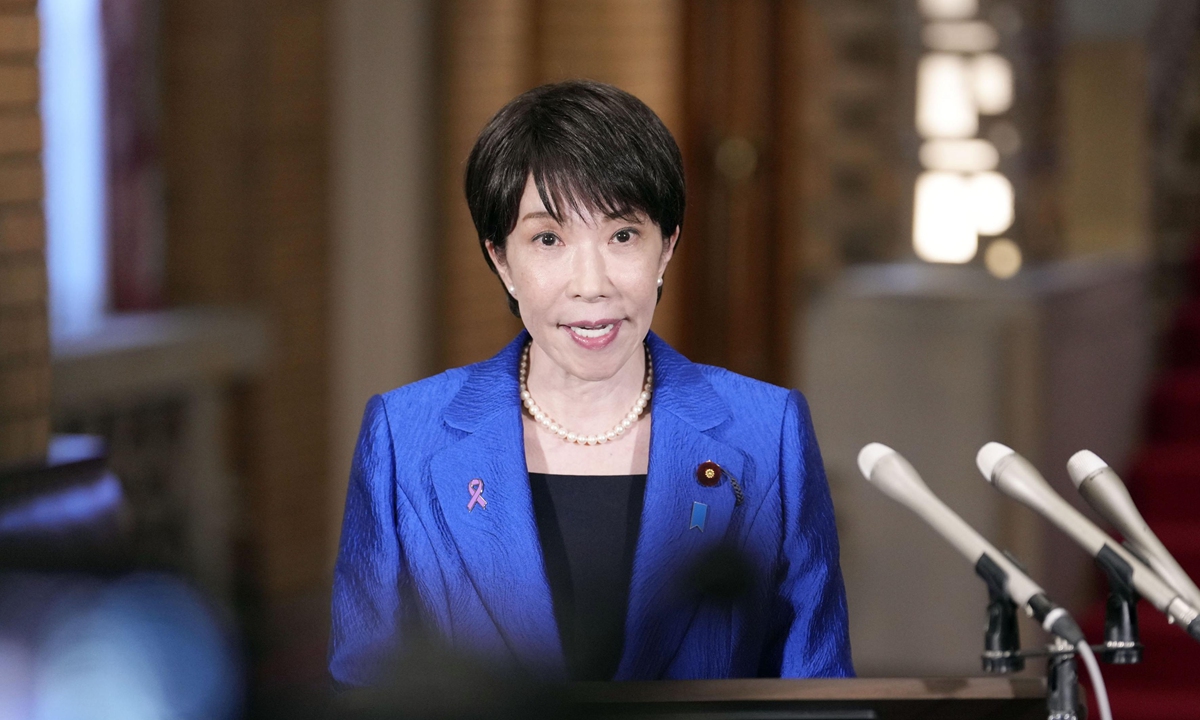
Japanese Prime Minister Sanae Takaichi meets the press at the premier's official residence in Tokyo, Japan, on November 16, 2026, before leaving for Manila to attend Association of Southeast Asian Nations-related meetings. Photo: VCG
The APEC Economic Leaders' Meeting is supposed to be about trade, investment and economic growth. Japan, however, seems more concerned with another question: Will anyone stop to talk to its Prime Minister Sanae Takaichi?On Monday, Takaichi announced her upcoming attendance at the APEC meeting in Shenzhen. But Japanese media were already preoccupied with something else: How warmly, or coldly, would she be received?
On the same day, one Japanese outlet published a graphic mapping four possible scenarios: no welcome at all; a welcome with no handshake and no conversation; a handshake accompanied by silence; or a handshake that finally includes a few words. The Japan Times reported that Tokyo is still seeking a chance for any form of contact with the Chinese leader - even a brief chat.
A conference meant to focus on regional trade, investment and economic growth has Japan preoccupied with something else entirely: diplomatic protocol. This fixation reveals a deeper anxiety in Tokyo: Just how much diplomatic influence does Japan still have? The problem, however, lies much closer to home: in Japan's own diplomatic moves that led to strained relations with its neighbors.
Earlier this month, Japanese media, citing unnamed sources, reported that the government was seeking assurances from Beijing that Takaichi would not be "snubbed" at the APEC meeting, and that Tokyo is concerned that any "unusual plan" or public criticism of Japan by China could be seen as an attempt to "embarrass" Takaichi.
Japanese media are overthinking it. China's Foreign Ministry has already made clear that China stands ready to work with all parties to ensure the complete success of the APEC "China Year." Fears of "unusual plan" or "embarrassment" seem to say more about Tokyo's own guilty conscience than about any realistic prospect.
Japanese media are also missing the point. Real diplomatic weight is earned, not secured, by demanding courtesy in advance. Today's handshakes or chats are shaped by yesterday's decisions. The question is: How successful has Japan's diplomacy really been?
In recent days, Japanese media have focused on the China-Russia-US summit during the APEC meeting, with a tone reflecting Tokyo's fear of being left out. Japanese media reports say Tokyo is still seeking to arrange a meeting between Takaichi and Russian President Vladimir Putin on the sidelines of the event. The aim, reportedly, is to press for the release of a Japanese journalist accused of spying and to protest Russia's decision to place a Japanese company under temporary state management. Moscow has yet to respond.
But Japan's diplomatic difficulties today are, to a large extent, of its own making.
Takaichi's public remarks that portrayed the Taiwan question as a "survival-threatening situation" for Japan hit both China's historical sensitivities and the red line of national sovereignty. Japan's relations with Russia have also remained strained amid sanctions, territorial disputes and broader political tensions. None of this can be easily repaired with a smile at an international gathering.
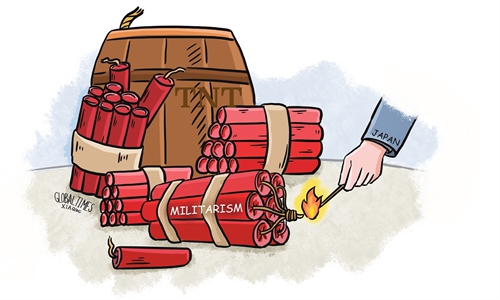
APEC's agenda is trade, investment, connectivity, regional integration, growth and shared prosperity. Japan's recent actions, however, have pushed an economic Asia-Pacific toward a more militarized Indo-Pacific. Tokyo styles itself a defender of the "rules-based international order," even as it works to loosen the postwar restraints imposed on it after its wartime aggression in Asia.
What, then, does Japan bring to APEC besides risk? The region wants growth dividends, not another geopolitical powder keg.
If Tokyo's main goal is to stage a show of "active diplomacy" for domestic voters - and then, when results disappoint, to shift the blame, and cast itself as the victim - this APEC trip is more likely to cost Japan points than earn them.
For Japan, the better question is not what treatment it will receive at a multilateral meeting, but what it is prepared to offer so that its neighbors still want to walk with it.
The author is a reporter with the Global Times. opinion@globaltimes.com.cn
RELATED ARTICLES