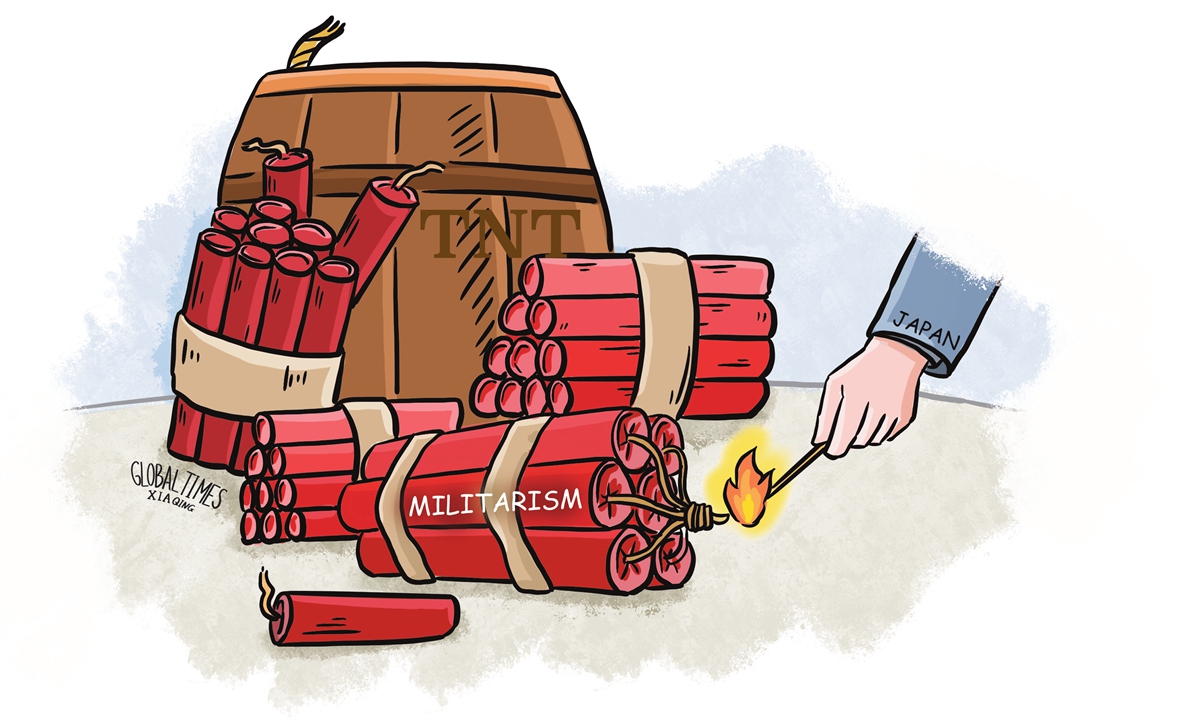
Illustration: Xia Qing/GT
Recently, Japanese Prime Minister Sanae Takaichi openly linked the Taiwan question to Japan's "survival-threatening situation," implying the possibility of military intervention in the Taiwan Straits. Such irresponsible rhetoric not only sparked strong indignation in China and seriously undermined the foundation of bilateral relations between the two nations, but also put Japan in a situation of immense strategic risk, drawing widespread criticism from the international community. However, some in Japan seem to overlook this and blindly praise Takaichi's "high approval ratings." This unusual political atmosphere in Japan, like silently spreading toxic air, erodes reason and conscience and could potentially push Japan once again to the dangerous brink of war.
Takaichi's assertive stance toward China has much to do with her government's fragile political foundation and domestic challenges. The Liberal Democratic Party (LDP) she leads suffered defeat in both the October 2024 Japanese general election and the July 2025 House of Councillors election, losing its majority seats in both houses and becoming a minority ruling party. Although she managed to maintain her ruling position by allying with the Japan Innovation Party (JIP), such a coalition is unstable at best. What's more, JIP's relatively loose arrangement of "extra-cabinet cooperation" means it could be withdrawn at any time.
At the same time, the Takaichi administration is grappling with a series of deep-rooted problems, including Japan's prolonged economic stagnation, significant yen depreciation, rising living costs and mounting debt pressure. In this context, playing the Taiwan card and exaggerating the "China threat" has become something of a last-ditch move - one that diverts attention from domestic problems, masks government incompetence and caters to right-wing forces pushing for constitutional revision and military expansion, all in an attempt to consolidate her right-wing support base.
Such a tactic of playing tough with other countries in exchange for domestic support is reminiscent of Japan's dark history. In the 1930s, Japan's political landscape tilted sharply to the right, militarist forces grew in influence, the media incited extreme nationalist sentiment and the public, caught in a wave of national fervor, endorsed external aggression. What did all this eventually lead to? Fascist forces took complete control of the state, established a fascist dictatorship, and waged wars of aggression, inflicting profound pains on the people of Asia, including China, and the world at large. The Japanese people also suffered tremendously from this havoc.
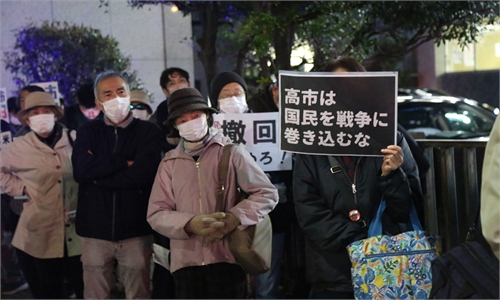
There seems to be alarming parallels in today's Japan. When it comes to China-related issues, Japanese politicians either adopt a confrontational and aggressive tone or remain silent to stay out of trouble. Although some opposition parties and former government leaders have voiced rational views, they are quickly labeled as "pro-China" or "weak," which has created a chilling effect. Being tough on China has almost become the only "correct" choice.
Ichiro Ozawa, former LDP president, pointed out that throughout history, there were countless examples of politicians instigating external crises, stirring public sentiment to a frenzy, and ultimately escalating into real "survival-threatening situations," resulting in enormous sacrifices for the people.
Who could hit the brakes before the train derails? Not the media. In recent years, Japanese media have been keen on hyping negative news about China. Some outlets simply put a negative spin on anything related to China, distorting facts or fabricating stories to justify Japan's tough policies toward China. They have also aggressively propagated the "China threat" theory, creating excuses for Japan to expand its military, revise its pacifist constitution and break free from post-World War II constraints.
As close neighbors, China and Japan have close cultural exchanges and economic cooperation, and there are so many positive stories to tell. And yet Japanese media, through selective reporting and misleading narratives, have built an "information cocoon" for their citizens, contributing to a distorted and biased perception of China across Japanese society.
The reality is politicians may gain votes and media outlets may gain viewership, but the price of deteriorating China-Japan relations will ultimately be borne by the Japanese people. Concerns over worsening ties have sent Tokyo's two major stock indices plummeting, with retail, transportation and consumer sectors among the hardest hit. The sharp drop in Chinese tourists will also bring significant losses to Japan's retail and tourism industries. Japanese economist Hidetoshi Tashiro warned that Japan is facing high prices, a depreciating yen and weak economic growth, and that in the absence of stable economic ties with China, Japan could fall into a severe recession.
China has seen significant growth in its national strengths, including its military capabilities. And its resolve to defend national sovereignty and territorial integrity is rock-solid. If Japan intervenes militarily in the Taiwan Straits, China will undoubtedly strike back. Are those politicians and media outlets that are fueling confrontational rhetoric on China prepared to assume responsibility for the safety of the Japanese people? Can they be held accountable for the nation's survival, development and prosperity?
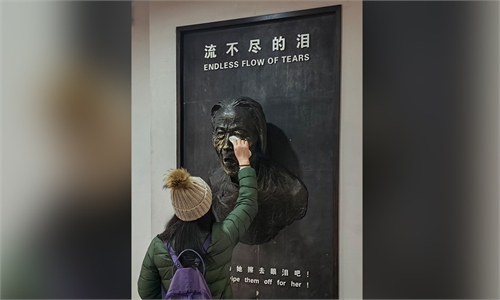
Over eight decades ago, voices of reason were silenced and collective irrationality prevailed in Japan, ultimately leading to a major calamity. More than 80 years later, Japan is once again facing a choice. Only by recognizing the historical trend, reflecting on its own past and keeping friendly relations with its neighbors, can Japan avoid repeating history. Indulging the right-wing forces to push its agenda at all costs will only plunge the entire country into an abyss. The arrogant rhetoric of today will eventually become the elegy of tomorrow. History's lessons are clear, and the past echoes as a solemn warning. Hopefully, the people of Japan will see the truth and refuse to let the future of their nation be gambled away once gain.
The author is an observer of international affairs. opinion@globaltimes.com.cn
RELATED ARTICLES