ARTS / CULTURE & LEISURE
Micromammal fossils discovered in SW China, offer new evidence of faunal exchanges in Asia
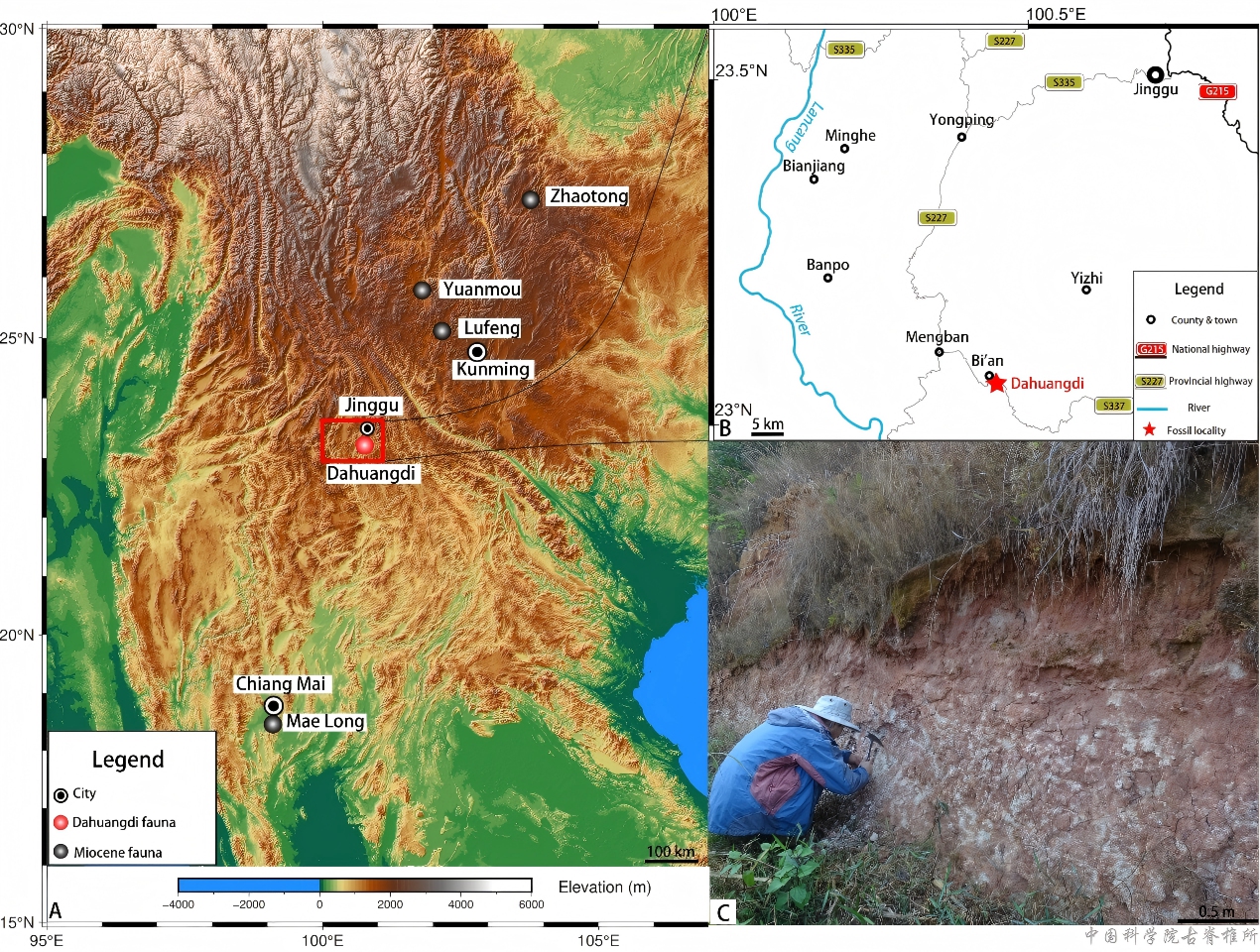
Photo: Courtesy of Institute of Vertebrate Paleontology and Paleoanthropology (IVPP) of the Chinese Academy of Sciences
A Chinese research team has discovered Early Late Miocene micromammal fossils in Jinggu county, Southwest China's Yunnan Province, representing 11 species across 10 genera, seven families and two orders. The assemblage includes two new species, Typhlomys latidens and Karnimata longimurus, as well as an early form of the Chinese hamster genus Sinocricetus - the first record of the genus in southern China, according to the Institute of Vertebrate Paleontology and Paleoanthropology (IVPP) of the Chinese Academy of Sciences.
In addition to identifying the animals that once lived in the area, researchers used the species combination found at the site to determine the age of the fossil assemblage. According to IVPP, the assemblage dates to the early Late Miocene, known as the Bahean age, roughly 10 million years ago.
Ni Xijun, a co-corresponding member of the research team from IVPP, told the Global Times on Tuesday that the Jinggu fauna, the group of fossil mammals discovered in Jinggu, is important for reconstructing the history of Cenozoic animal communities and changes in ancient environments.
The two new species, in particular, are significant for research into the origins of modern Typhlomys (pig-tailed dormice) and rats of the genus Rattus.
"These new findings show that China's Yunnan was a key region shaping the formation and evolution of modern biodiversity in Asia," he said.
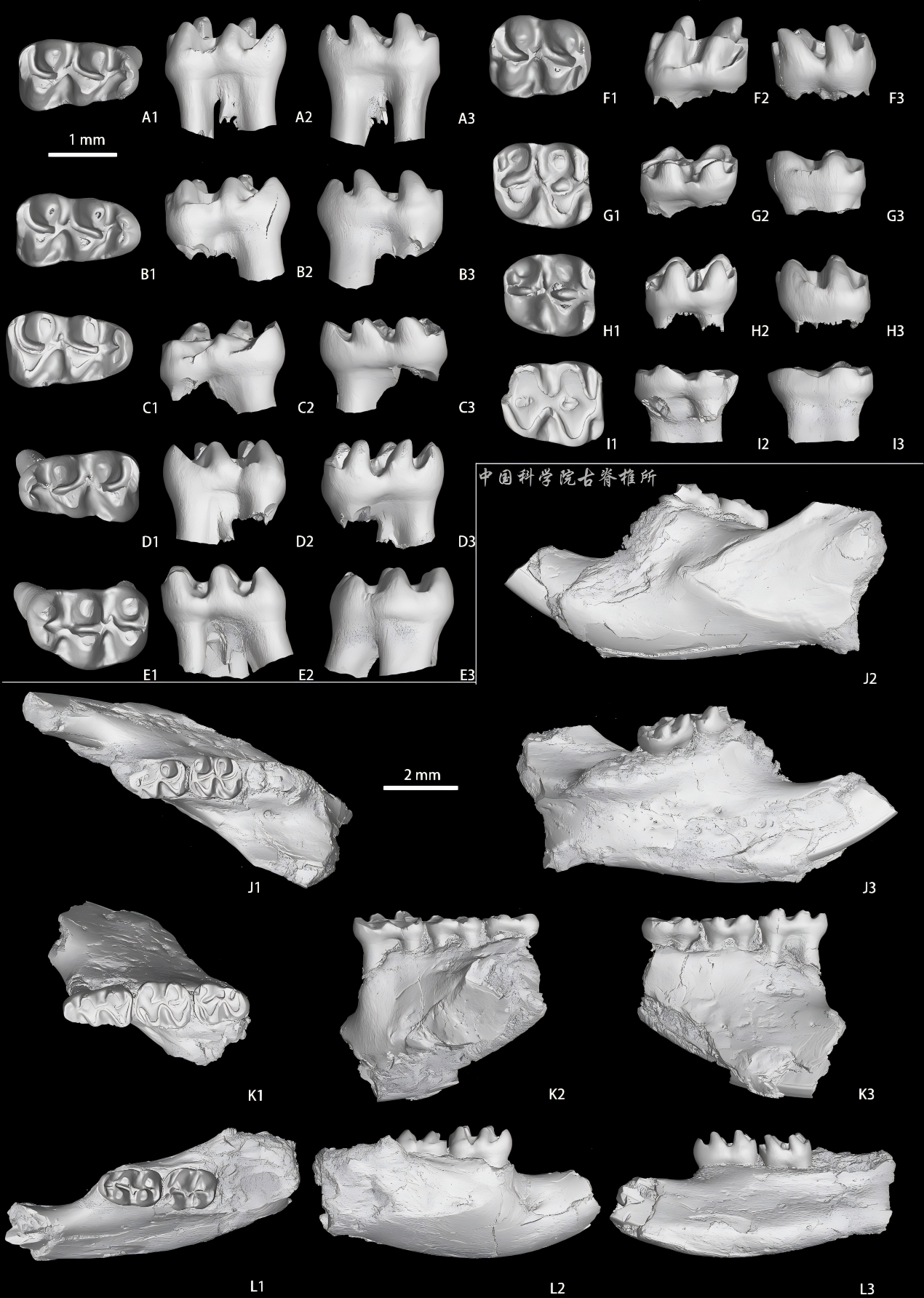
Photo: Courtesy of Institute of Vertebrate Paleontology and Paleoanthropology (IVPP) of the Chinese Academy of Sciences
The Jinggu fauna shares characteristics with animal groups found in northern China, while also showing links to some ancient rodents discovered in South Asia, researchers said. The findings have provided new evidence of faunal exchanges between northern and southern China and South Asia.According to IVPP, field surveys and fossil excavations at the Dahuangdi site in the Jinggu Basin began in 2021. As the teeth and bones of small mammals are extremely tiny, researchers first had to sift through sediment samples before using techniques such as CT scanning, 3D reconstruction and tooth measurements to examine the fossils and compare them with specimens found in other regions.
The presence of some relatively primitive animal forms, together with the overall combination of species, indicates that the Jinggu fauna dates to the early Late Miocene, specifically the Bahean age. It may be older than some micromammal assemblages previously discovered in places such as Yuanmou, also in Yunnan, according to the research team.
Establishing the age of the assemblage provides a basis for comparing animal communities from different regions, while similarities between species offer further clues to possible migration and exchanges at the time, researchers said.
The study found that the Karnimata rodents from Jinggu share similarities with related fossils discovered in the Siwalik region of South Asia, suggesting that these rodents may have spread from South Asia into Yunnan. Meanwhile, the presence of Sinocricetus and shrew mole-like animals' points to links between the Jinggu fauna and animal communities in northern China, according to the IVPP.
This suggests that Yunnan was not an isolated region in terms of animal distribution and evolution around 10 million years ago, but may have served as a key link among faunal communities in northern and southern China, South Asia and Southeast Asia, according to the IVPP.
RELATED ARTICLES