ARTS / CULTURE & LEISURE
India’s 2036 Games ambitions face multi-layer tests
Fulfilling an Olympic dream
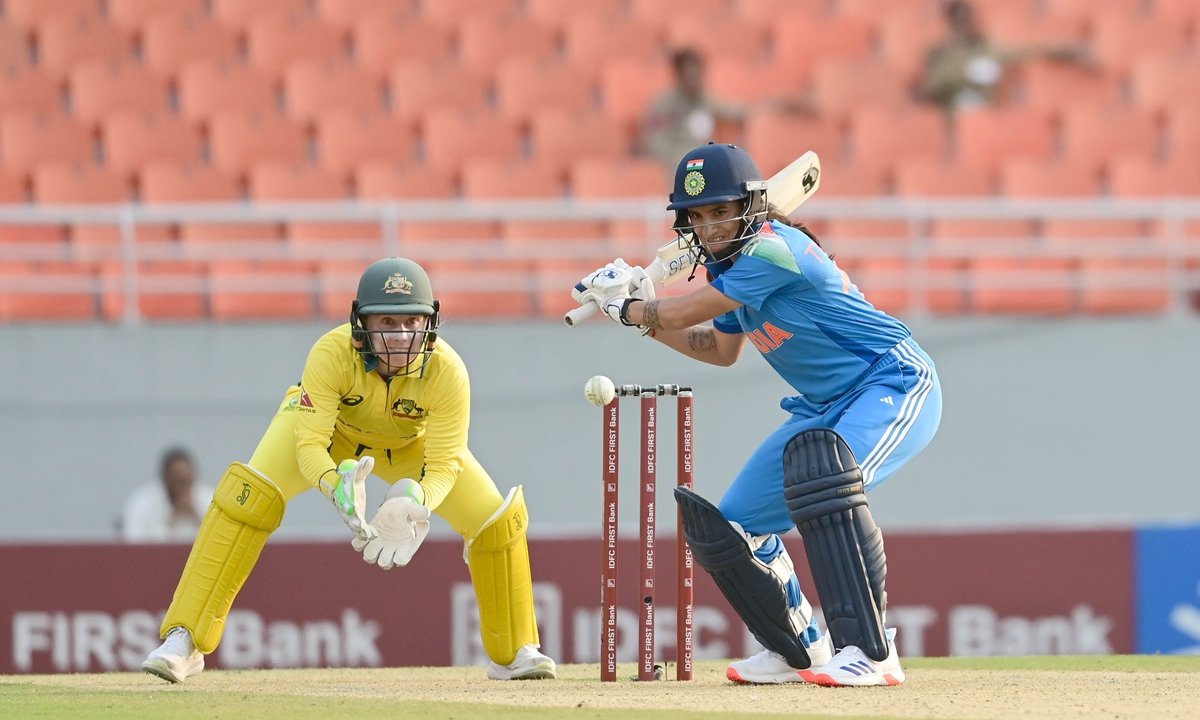
Indian batter Renuka Thakur plays a shot during a match against Australia at the Mullanpur Cricket Stadium in New Chandigarh, India, on September 17, 2025. Photos: VCG
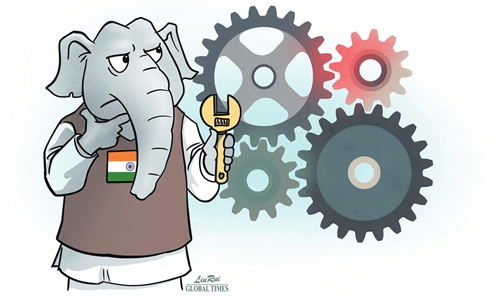
India's ambition to host the 2036 Olympics is approaching an important milestone this month, but a recent warning from the International Olympic Committee (IOC) has highlighted an issue that could prove just as important as stadiums and sporting facilities: governance within the country's Olympic movement, a Chinese expert said.
The IOC recently expressed disappointment over renewed disputes surrounding the Indian Olympic Association's (IOA) election process, warning that the situation was negatively affecting the operations and reputation of the Olympic movement in India, multiple Indian media outlets have reported.
The IOC urged the Indian sports governing body to ensure that its elections comply with the Olympic Charter and relevant regulations and are conducted in a free and fair manner without external interference.
The warning comes at an important time for India's Olympic ambitions. On November 26, an Indian delegation is scheduled to present its 2036 Games project to the IOC, with Ahmedabad in Gujarat proposed as the host city, according to Indian media.
For India, establishing a stable and transparent governance framework is an important part of strengthening its Olympic bid. But governance is only one aspect of the preparations required. The country also needs to demonstrate its ability to develop competitive athletes, organize major international sporting events and provide venues that meet the demands of the world's biggest multi-sport competition, experts noted.
India is among seven interested parties currently in dialogue with the IOC over hosting the Games, alongside Germany, Hungary, Qatar, South Korea, South Africa and Turkey. The IOC Executive Board is expected to shortlist candidates for the next stage in March 2027, with the host country expected to be elected in mid-2029.
Building a broader foundation
India has made visible progress in competitive sports in recent years, providing an increasingly solid foundation for its Olympic ambitions.
At the most recent 2026 Asian Games, India finished fourth with 85 medals, including 21 golds. Its 19 gold medals across Olympic sports, excluding kabaddi, demonstrated growing competitiveness in disciplines such as shooting, archery and athletics.
Sports commentator Wang Dazhao, however, noted that success in a single sport, such as cricket, is not sufficient to establish India as a capable Olympic host.
"A multi-sport event requires comprehensive sporting competitiveness, rather than strength in just one individual discipline. Even winning a championship several times in one sport is not enough," Wang told the Global Times.
He said India would need to make progress in fundamental Olympic sports and build a broader competitive foundation to support the overall sports program.
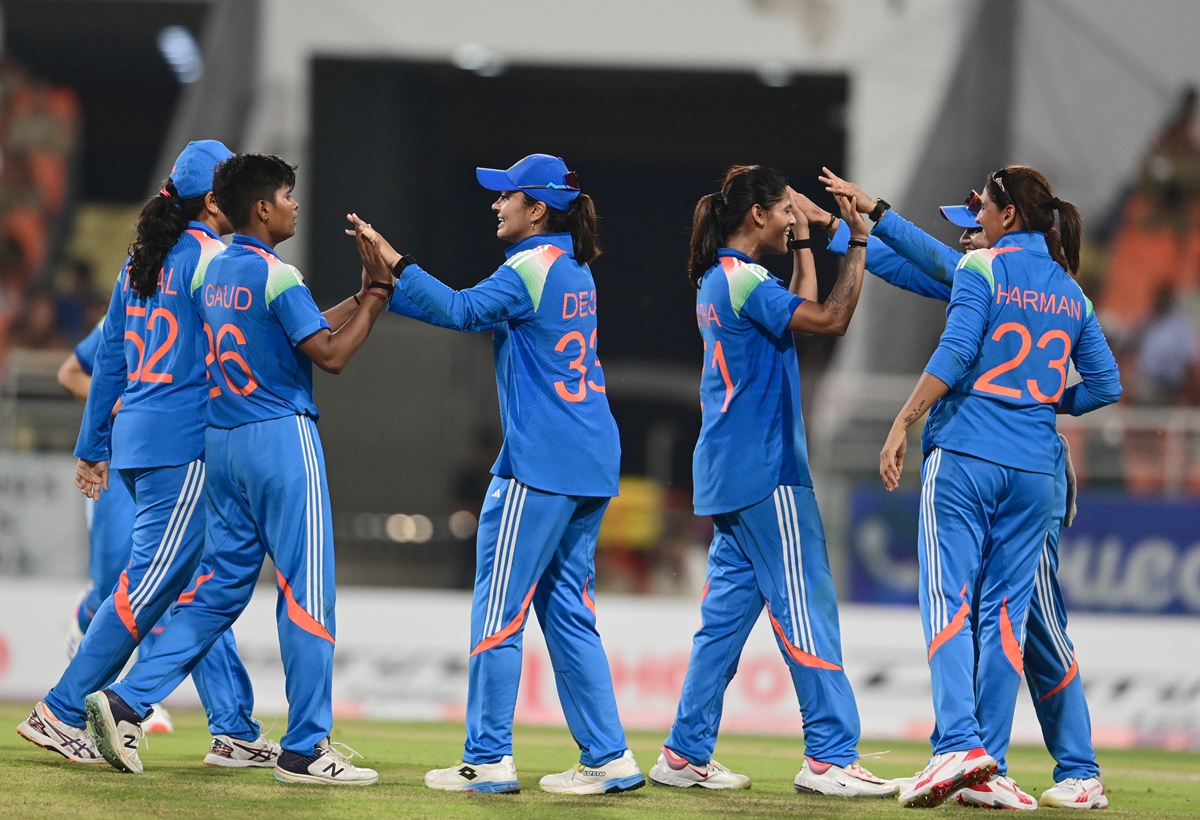
Indian women cricket team celebrates the victory against Australia at the Mullanpur Cricket Stadium in New Chandigarh, India, on September 17, 2025.
A decade to prepare
India has also accumulated experience in hosting major sporting events.
It was New Delhi that staged the very first Asian Games in 1951, with an encore in 1982, as well as the 2010 Commonwealth Games, and the country subsequently hosting a growing number of international competitions across different disciplines.
Nevertheless, the 2010 Commonwealth Games, the only major international multi-sport event held in India in the 21st century, offered important lessons. Delayed construction, venue readiness and accommodation arrangements sparked criticism.
Hosting the Olympics involves considerably more complex requirements.
Wang suggested that India could use the period leading up to 2036 to gain experience by hosting more international sporting competitions. Such experience would help India identify practical gaps before the Games, from venue management to staffing and coordination among different organizers, he argued.
He also emphasized that India should develop an approach suited to its own circumstances instead of attempting to replicate the experience of previous Olympic hosts such as China.
"India cannot simply copy China's approach. Every host country needs to develop its own characteristics based on its actual conditions, as long as it meets the rules and requirements of the IOC and the international sports federations," he said.
Beyond venues
Environmental conditions in India have also triggered debate on social media, particularly given the physical demands of outdoor sports.
The India Open badminton tournament in New Delhi provided a relatively minor but highly visible example of the importance of venue management.
A match between India's HS Prannoy and Singapore's Loh Kean Yew was interrupted twice after bird droppings fell onto the court from the stadium ceiling.
"While the incident was not representative of India's overall ability to organize sporting events, it highlighted how seemingly minor venue-management issues can affect the conditions under which athletes compete and the spectator experience," Zhu noted.
"For a potential Olympic host, maintaining high standards of venue cleanliness, sanitation and routine inspection would be essential."
Wang said that major sporting events have historically provided Asian countries with opportunities to accelerate infrastructure development and bring about broader improvements in their sports systems.
India's Olympic ambition should be viewed as a long-term opportunity to strengthen its entire sports system, rather than merely a bid to host a single major event, Zhu also noted.
"The road to 2036 is not only about demonstrating India's ability to host the world's biggest sporting event. It is also an opportunity to show how hosting the Olympics can contribute to a more sustainable sports culture and broader development for the country," Zhu said.
RELATED ARTICLES