China, Canada to explore wider use of local currencies in trade, investment: finance ministry
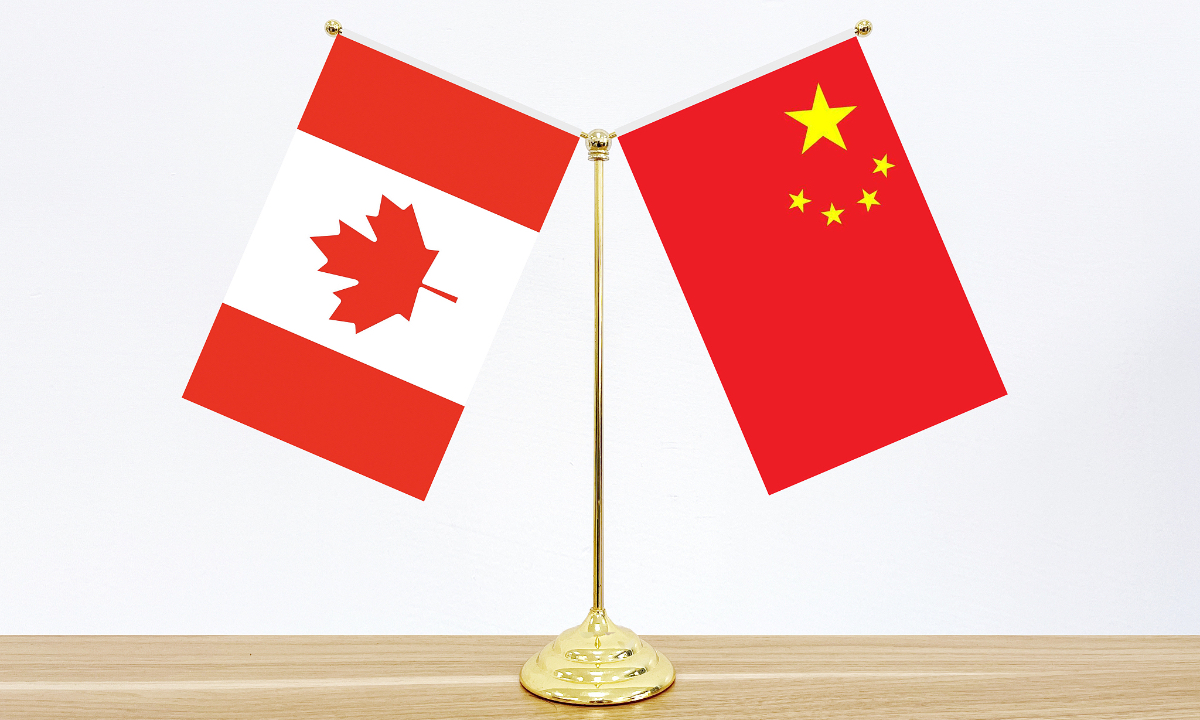
China Canada Photo: VCG
China and Canada have agreed to deepen bilateral monetary and financial cooperation, including exploring ways to expand the use of local currencies in bilateral trade and investment, according to a statement released by China's Ministry of Finance (MOF) on Tuesday.
Analysts noted that the agreements, announced as global leaders gather for the APEC meetings in Shenzhen, South China's Guangdong Province, reflect both countries' commitment to deepening economic engagement in the Asia-Pacific despite broader geopolitical headwinds.
Specifying the joint outcomes of the 2nd Canada-China Economic and Financial Strategic Dialogue (EFSD), the statement said that both sides welcomed the positive progress made in the recent bilateral economic and trade consultations, including further extending the relevant arrangements between the two countries.
According to the document, China and Canada welcomed agreement on a list of financial issues for a Financial Working Group (FWG) technical exchanges and cooperation. The list includes testing and discussing use cases for the recently renewed central bank bilateral currency swap agreement; exploring ways to expand the use of local currencies in bilateral trade and investment; encouraging two-way institutional investment, including through China's Qualified Foreign Investor and the Qualified Domestic Institutional Investor frameworks; and promoting discussion of green and sustainable finance at multilateral forums, among other items.
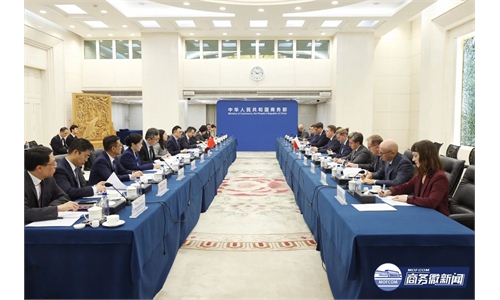
According to the MOF, Chinese and Canadian officials co-chaired the second EFSD in Vancouver, Canada on November 8 and 9.
In line with this agreement, both sides took note of productive intersessional FWG technical exchanges to date on the issuance of panda bonds; enhancing the efficiency of cross-border payments systems, and anti-money laundering and countering the financing of terrorism, according to the MOF.
To further facilitate bilateral trade and investment, as well as maintain global financial stability, the People's Bank of China and the Bank of Canada will further implement the bilateral local currency swap agreement, including a planned tabletop exercise by the end of 2026, followed by a test drawing in 2027, said the statement.
The swap line, renewed in January 2026, is worth 200 billion yuan ($30 billion) and is valid for five years, the third extension of an arrangement first signed in November 2014.
Building on the commitments made by their leaders in January 2026, both sides reaffirmed commitment to strengthening bilateral economic and financial relations and advancing the Canada-China new Strategic Partnership through practical cooperation in areas of mutual interest, according to the MOF's statement.
The dialogue outcomes build on steps to stabilize China-Canada economic ties since the January 2026 leaders' meeting, which produced a joint statement deciding to reinvigorate the high-level EFSD and establish a financial working group.
Chinese experts attributed these outcomes to the predictable and mutually beneficial financial and economic dialogue channels between the two sides, saying that they reflect a shared interest in stability, market access, and institutional dialogue, while also suggesting that both sides want to keep economic channels open despite uncertainty.
Deepening China-Canada financial cooperation signals a pragmatic reset in bilateral relations. By elevating financial and economic dialogue, both sides are signaling that despite broader geopolitical tensions, they still see practical economic engagement as possible and desirable, Dong Shaopeng, a senior research fellow at the Chongyang Institute for Financial Studies at Renmin University of China, told the Global Times on Tuesday.
Improved financial sector cooperation, including financial services market access and engagement between regulators, could gradually make it easier for firms, investors, and financial institutions to operate across the two markets, Dong said.
On the global economic outlook, the two sides exchanged views and agreed that while the global economy has demonstrated resilience, rising uncertainty continues to exert downside risk to growth, trade and investment. They reaffirmed their support for multilateralism as well as a transparent and predictable trade and investment environment, according to the statement.
The two sides are also committed to deepening cooperation in the economic and financial tracks of multilateral forums, including the G20 and APEC, and jointly improving the governance of the international financial architecture. Experts said that this is especially noteworthy because it suggests both sides value rules-based global institutions at a time when geopolitical fragmentation is affecting trade and finance.
The renewed cooperation also adds momentum to the internationalization of the yuan, Dong said. He added that China has signed local currency swap agreements with more than 30 countries and regions, and the steady expansion of local currency settlement reflects the broader diversification of the international monetary system.
The MOF on November 9 issued 4 billion yuan in sovereign green bonds in Canada, Beijing's first issuance of yuan-denominated green debt in the country. The move underscores efforts to support green development and broaden offshore funding channels amid improving bilateral relations.
Global Times
RELATED ARTICLES