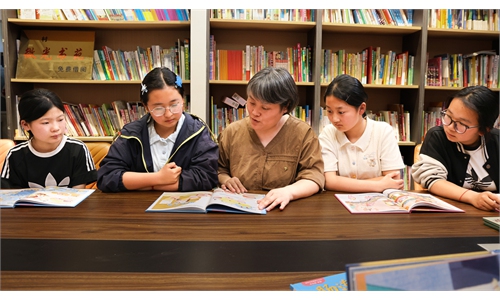
ARTS / BOOKS
Passing on the spirit of lion dance
From his father’s shoulders to the library: a man’s dedication to a beloved tradition
By Published: Nov 18, 2026 08:14 PM Updated: Nov 20, 2026 09:17 PM

Editor's Note:
In an age of information overload, reading remains a necessary channel to invigorate the mind, provide inspiration and cultivate virtue. Whether it is childhood enlightenment or the pursuits of adulthood, everyone's reading journey carries unique emotions and life experiences. The Global Times has specially launched the "100 Avid Readers" series, inviting guests from various fields to share their connections with books, stories of growth, and sparks of thought.
In this installment, Deng Weijie, president of the Foshan Dragon and Lion Dance Association, recounts how a lifetime of reading transformed a boy who once only heard the drums of lion dance into a guardian of tradition.
On a crowded afternoon, drums and cymbals rolled down the street of the Lingnan Xintiandi of Foshan like summer thunder. Children pressed against the barriers, some crouching low, others balanced on tiptoe, eyes locked on the golden, red and black lions leaping across elevated poles.
Watching from the side stood Deng Weijie. He had seen this scene countless times. In 1979, when he was nine, his father had lifted him onto his shoulders in the same city so the boy could glimpse the lions above the crush of heads. A photograph from that day still hangs in the Foshan Museum: a man holding a small child high above a line of dancers. At the time Deng could not understand the loyalty and integrity embedded into the play. He knew only the excitement of the drums and the flash of the lion heads.
He did not yet know that the yellow, red and black faces represented Liu Bei, Guan Yu and Zhang Fei, the sworn brothers of the classic novel Romance of the Three Kingdoms. On the street they were simply the three colors of the southern lion. The understanding of the story came later.
For years, Deng learned the craft the traditional way: watching, repeating, accepting his masters' instructions without explanation. "We first got to know the techniques," he said in an interview with the Global Times. The deeper reasons, why a particular step, why this color, why that sequence, remained locked in oral tradition. Often the masters themselves could not tell the reasons hidden behind a particular move. "My teacher had no deep theoretical foundation," a performer told him once. "He had learned it from his teacher without questioning. It was never refined from a cultural point of view."

Curiosity became a quiet restlessness. In the early 2000s, as Deng began organizing competitions that brought the northern and southern styles together, the gaps in knowledge became impossible to ignore. He started asking harder questions and searching for answers beyond the practice ground. He went to libraries. He read local gazetteers and county histories. He studied the novel itself and the scripts of Cantonese opera. He tracked down elderly masters and pressed them for sources. Many could not provide any.
The books did not hand him ready-made choreography. Romance of the Three Kingdoms describes Guan Yu's loyalty and courage; it does not prescribe the exact drum pattern for a lion climbing poles. County records mention martial-arts halls and temple festivals but rarely detail the steps of a lion dance.
Deng learned to read across sources, matching a line in a novel to a gesture remembered by an old performer, a note in a local history record to a sequence still practiced in that neighborhood.
He began keeping careful notes of sources, annotations and unanswered questions.
Reading changed how he saw the work he already knew. An ordinary movement now carried a lineage. The red lion, associated with Guan Yu, was no longer just a dramatic prop. Deng and his colleagues reconstructed a nearly lost "Red Lion Manual" - nine sequences drawn from Guan Yu's life in the novel: the episode in which he beheads the enemy Hua Xiong before a cup of wine has time to cool; the long journey escorting his sisters-in-law; the lonely nights spent reading the Spring and Autumn Annals. What had been scattered oral fragments became a coherent narrative of loyalty and restraint, performed in the language of the lion.
The same impulse led him outward. Deng helped write international competition rules, served as a referee on global stages, and sat on committees revising standards for the sport. A man who had once made his living through physical prowess now sat at tables with historians and literary scholars. Reading did not pull him away from the lions; it repositioned him inside the tradition.
Another form of transmission
Later he turned to another form of transmission. Beginning in 2019 he and his team began filming a trilogy on southern lion culture. The first film traced the origins, form, rhythm and spirit of this tradition. The second documented the craft of building a lion head from bamboo. A third, still in preparation, will attempt to recover lost formations. The process brought both satisfaction and grief. Some masters died before the cameras could reach them. Others left only fragmentary notes that younger generations could no longer interpret. "The most painful thing," Deng said, "is when the teacher is gone and the disciples cannot restore what was left behind."
He still hopes to produce a written manual with diagrams, drum patterns, sources, and honest admissions of what remains unknown. "What sits in an archive is not yet passed on," he said. "Someone has to read it, understand it, and step onto the poles."
On those two competition days in Foshan, 15 lion teams from China and abroad, representing seven major traditional styles, competed side by side. Deng described the event at the Lingnan Xintiandi as "a practical effort to rescue and revitalize traditional lion arts," bringing the ancient practice into modern urban streets so that audiences could see beyond the spectacle and understand the martial arts, history, and folk culture behind every leap and drumbeat. More than anything, he hopes young people will learn to read Foshan's deep culture of hero worship and loyalty.
"We define it as knowledge that strengthens a nation," Deng said. "The spiritual core of the waking lion is self-reliance, loyalty and righteousness, and respect for propriety. Inside every lion lives a traditional idea. Behind each character stands a Confucian value."
In an age of information overload, reading remains a necessary channel to invigorate the mind, provide inspiration and cultivate virtue. Whether it is childhood enlightenment or the pursuits of adulthood, everyone's reading journey carries unique emotions and life experiences. The Global Times has specially launched the "100 Avid Readers" series, inviting guests from various fields to share their connections with books, stories of growth, and sparks of thought.
In this installment, Deng Weijie, president of the Foshan Dragon and Lion Dance Association, recounts how a lifetime of reading transformed a boy who once only heard the drums of lion dance into a guardian of tradition.
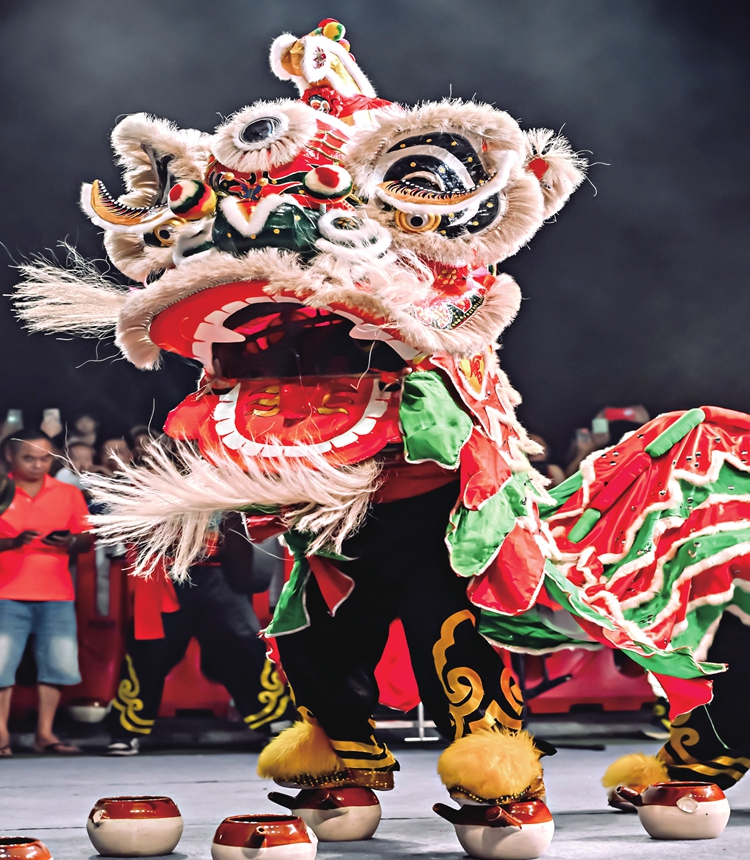
A lion dance is performed in Foshan, South China's Guangdong Province. Photos: Courtesy of Deng Wenjie
On a crowded afternoon, drums and cymbals rolled down the street of the Lingnan Xintiandi of Foshan like summer thunder. Children pressed against the barriers, some crouching low, others balanced on tiptoe, eyes locked on the golden, red and black lions leaping across elevated poles.
Watching from the side stood Deng Weijie. He had seen this scene countless times. In 1979, when he was nine, his father had lifted him onto his shoulders in the same city so the boy could glimpse the lions above the crush of heads. A photograph from that day still hangs in the Foshan Museum: a man holding a small child high above a line of dancers. At the time Deng could not understand the loyalty and integrity embedded into the play. He knew only the excitement of the drums and the flash of the lion heads.
He did not yet know that the yellow, red and black faces represented Liu Bei, Guan Yu and Zhang Fei, the sworn brothers of the classic novel Romance of the Three Kingdoms. On the street they were simply the three colors of the southern lion. The understanding of the story came later.
For years, Deng learned the craft the traditional way: watching, repeating, accepting his masters' instructions without explanation. "We first got to know the techniques," he said in an interview with the Global Times. The deeper reasons, why a particular step, why this color, why that sequence, remained locked in oral tradition. Often the masters themselves could not tell the reasons hidden behind a particular move. "My teacher had no deep theoretical foundation," a performer told him once. "He had learned it from his teacher without questioning. It was never refined from a cultural point of view."
Deng Weijie speaks at an event.
Lineage behind movementsCuriosity became a quiet restlessness. In the early 2000s, as Deng began organizing competitions that brought the northern and southern styles together, the gaps in knowledge became impossible to ignore. He started asking harder questions and searching for answers beyond the practice ground. He went to libraries. He read local gazetteers and county histories. He studied the novel itself and the scripts of Cantonese opera. He tracked down elderly masters and pressed them for sources. Many could not provide any.
The books did not hand him ready-made choreography. Romance of the Three Kingdoms describes Guan Yu's loyalty and courage; it does not prescribe the exact drum pattern for a lion climbing poles. County records mention martial-arts halls and temple festivals but rarely detail the steps of a lion dance.
Deng learned to read across sources, matching a line in a novel to a gesture remembered by an old performer, a note in a local history record to a sequence still practiced in that neighborhood.
He began keeping careful notes of sources, annotations and unanswered questions.
Reading changed how he saw the work he already knew. An ordinary movement now carried a lineage. The red lion, associated with Guan Yu, was no longer just a dramatic prop. Deng and his colleagues reconstructed a nearly lost "Red Lion Manual" - nine sequences drawn from Guan Yu's life in the novel: the episode in which he beheads the enemy Hua Xiong before a cup of wine has time to cool; the long journey escorting his sisters-in-law; the lonely nights spent reading the Spring and Autumn Annals. What had been scattered oral fragments became a coherent narrative of loyalty and restraint, performed in the language of the lion.
The same impulse led him outward. Deng helped write international competition rules, served as a referee on global stages, and sat on committees revising standards for the sport. A man who had once made his living through physical prowess now sat at tables with historians and literary scholars. Reading did not pull him away from the lions; it repositioned him inside the tradition.
Another form of transmission
Later he turned to another form of transmission. Beginning in 2019 he and his team began filming a trilogy on southern lion culture. The first film traced the origins, form, rhythm and spirit of this tradition. The second documented the craft of building a lion head from bamboo. A third, still in preparation, will attempt to recover lost formations. The process brought both satisfaction and grief. Some masters died before the cameras could reach them. Others left only fragmentary notes that younger generations could no longer interpret. "The most painful thing," Deng said, "is when the teacher is gone and the disciples cannot restore what was left behind."
He still hopes to produce a written manual with diagrams, drum patterns, sources, and honest admissions of what remains unknown. "What sits in an archive is not yet passed on," he said. "Someone has to read it, understand it, and step onto the poles."
On those two competition days in Foshan, 15 lion teams from China and abroad, representing seven major traditional styles, competed side by side. Deng described the event at the Lingnan Xintiandi as "a practical effort to rescue and revitalize traditional lion arts," bringing the ancient practice into modern urban streets so that audiences could see beyond the spectacle and understand the martial arts, history, and folk culture behind every leap and drumbeat. More than anything, he hopes young people will learn to read Foshan's deep culture of hero worship and loyalty.
"We define it as knowledge that strengthens a nation," Deng said. "The spiritual core of the waking lion is self-reliance, loyalty and righteousness, and respect for propriety. Inside every lion lives a traditional idea. Behind each character stands a Confucian value."
RELATED ARTICLES