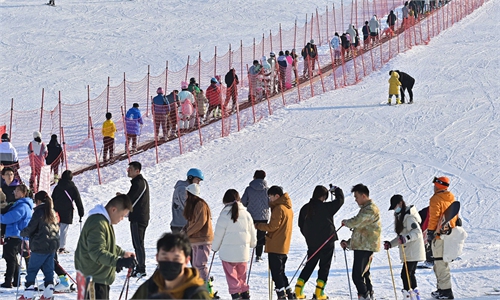
Northern China rolls out 'snow breaks' to turn winter activities into learning opportunities beyond classroom
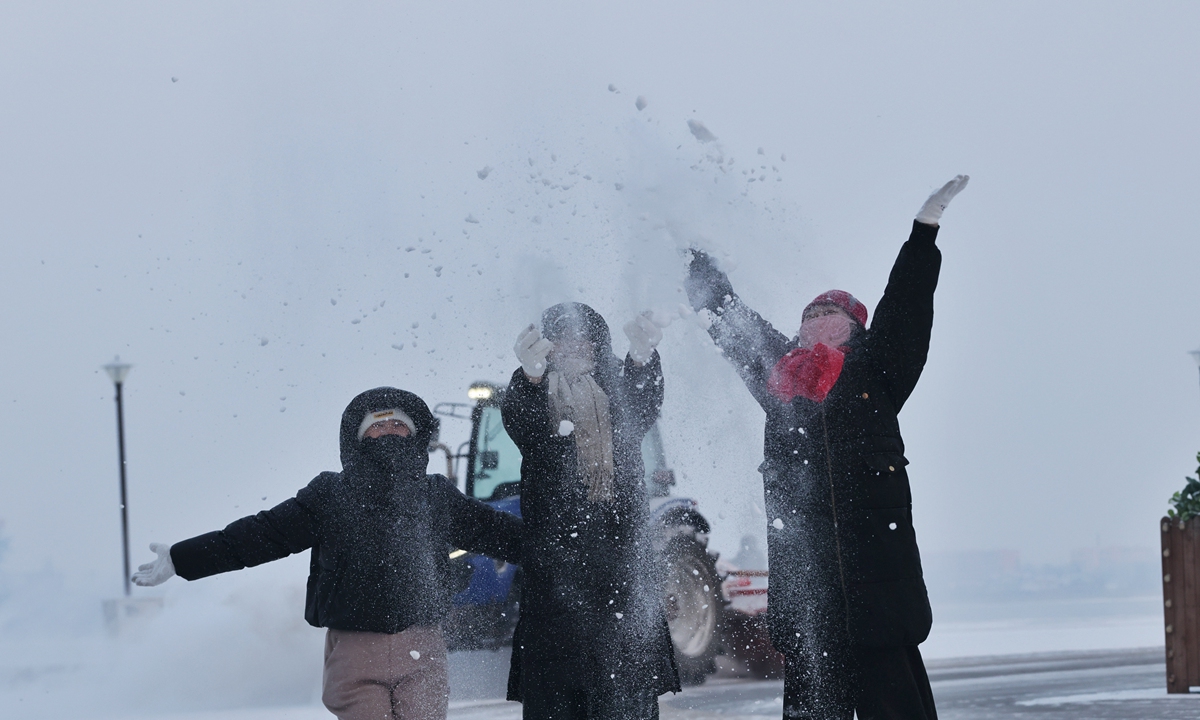
Snow covers the partially frozen Songhua River in Harbin, Northeast China's Heilongjiang Province, on November 18, 2026. Photo: VCG
As autumn breaks continue to make headlines, several northern Chinese regions are introducing another seasonal school holiday: the snow break. Students in Zhangjiakou, North China's Hebei Province, began their first snow break on Wednesday, while Jilin Province, Hulunbuir in North China's Inner Mongolia Autonomous Region, and Altay in Northwest China's Xinjiang Uygur Autonomous Region have also announced their 2026 arrangements.
The initiative seeks to make use of local ice and snow resources, turning winter activities into opportunities for learning beyond the classroom. Jiang Yiyi, dean of the School of Leisure Sports and Tourism at Beijing Sport University, told the Global Times on Thursday that the snow break represents a positive exploration of local education governance, moving away from a uniform school calendar toward arrangements tailored to regional conditions and seasonal characteristics.
Unlike traditional winter and summer vacations, which mainly follow academic schedules and climatic conditions, the snow break directly turns the distinctive ice and snow resources of northern China into educational resources, Jiang said. "It allows the holiday to become an extension of school-based courses and social practice, rather than simply a pause in classroom learning."
The initiative also carries broader significance, Jiang said. It offers opportunities to integrate physical education, aesthetic education, and labor education into real-life experiences, supports the development of winter sports among young people, and creates potential synergies between education and local tourism.
Local arrangements reflect these goals. Jilin plans to offer students free skiing and skating experiences, as well as access to selected tourist attractions and public cultural and sports venues. Hulunbuir is incorporating activities such as dryland curling and floorball, while Altay is encouraging students to take part in winter-themed study tours, folk culture activities, and science education programs.
The growing popularity of winter sports provides a broader context for the initiatives. According to data released by the Winter Sports Administrative Center of China's General Administration of Sport, 308 million people participated in ice and snow sports nationwide during the 2025-26 winter season, including nearly 69 million children and teenagers.
However, turning a seasonal holiday into a meaningful educational experience requires more than simply issuing a vacation notice.
Jiang highlighted three major challenges: childcare provision, activity safety, and equitable access to resources.
For families with both parents working, a school holiday can create additional childcare pressure. Without adequate support, the burden may fall disproportionately on families with limited caregiving options.
Local authorities and schools should provide a combination of on-campus childcare, community-based services, and public winter camps throughout the holiday, Jiang said.
Safety is another concern. Jiang noted that skiing and skating require professional instruction, suitable equipment, and proper supervision. School-organized activities should have clear standards for instructors, venues, student-to-teacher ratios, insurance, and emergency response plans. Public safety training and venue certification can also help families make informed choices when arranging activities independently.
Unequal access to facilities and services could further widen existing gaps between urban and rural students. If snow-break activities rely mainly on commercial ski resorts and paid courses, the holiday could become an opportunity available only to families who can afford it.
The success of a special holiday should not be measured by how many days students are given off, but by whether they return healthier, more confident, and more familiar with their hometowns, while their parents can enjoy peace of mind, Jiang added.
RELATED ARTICLES