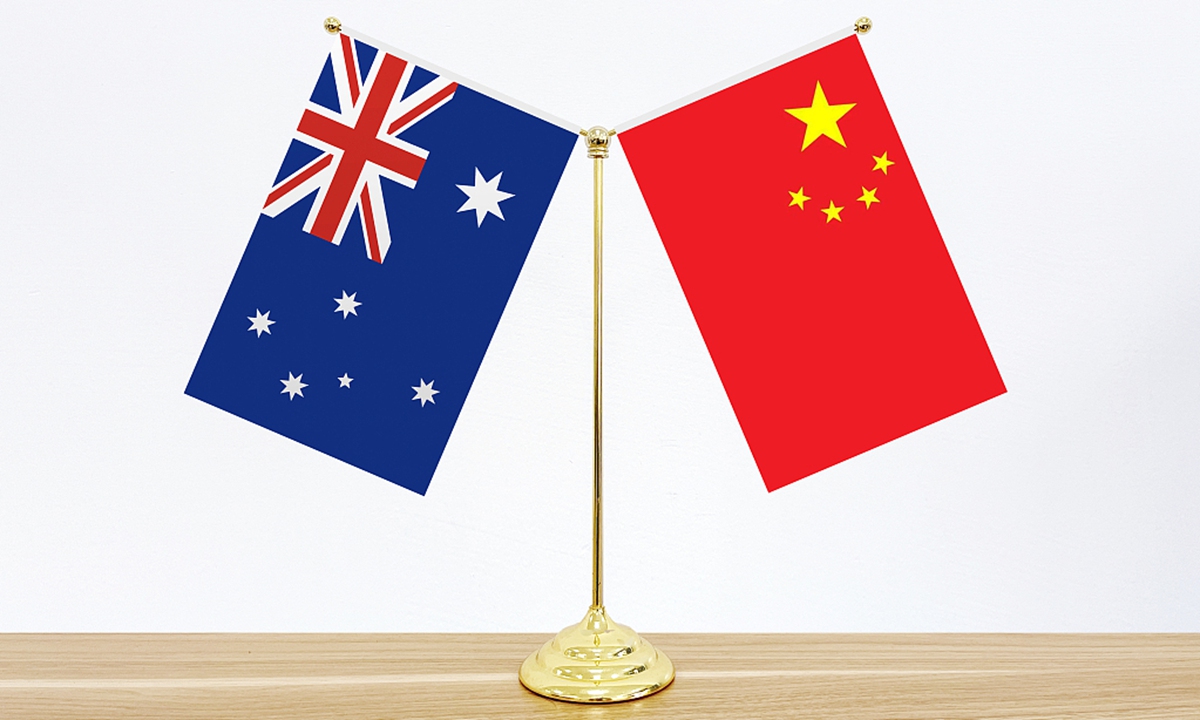
China Australia Photo: CFP
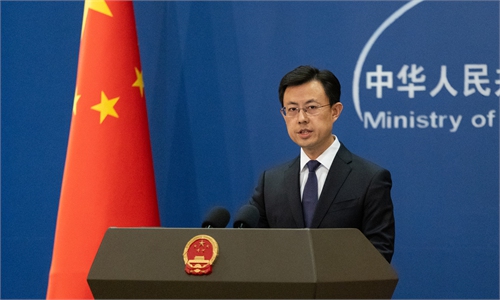
China is willing to work with Australia to focus on common interests and boost cooperation in areas including green development and artificial intelligence (AI), Chinese Premier Li Qiang said during the 11th China-Australia Annual Leaders' Meeting with Australian Prime Minister Anthony Albanese in Beijing on Friday, according to the Xinhua News Agency.
Noting next year marks the 55th anniversary of China-Australia diplomatic relations, Li said China stands ready to work with Australia to seize this opportunity to focus on common interests, properly manage differences, and deliver more outcomes in the comprehensive strategic partnership, Xinhua reported.
China is willing to expand trade volume and optimize its structure with Australia, develop cooperation highlights in emerging areas such as green and low-carbon development, new energy vehicles and AI, and further enhance trade and investment liberalization and facilitation, Li said, per Xinhua.
Albanese said Australia is willing to deepen cooperation with China in economy and trade, agriculture, energy and other fields, and accelerate cooperation in emerging fields like clean energy, AI, electric vehicles and digital economy, Xinhua reported.
The leaders' calls for broader economic cooperation coincided with the ninth Australia-China CEO Roundtable, where Albanese and senior business executives gathered in Beijing on Friday to explore opportunities in resources, industrial decarbonization and clean energy. Mining cooperation, in particular, is expanding beyond traditional iron ore trade to green mining, renewable energy and low-carbon steelmaking.
Co-hosted by the Business Council of Australia and China Development Bank, the meeting brought together 11 Australian executives, including representatives from BHP and Rio Tinto, alongside Chinese business leaders, according to Investing.com. China accounts for more than a quarter of Australia's international trade, according to the Business Council of Australia.
Australia has long been a major iron ore supplier to China, while China is a major market for Australian resources. Australian miners account for nearly 60 percent of China's iron ore imports, while China produces more than half of the world's steel, according to Albanese's remarks at a bilateral steel decarbonization roundtable in July 2025.
As the industry faces pressure to cut emissions, the two countries' complementary strengths are creating opportunities across the industrial chain, Chinese industry observers said.
During a meeting between the Chinese and Australian leaders in Shenzhen, South China's Guangdong Province, on Friday, the Chinese side called for deepening mutually beneficial cooperation in pursuit of the two countries' respective development goals, advancing traditional cooperation in areas such as energy and minerals, according to the Xinhua News Agency.
Mark Kouwenhoven, general manager of Fortescue's China operations, told the Global Times that the company has operated large-scale mines in Australia's remote Pilbara region for more than two decades and is bringing together its mining experience and the capabilities of Chinese firms.
"Our Chinese partners bring expertise in manufacturing, energy and technology. We are combining these strengths to demonstrate how decarbonization can be achieved at industrial scale," Kouwenhoven said.
He cited cooperation with XCMG on all-electric mining equipment and partnerships with LONGi, BYD and Envision Energy in solar power, storage and wind power. Fortescue is integrating these technologies through a green power grid in the Pilbara and the electrification of its mining fleet, he said.
Cooperation is also reaching further down the steelmaking chain. Rio Tinto, the University of Queensland, Central South University and the University of Science and Technology Liaoning recently established the Global Ironmaking Frontier Technical R&D Platform to advance low-carbon ironmaking research through joint work by Chinese and Australian researchers, according to the Australian company.
Rio Tinto has also worked with China's Shougang Group on emissions-reduction technology. In September 2026, the two companies commissioned a carbon capture trial facility at Shougang's Jingtang base in Hebei Province, capable of processing up to 3,000 cubic meters of blast furnace gas per hour and capturing up to 10,000 tons of carbon dioxide annually, Rio Tinto said.
The project builds on a 2022 partnership covering carbon capture and low-carbon steelmaking.
Policy cooperation is developing alongside these projects. At the first Australia-China Policy Dialogue on Steel Decarbonisation on November 2, officials discussed iron ore processing, lower-emission steel technologies, industry standards and emissions accounting. The two sides agreed to continue exchanges and develop practical cooperation, with China set to host the next dialogue.
Wang Guoqing, research director at Beijing Lange Steel Information Research Center, told the Global Times that the shift from iron ore trade toward green mining, low-carbon metallurgy and joint research is an inevitable trend amid global steel decarbonization and industrial upgrading. It does not replace existing trade but deepens the complementary relationship between the two countries.
"Australia's strengths include high-grade iron ore, mature mining and mineral-processing expertise, abundant wind and solar resources, and research into low-carbon metallurgy and the utilization of lower-grade ore. China, meanwhile, has strengths in renewable energy equipment, mining machinery, autonomous mining trucks, smart mines and integrated energy systems, as well as experience applying low-carbon technologies across its large steel industry," Wang said.
The two countries need to coordinate efforts to cut emissions across the entire chain, from mining and transportation to smelting, Wang said. This means integrating renewable power, energy storage and smart equipment at mining sites; establishing carbon-footprint tracking for ore transportation; and jointly developing hydrogen-based shaft furnaces and shorter-process steelmaking technologies suited to Australian iron ore, with green hydrogen metallurgy advancing in stages.
As a major resource supplier and the world's largest steelmaking market, respectively, Australia and China could develop a more integrated low-carbon steel supply chain, Wang said. If translated into commercially viable projects, this cooperation could offer a practical model for the global mining and steel industries' green transition.
RELATED ARTICLES