Largest embodied AI robot cluster enters mass parcel-feeding duty at postal hub in China
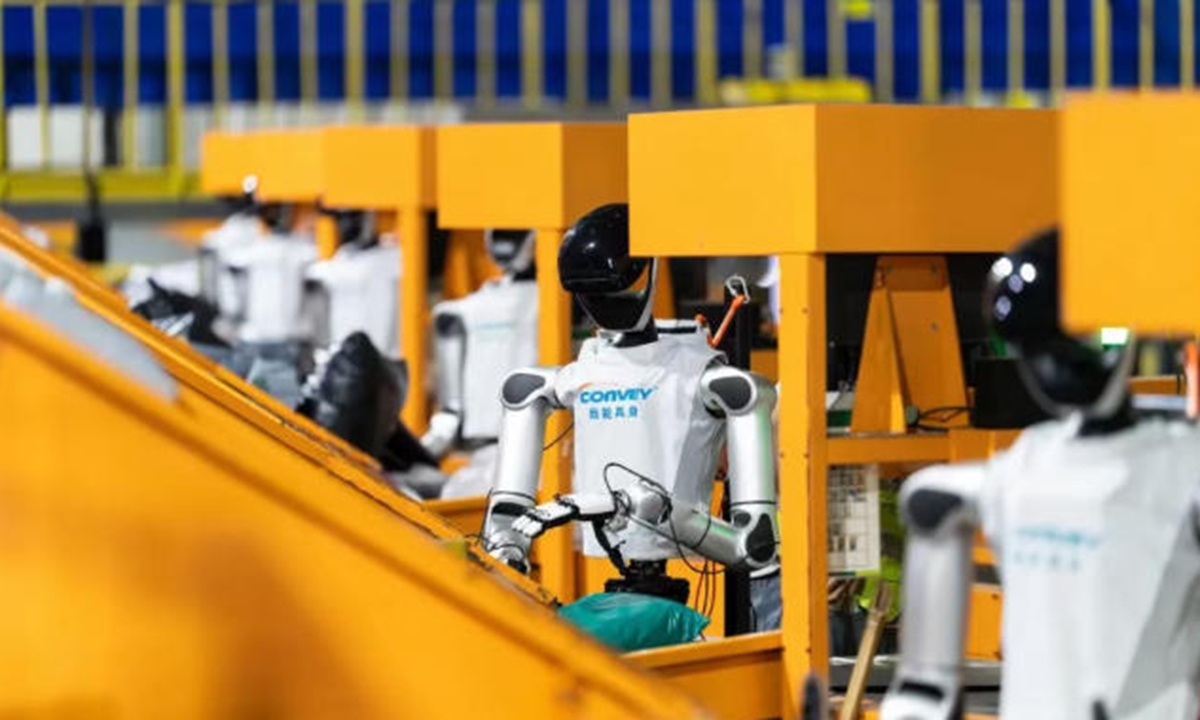
Robotera humanoid robots on parcel sorting duties Photo: Screenshot from web
A total of 45 humanoid robots have been working together on parcel sorting duties at a logistics center in Hangzhou, East China's Zhejiang Province, with their working efficiency rising by 25 percent in less than three months since they were put into operation, Beijing-based Robotera, developer of the robots, said on Wednesday.
China Post's Hangzhou branch has deployed 45 Robotera M7 embodied robots at its Hangzhou mail center to handle small-parcel feeding, marking the first large-scale clustered application of embodied artificial intelligence (AI) in the logistics sector, Robotera said on its official WeChat account on Wednesday.
The pilot started in early September with a designed processing capacity of 1,200 parcels per hour per unit; actual on-site throughput has since surpassed 1,500 parcels per hour, representing a 25 percent increase. The 45 humanoid robots can pick, flip, scan, filter out odd-shaped items and place parcels onto the feed line. They operate alongside existing sorters, scanners and Automated Guided Vehicles (AGVs), making up for the lack of flexibility in these rigid automation systems with their own intelligence and adaptability.
According to the company, deploying these humanoid robots can help resolve bottlenecks in the express delivery industry and cope with workload surges during major shopping festivals. During the 2025 Double 11 shopping festival, the State Post Bureau recorded 13.938 billion parcels nationwide, with a daily average of 634 million parcels - equivalent to 117.8 percent of normal daily volume and a single-day peak of 777 million. Features including stable 24-hour operation will help handle such demand spikes, extended working hours and night shifts, the company noted.
Robotera said its robots have been deployed in multiple cities across South China's Guangdong Province, and the Hangzhou site represents the largest single-site cluster to date, signaling a shift from pilot projects to cross-regional replication. The company added that the robots require no production line retrofitting and can run continuously for 24 hours via battery or mains power.
Industry insiders said that, compared with human workers, embodied AI robots can receive batch software upgrades, enabling their operational efficiency to improve simultaneously overnight.
RELATED ARTICLES