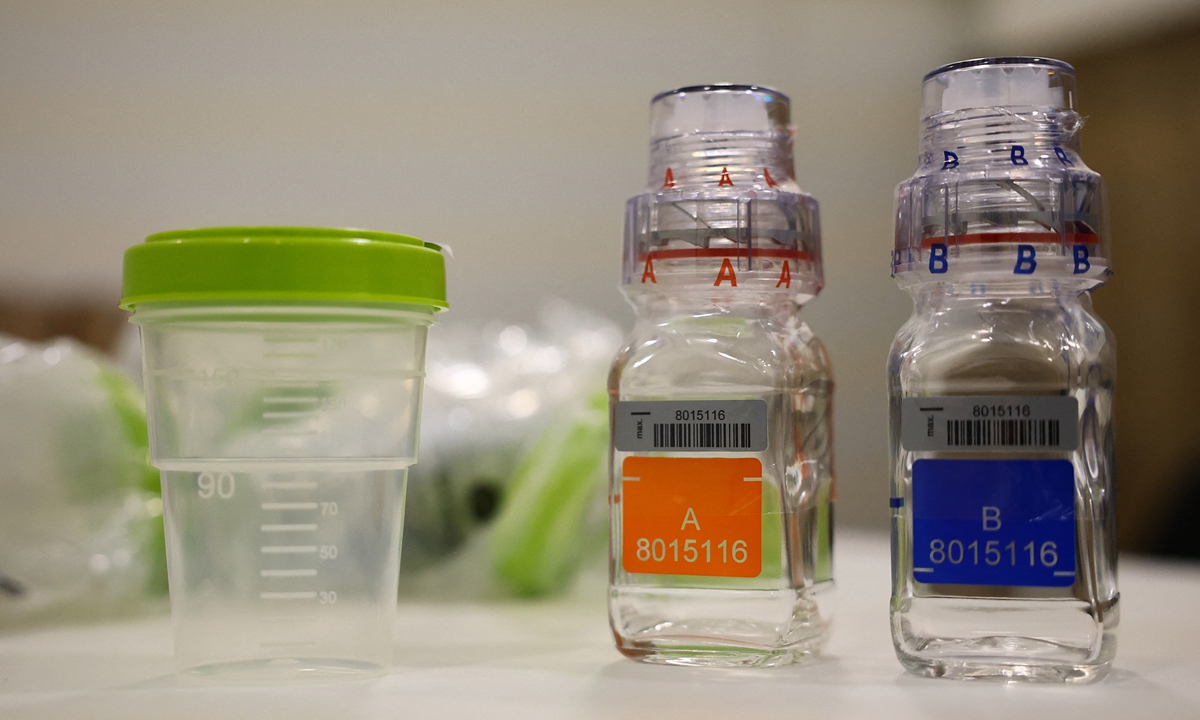
A sample collection cup and sealed A and B bottles used for anti-doping tests Photo: IC
China's top judicial authorities issued a new judicial interpretation clarifying the criminal liability for doping-related offenses on Thursday, setting out more specific criteria for prosecuting those who induce athletes to use prohibited substances, supply them with such substances or engage in other doping-related activities.The Supreme People's Court (SPC) and the Supreme People's Procuratorate (SPP) jointly released the Interpretation on Several Issues Concerning the Application of Law in Handling Criminal Cases Involving Obstruction of Doping Control and Other Related Matters on Thursday. The interpretation will take effect on December 1, 2026.
The new rules aim to strengthen the legal response to doping-related crimes, safeguard fair competition in sports and protect the physical and mental health of athletes, according to the two authorities.
A key provision clarifies what constitutes "serious circumstances" under the crime of obstructing doping control, which was introduced through the 11th Amendment to China's Criminal Law.
Under the interpretation, such circumstances include repeatedly targeting athletes or involving multiple athletes, committing the offense again within two years of receiving industry sanctions or administrative penalties for doping-related misconduct, seriously harming athletes' physical or mental health, and targeting underage or athletes with disabilities.
The provision also covers cases involving illegal proceeds of at least 50,000 yuan ($7,000), as well as conduct that causes serious adverse social repercussions.
The interpretation also seeks to close potential gaps in the legal framework covering the doping supply chain.
It stipulates that smuggling substances included in China's doping catalogue can be prosecuted under the crime of smuggling goods and articles prohibited from being imported or exported, among other applicable charges. Illegal production, sale and use of substances on the catalogue will also be subject to criminal prosecution when the conduct constitutes a crime under relevant laws.
The interpretation builds on China's existing legal framework against doping.
An amendment to China's Criminal Law that took effect on March 1, 2021, introduced a specific offense covering those who induce, instigate or deceive athletes into using doping substances in major domestic or international sports competitions, as well as those who knowingly provide such substances to athletes.
The offense carries a maximum prison term of three years, alongside a fine, while organizing or forcing athletes to use doping substances is subject to heavier punishment.
The new interpretation comes as China continues to strengthen the legal and regulatory framework for anti-doping efforts.
In 2022, the revised Sports Law added a dedicated chapter on anti-doping, explicitly prohibiting organizations and individuals from organizing, forcing, deceiving, instigating or inducing athletes to use doping substances, or providing such substances to them.
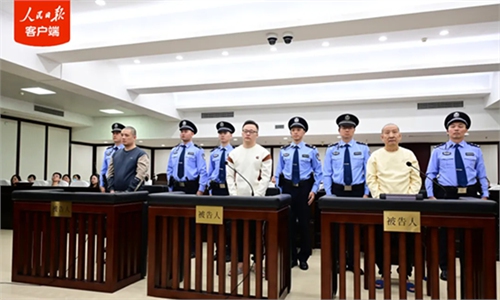
Judicial enforcement has also moved beyond legislative provisions. In April 2025, the ruling in China's first criminal case involving the crime of obstructing doping control became legally effective, according to a case analysis published by the Supreme People's Court.
The case involved two defendants who deceived athletes into undergoing prohibited blood transfusions. The court found that their repeated conduct involving multiple athletes, illegal proceeds and harm to athletes' health and the fairness of competition constituted serious circumstances under the Criminal Law.
The China Anti-Doping Agency (CHINADA) maintains a public disclosure system for doping violations, publishing information on anti-doping rule violations, decisions and lists of black-listed athlete-support personnel.
RELATED ARTICLES