ARTS / CULTURE & LEISURE
Zhao Songyuan’s U-17 World Cup breakthrough raises expectations for China’s next generation of overseas footballers
Fueling hopes
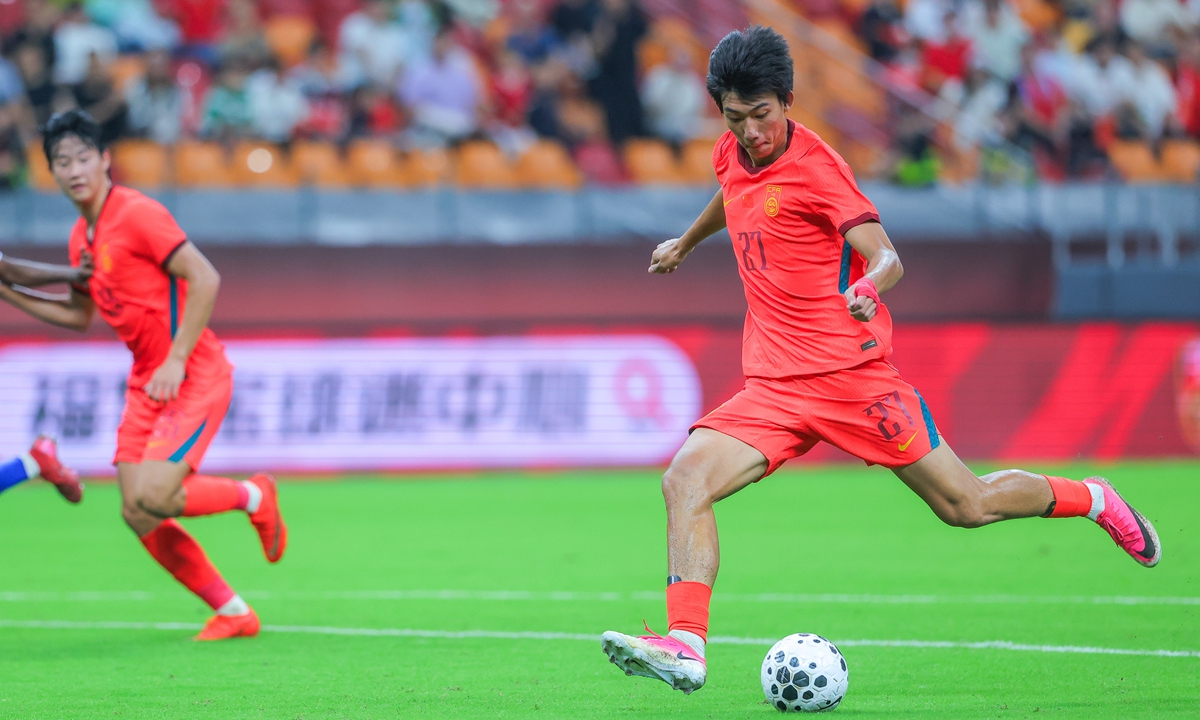
Zhao Songyuan takes a shot in Southwest China's Chongqing Municipality on September 24, 2026. Photo: VCG
The 17-year-old forward from Tsinghua University High School scored twice as China drew 2-2 with Morocco in their second Group H match in Qatar on Monday, earning the Player of the Match award. His performance has attracted attention from international football scouts.
On Tuesday, FIFA also published a dedicated feature on its official website introducing Zhao and his unusual habit of keeping handwritten notebooks to record tactical ideas, analyze movements and reflect on his development.
Zhao's prospects of playing overseas had already attracted attention. In May, following China's runner-up finish at the U17 Asian Cup, Chinese Football Association (CFA) President Song Kai wrote an open letter to Zhao and his parents, encouraging the young forward to leave his comfort zone and pursue opportunities in European football.
The question of how to support such ambitions has also become part of the CFA's broader youth development agenda.
Building a new pathway
On Sunday, the CFA announced a proposed list of 28 young players selected to receive support under its newly established Future Stars Program, an initiative designed to help Chinese teenagers already training and competing in overseas clubs.
The players, born between 2009 and 2011, are based in football systems across Spain, Italy, Germany, Serbia and Japan. Spain accounts for the largest group, with 20 players, reflecting growing interest among Chinese families and young talents in entering the country's football development system. Zhao, however, is not currently on the list.
Four of the 28 players are developing in the youth systems of clubs competing in Europe's top-tier leagues: Espanyol, Getafe and Villarreal in Spain's La Liga, and Genoa in Italy's Serie A.
The presence of these players in established European club academies marks a step toward greater international exposure for Chinese youth football, although their development remains at an early stage, experts said.
"Their inclusion highlights the growing presence of Chinese youth players in the development systems of some of Europe's leading professional clubs, although they have yet to establish themselves among the clubs' senior teams," Zhu Meng, a Beijing-based sports commentator, told the Global Times.
The Future Stars Program is intended to make such opportunities more accessible by providing financial support to eligible Chinese youth players pursuing football development overseas, according to the CFA.
At the program's launch in September, Song said that developing high-level competitive ability requires exposure to advanced football concepts and experience competing at a high level. "The Future Stars Program aims to enable talented children to dare to go abroad, be able to go abroad, stay there , and get play time," Song said.
While the program seeks to help young players access overseas opportunities, the more difficult task is ensuring they can establish themselves and gain meaningful playing experience.
"The emphasis on staying and playing is particularly important. Securing a place at an overseas academy or joining a foreign club may attract attention, but neither guarantees a successful football career," Sun Yuxuan, a football commentator, told the Global Times.
"Young players must adapt to different coaching methods, training intensity, tactical expectations and everyday life, while competing with peers who have grown up in those environments."
Several other young Chinese players have also pursued opportunities in overseas football.
Xu Bin has joined English club Wolverhampton Wanderers, while Wang Bohao has gained experience with Dutch second-tier side FC Den Bosch. Wei Xiangxin has moved to French top-tier club Auxerre. Promising forward Wang Yudong, meanwhile, has been linked with a potential move to Denmark, although no deal has been officially confirmed.
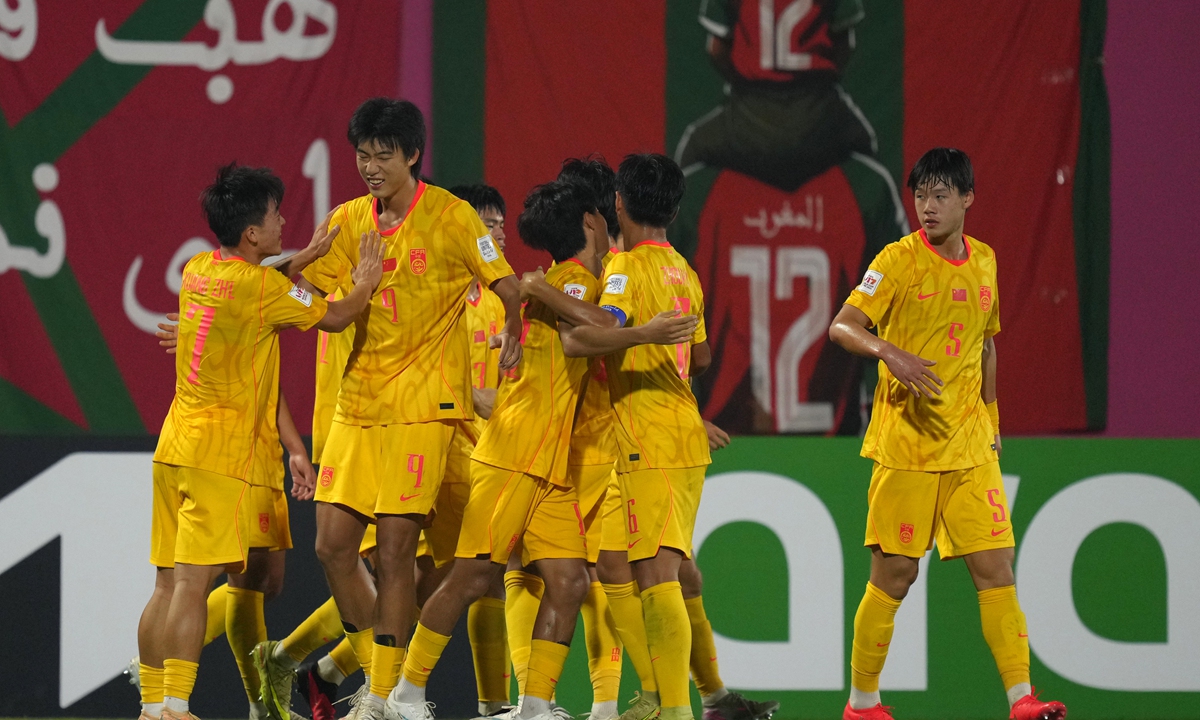
Zhao Songyuan (second from the left) celebrates scoring the China team's second goal with teammates during the FIFA U-17 World Cup Qatar 2026 match on November 23, 2026, in Doha, Qatar. Photo: VCG
Connecting with domestic reform
The CFA's efforts to support young players abroad are taking place alongside broader reforms in China's domestic youth development system.
At a national youth football training conference held in Beijing earlier this week, Song said that China's overall football gap was fundamentally a gap in its development system. He went on to call for systematic restructuring.
The CFA has also launched the Red Print Plan, a broader technical framework intended to establish more consistent approaches to youth development, training, competition, and coaching nationwide.
However, creating opportunities overseas alone cannot address all the challenges facing young Chinese players. The quality and intensity of their development at home also matter, particularly when they eventually move into more competitive football environments.
"The generally slower pace of domestic football has become a major factor limiting the further development of Chinese national team players," Zhu told the Global Times. "The longer young players stay in the domestic game, the harder it can be for them to adapt to the faster pace of leagues overseas."
Beyond the pace of domestic competition, Sun said the broader challenge lay in creating conditions that allow promising players to develop consistently over time.
China's U17 team was scheduled to face Fiji in its final Group H match on Thursday, providing another opportunity for the young players to gain international tournament experience.
For Zhao and the players on the Future Stars Program's proposed list, the challenge extends well beyond securing an opportunity to train overseas. Their long-term progress will depend on whether they can keep regular playing time, continue improving, and eventually establish themselves at the professional level.
"The road from a promising teenager to an established professional is rarely straightforward. Turning that moment of promise into lasting progress takes patience, and preferably a development system that supports young players long after the spotlight moves on," Zhu said.
RELATED ARTICLES