IN-DEPTH / IN-DEPTH
From cross-border power grids to AI-driven systems, Belt and Road energy cooperation gains new momentum
By in Qingdao Published: Nov 26, 2026 10:17 PM

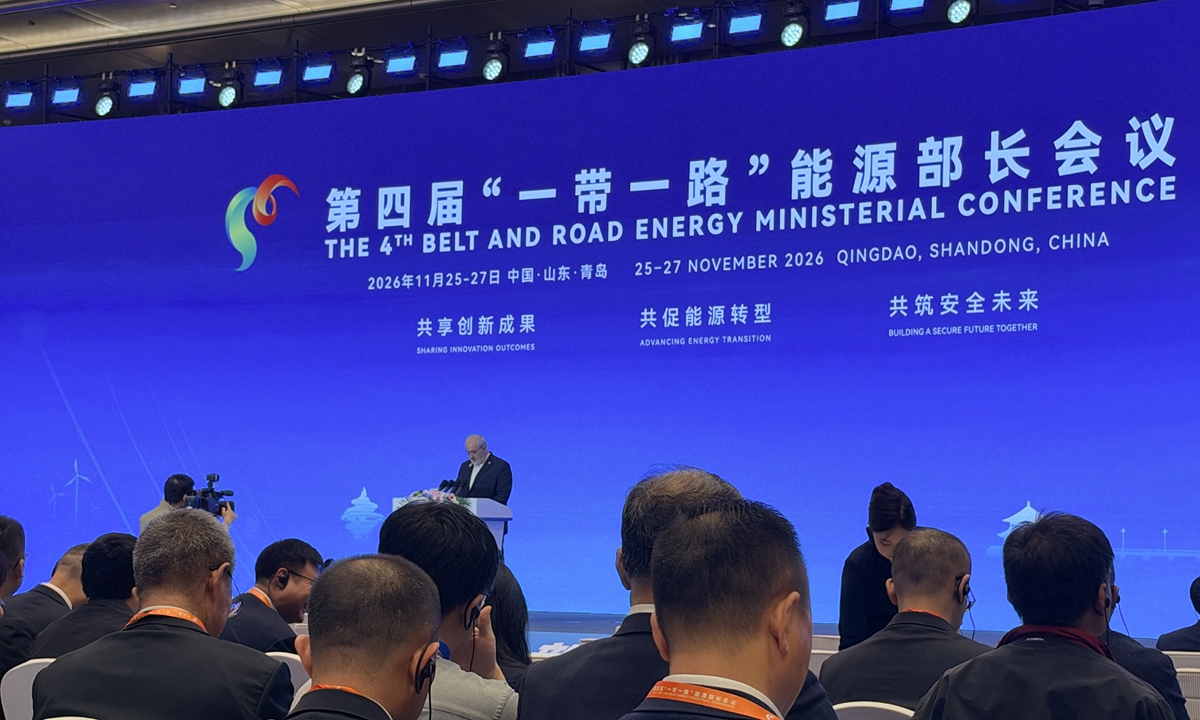
The Fourth Belt and Road Energy Ministerial Conference opens in Qingdao, East China's Shandong Province, on November 26, 2026. Photo: Shan Jie/Global Times
The Fourth Belt and Road Energy Ministerial Conference opened on Thursday in Qingdao, East China's Shandong Province, bringing together some 400 representatives from around 30 countries to strengthen international energy cooperation amid profound changes in the global energy landscape.
A joint ministerial statement on strengthening energy security and green transition among Belt and Road partner countries was released at the conference, along with six other outcome documents covering energy security and resilience, power connectivity, renewable energy development and electrification, artificial intelligence (AI), energy governance, and green financing.
The statement emphasizes respecting differences in countries' resource endowments and stages of development, supporting energy transition pathways suited to national conditions, and strengthening cooperation in technology sharing, cross-border energy exchanges and capacity building.
Under the theme of "sharing innovation outcomes, advancing energy transition and building a secure future together," the conference brought together ministers, senior government officials, representatives of international organizations, energy companies and research institutions.
Running alongside the ministerial conference, the 2026 International Energy Technology Equipment (Qingdao) Exhibition opened on Wednesday. Covering approximately 12,000 square meters, the exhibition attracted more than 100 energy equipment companies showcasing innovations in new-type power systems, coordination between computing and electricity infrastructure, and AI-enabled energy applications.
Addressing the opening ceremony, Wang Hongzhi, head of China's National Energy Administration, said that energy cooperation under the BRI has contributed to global economic development and improved people's livelihoods over the past decade.
Over the past 10 years, the cumulative installed capacity of new energy in Belt and Road partner countries has quadrupled to more than 600 gigawatts (GW). Nearly 70 new energy projects were launched in partner countries in 2025 alone, while China has carried out green energy project cooperation with more than 100 countries and regions.
The Belt and Road Energy Partnership has expanded to 35 member countries, with its cooperation network bringing together nearly 300 Chinese and foreign enterprises.
Wang proposed six areas for deeper international cooperation, including strengthening energy security, upgrading cross-border power connectivity, exploring green transition pathways, promoting technological innovation, improving energy governance and expanding green financing channels.
He also called for greater cooperation in integrating AI and energy, making use of newly established working groups, including one on AI plus energy, to support developing countries in improving their technological capabilities.
Foreign ministers attending the conference highlighted their countries' development priorities and expressed expectations for deeper energy cooperation with China.
Mariam Kvrivishvili, Georgian vice prime minister and minister of economy and sustainable development, said international cooperation and the sharing of innovative solutions are essential to developing modern and resilient energy systems, expressing Georgia's willingness to deepen practical cooperation with China in renewable energy, energy storage and modern energy infrastructure.
Azerbaijani Energy Minister Parviz Shahbazov said China's strengths in green energy technology, combined with Azerbaijan's energy resources and strategic geographical location, offer opportunities for further cooperation.
Azerbaijan is already working with China Southern Power Grid International to advance the Trans-Caspian Green Energy Corridor, with a feasibility study underway with support from the Asian Development Bank and the Asian Infrastructure Investment Bank. The corridor is scheduled to enter operation in 2032, Shahbazov said.
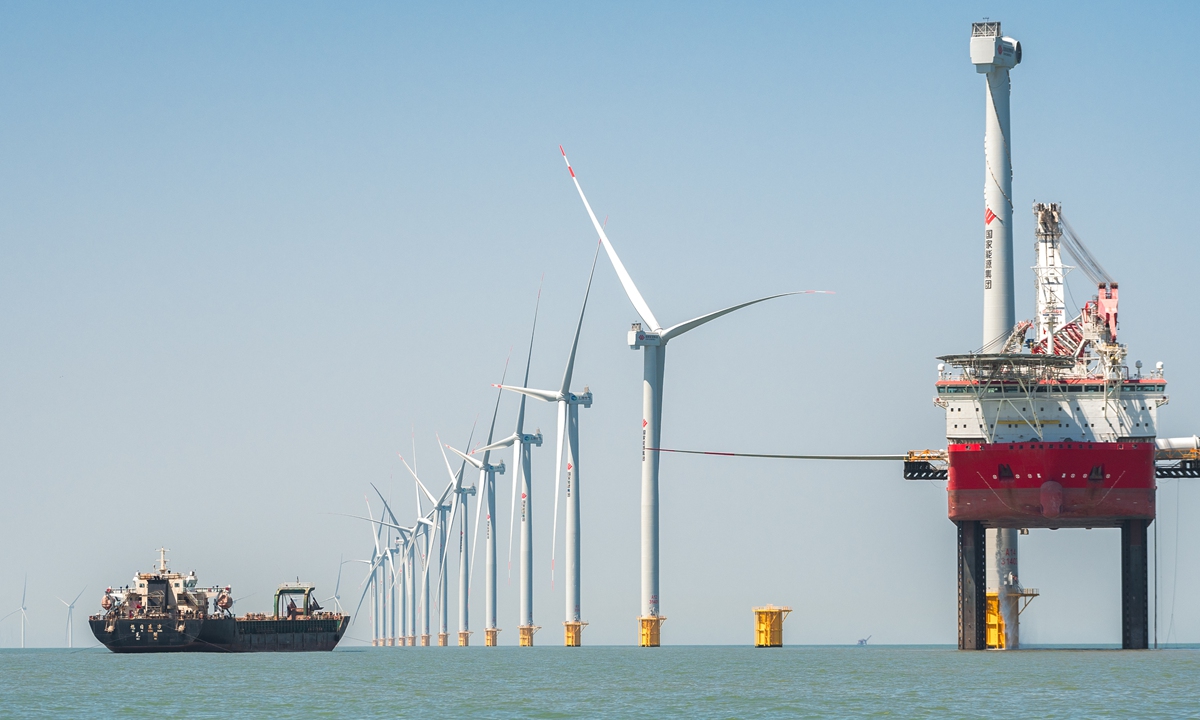
Offshore wind power Photo: VCG
For African countries, energy access, local industrial development and technological capacity building were among the priorities raised at the conference.Edwige Opportune Pouninguiza-Nguelebe, minister of energy and water resources development of the Central African Republic, highlighted the Chinese-supported Sakai solar power plant near Bangui, which has an installed capacity of 15 megawatts (MW) and a 5-megawatt-hour battery storage system.
The minister said the country hopes to move beyond individual projects toward a more comprehensive and results-oriented energy partnership with China, with priorities including power generation, grid expansion, rural electrification, technology transfer and local capacity building.
South African Minister of Electricity and Energy Kgosientsho Ramokgopa said that for developing countries, energy transition must serve as an instrument of industrial development, expanding productive capacity, creating jobs and enabling broader participation in the economy.
South Africa hopes to deepen investment and technological cooperation in areas including renewable energy, nuclear power, advanced energy storage and the digitalization of energy systems, with particular emphasis on local manufacturing and technology transfer, Ramokgopa said.
The conference also unveiled 16 best practice cases of innovation-driven international energy cooperation, ranging from renewable energy-powered seawater desalination equipment in the Maldives and energy storage applications in Pakistan to digital talent training in Senegal.
On Wednesday, the Governing Board of the Belt and Road Energy Partnership was officially established, with its inaugural meeting held in Qingdao.
Wang said at the meeting that the establishment of the board marks the partnership's transition from building a cooperation framework to developing institutional mechanisms and implementing commitments.
RELATED ARTICLES