China’s State Council meeting calls for greater role by ‘national team’ in steadying stock markets
China stocks surge most in 2 years; Shanghai Composite Index reclaims 3,600-point mark

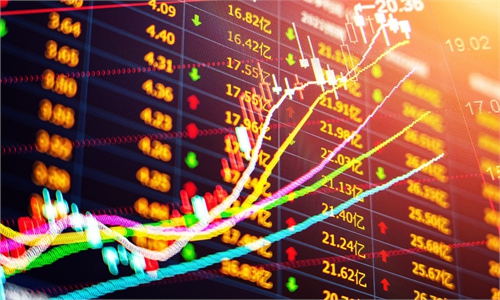
stock market Photo:VCG
China's key stock indexes surged across the board on Friday, with the benchmark Shanghai Composite Index and the blue-chip CSI300 Index heading for their best session in two years. The surge came after the country convened a State Council executive meeting that urged efforts including giving greater play to "national team" (state-backed) funds in steadying the market.
It marks the second time in a month that the State Council executive meeting has issued a dedicated policy direction on the capital market, combined with a series of recent measures to stabilize the stock market, including cutting the minimum stock margin requirement to 80 percent.
Chinese experts noted that the measures mentioned at the meeting go beyond a single-dimensional backstop to form a coordinated policy package covering capital supply, trading mechanisms and listed-company quality, which help restore investor confidence, anchor expectations and ultimately serve the market's long-term stability.
The meeting also came before the annual Central Economic Work Conference, which, normally held in mid-December, will set out priorities for next year's economic work. Meanwhile, Chinese analysts noted that stabilizing the stock market helps improve market expectations and create a positive cycle of steady investment and consumption, laying the foundation for the country's economy to achieve stable growth.
Stabilizing capital market
Chinese Premier Li Qiang on Friday chaired a State Council executive meeting. Stressing that the capital market is vital to overall economic development, the meeting called for efforts to strengthen counter-cyclical adjustments and tackle critical reform tasks at the same time, the Xinhua News Agency reported.
Efforts should be made to encourage listed companies to pay more dividends and step up share repurchases, give greater play to "national team" (state-backed) funds in steadying the market, and optimize the quasi-"stabilization fund" function of the state-owned Central Huijin Investment Ltd. to provide sufficient liquidity, according to the meeting.
"It is worth noting that the timing of the release of the meeting readout differed from the usual after-hours releases, coming just before the A-share afternoon session opened — a move that reflects the policy intent to safeguard market stability and bolster investor confidence," Yang Delong, chief economist at Shenzhen-based First Seafront Fund, told the Global Times on Friday.
Against the backdrop of a market that has undergone several months of correction and the growing allocation value of some quality stocks and funds, the meeting's deployment comes as timely relief and is expected to be an important force in driving the market toward stabilization and a rebound, Yang said.
During the previous pullback in China's A-share market, the Shanghai Composite Index briefly fell below the 3,500-point psychological threshold, with the pressure stemming partly from the spillover effects of the correction in overseas tech sectors.
As of the close on Friday, it reclaimed the 3,600-point mark, closing 3.73 percent higher to end the day at 3,606.49 points, and notching its biggest daily gain since October 2024.
The Shenzhen Component Index soared 7.24 percent, the ChiNext Index, tracking China's Nasdaq-style board of growth enterprises, jumped 11.61 percent, while the STAR Composite Index, which reflects the performance of stocks on China's sci-tech innovation board, jumped 14.21 percent.
The CSI 300 Index gained 4.17 percent to close at 4,063.06 on Friday, marking its biggest single-day advance since October 2024.
Notably, this is the first time the term "national team" has appeared in a readout from a State Council executive meeting, according to an analysis by Xinhua. "It gives the stabilization mechanism a clearer institutional outline, signaling that the market stabilization measures are not temporary but a standing institutional arrangement," Xi Junyang, a professor at the Shanghai University of Finance and Economics, told the Global Times on Friday.
According to Xinhua, the meeting also stressed the need to improve market-stabilizing mechanisms, give full play to existing policies, and mull and introduce new measures to promote steady and sound development of the capital market.
Over the period, a raft of policies has already been rolled out — optimizing share buybacks and increased holdings, the swap facility, and adjusting the margin requirement ratio. "It now appears that more policy support may be in the pipeline at both the capital market and macroeconomic levels," Xi Junyang said.
The meeting also underlined the need to improve policies to support and guide medium- and long-term funds such as insurance funds, enterprise annuities, and social security funds into the market, and strengthen the capacity to guard against and respond to imported risks.
"The multiple efforts proposed at the meeting have a positive effect on stabilizing the capital market. Rather than a single-dimensional backstop, these measures form a coordinated policy package spanning capital supply, trading mechanisms, and the quality of listed companies," Xi Junyang said, adding that they point toward enhancing the functions and operational quality of the capital market, helping restore investor confidence, improve market expectations, and deliver an overall benefit for the long-term stability of the capital market.
Conducive to stable economic devt
Beyond the market itself, the significance of the meeting's deployment extends to the broader macroeconomy, Chinese analysts said.
"As the readout made clear from the outset, the capital market is vital to overall economic development — and stabilizing it is not an end in itself, but a means of shoring up expectations, investment and consumption," Tian Yun, a veteran economist based in Beijing, told the Global Times on Friday.
According to Tian, the measures are expected to help bolster investor confidence by making clear that while normal corrections are inevitable, the market is on a broadly upward trajectory despite fluctuations.
Xi Junyang noted that a healthy capital market can better perform its financing and investment functions and promote the rational allocation of financial resources to more efficient sectors. "This optimization of financial resource allocation, in turn, guides the effective flow of real resources and improves overall operational efficiency, thereby exerting a positive effect on economic growth," he noted.
Friday's development also came as official data released on the same day showed that major industrial enterprises recorded an increase of 16 percent year-on-year during the first ten months, with high-tech manufacturing profits surging 50.9 percent.
Tian noted that improving corporate earnings provide the fundamental basis for better returns, while a stable capital market helps channel long-term capital into the market to support the development of innovative and tech companies and foster a positive cycle among market stability, corporate development and stable economic growth.
Chinese experts also stressed that the strong rebound in China's stock market — particularly the tech-growth segment — coupled with the simultaneous rally in Hong Kong stocks, will help lift risk appetite across Asia-Pacific markets, emerging markets and the broader global market.
"As the world's second-largest economy, a recovery in market confidence in China can help reduce part of the global risk premium and may attract some cross-border capital to flow back or reallocate into Chinese assets," Xi Junyang said.
Against the backdrop of ongoing volatility in overseas tech markets and shifting global liquidity conditions, as investors worldwide seek a reliable anchor amid uncertainty, China is advancing in a more institutionalized manner to inject a measure of predictable certainty into both its domestic economy and global financial stability, Xi Junyang noted.
RELATED ARTICLES