A week on, Japan remains focused on Shenzhen airport dispute, overlooking the bigger picture
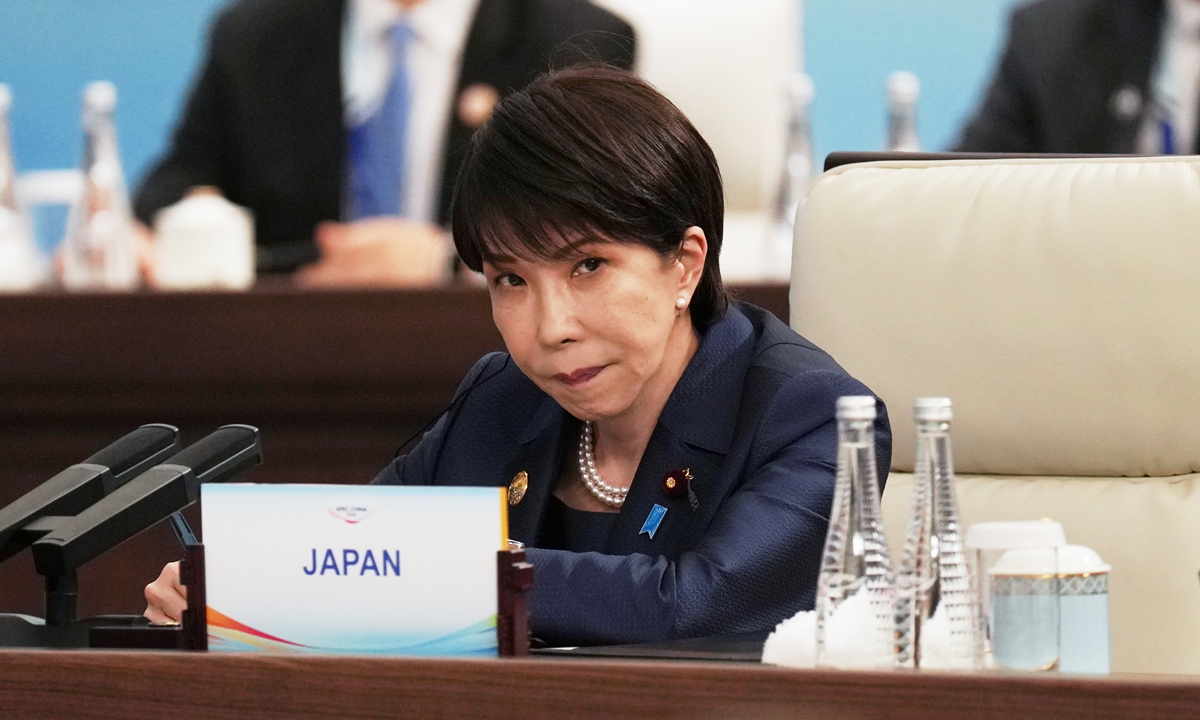
Japan's Prime Minister Sanae Takaichi attends the APEC Economic Leaders' Meeting on November 19, 2026, in Shenzhen, China. Phto: VCG
Some countries go to international summits with a vision for the future. Others seem more concerned with whether they have been shown enough respect.
The 33rd APEC Economic Leaders' Meeting ended a week ago. Across the region, attention has shifted to economic and technological cooperation. In Japan, the argument remains stuck at the Shenzhen airport — still circling the arrival of a government plane and the reception that followed. The row has lasted long enough for Japanese Prime Minister Sanae Takaichi to enter the fray personally.
For the past week, Japanese media kept returning to the height of the mobile stairs at the Shenzhen airport, casting it as evidence that China had snubbed Japan. Then came the twist. Some Japanese media reported that Takaichi asked for the plane to arrive early so she could stage a "chance" to encounter with US President Donald Trump. The request continued even after she were told leaders use separate airport routes, and she insisted on disembarking as quickly as possible. These details tell a different story: What Japan portrays as a diplomatic slight may have been largely the result of its own poor planning.
On Friday, Takaichi denied on social media that she had asked for an early arrival. The denial looked like wordplay. Japanese media had already reported that the plane left Manila, the Philippines, more than an hour earlier than originally scheduled. The issue has now turned into a public squabble between the Japanese government and media. It is clearly no longer quite about the stairs.
The controversy reveals something more troubling than an obsession with diplomatic protocol: a striking lack of strategic vision. The real question is not how high the stairs were, or whether the plane left or arrived on time, but why a meeting that was supposed to focus on regional cooperation has been turned, in Japan, into a debate about protocol, appearances and wounded pride.
What increasingly holds Japan back is a deeply misplaced set of priorities: fretting endlessly over trivial gains and losses while avoiding fundamental political questions; demanding respect from others while showing little willingness to consider how its own actions affect regional trust.
Nowhere is this contradiction more apparent than in its approach to China. Tokyo's political debate has devoted enormous attention to an airport stairway, while largely tolerating Takaichi's provocative and erroneous remarks on Taiwan question — which concerns China's sovereignty and territorial integrity and a major source of tension in bilateral relations. It is a classic case of nitpicking the details while getting the strategy completely wrong.
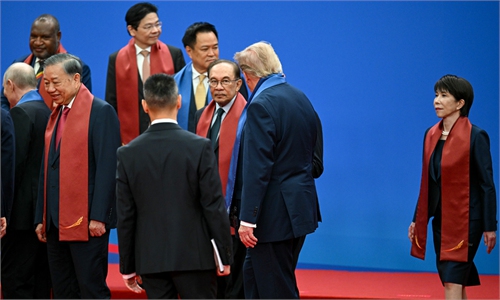
Takaichi's loneliness at APEC meeting did not go unnoticed. As Financial Times put it, "Japan's Takaichi isolated on world stage." But no one stepped in to offer her warm diplomatic support or ease her isolation - not the US, nor any of the other APEC members. That isolation was not imposed on Japan by China. It was self-inflicted.
Peaceful coexistence with major neighboring countries is a fundamental condition for any country's development. Yet Japan is moving in the opposite direction. It is pressing ahead with military expansion, whitewashing its wartime history and, most recently, preparing to deploy long-range strike missiles in Hokkaido. The move is bound to raise questions about Tokyo's strategic intentions, particularly given the potential reach of Japan's expanding missile arsenal. Is Japan seeking to provoke China and Russia simultaneously?
Tokyo appears to want to win the trust of its neighbors, yet its actions are steadily eroding that trust. It presents itself as a guardian of the post-war international order while pursuing policies that push the region towards confrontation. This contradiction is increasingly narrowing Japan's diplomatic room for maneuver.
What Japan needs most is an honest debate about its strategic direction. Should a country grappling with deep economic and demographic challenges devote ever more political resources to military expansion? Should a country with deep economic ties to China, and no power to change its geography, continue to undermine political trust with its neighbor? And how can a country aspiring to greater international influence explain the growing tensions its own policies are creating across the region?
Nitpicking over details cannot conceal Japan's failure of strategic judgment.
The Asia-Pacific is entering a new stage. Economic restructuring, technological change, and shifts in the regional security landscape all demand more mature strategic judgments from every country. Against this backdrop, Japan is still arguing over a set of aircraft stairs. The country should be more concerned that it is losing sight of where it is heading.
RELATED ARTICLES