China’s ‘strictest-ever’2027 civil service exam draws 3.45 million; competition remains fierce despite decline in qualified applicants
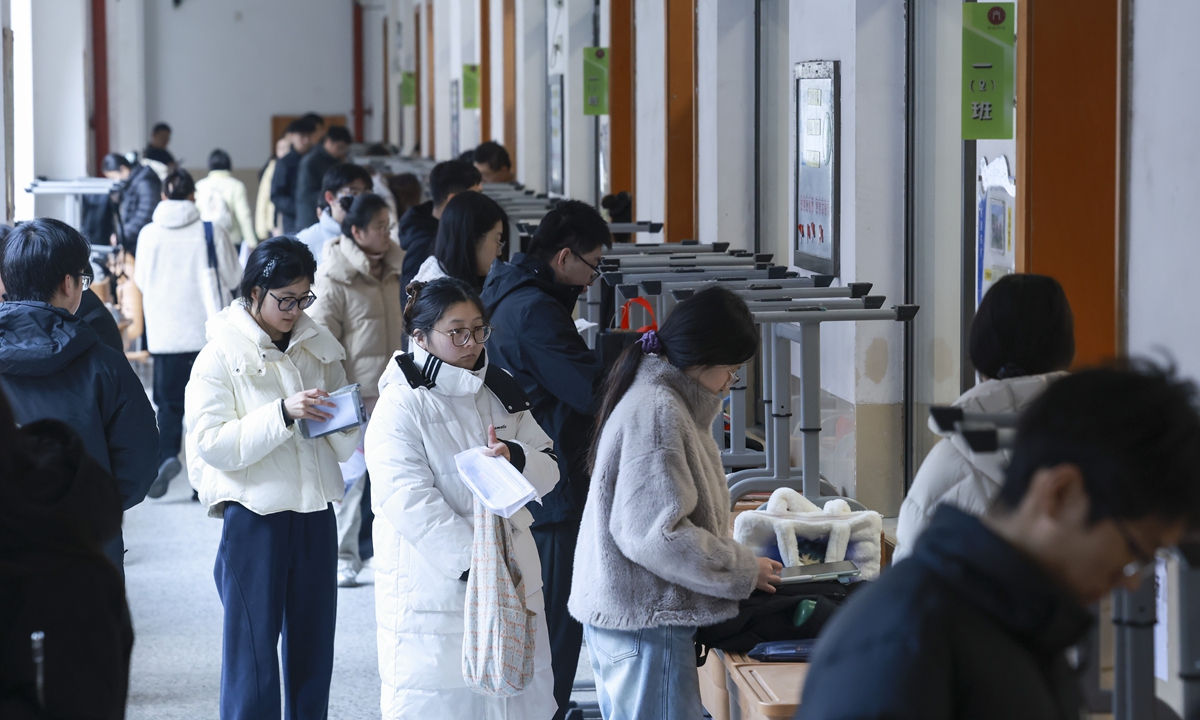
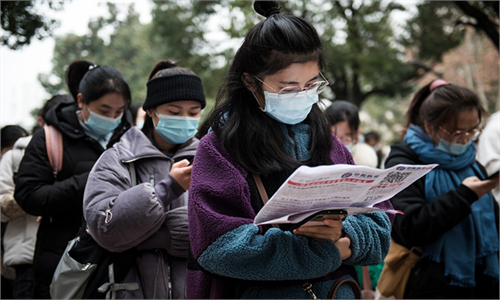
Applicants enter an exam venue in East China's Jiangsu Province on Novermber 29, 2026. Photo: VCG
China's 2027 national civil service examination was held on Sunday, with the number and profile of applicants once again drawing widespread attention, as competition remains fierce for many positions despite a decline in the number of qualified applicants.
The 2027 recruitment exercise aims to recruit 35,700 civil servants, while 3.45 million applicants passed the qualification review conducted by recruiting agencies, according to the recruitment announcement for the 2027 national civil service examination. This translates into approximately 97 qualified applicants per available position.
According to previously released figures from the National Civil Service Administration, the recruitment quota has been reduced by approximately 2,400 positions from the previous year. However, the examination continues a policy of relaxing age requirements for applicants.
Under the eligibility rules, applicants are generally required to be between 18 and 38 years old. The upper age limit is extended to 43 for those applying as 2027 graduates of master's and doctoral programs.
The recruitment policy also continues to prioritize fresh graduates and positions at the grassroots level. Of the total recruitment quota, 26,900 places are allocated to directly affiliated agencies at the county level and below. Meanwhile, recruitment at municipal-level institutions and below directly affiliated with central government departments is primarily aimed at fresh university graduates, with 24,600 positions designated for this group, according to Xinhua.
Competition remains particularly fierce for some positions. According to statistics compiled by relevant institutions, each of the 10 most sought-after positions attracted more than 3,400 applicants, while the competition for the most popular position exceeded 6,000 applicants for a single vacancy.
This year's examination also introduced stricter disciplinary requirements. Candidates arriving more than 15 minutes after the exam begins are prohibited from entering the examination venue, tightening the previous 30-minute grace period.
In addition, applicants were required to undergo real-name and identity verification through platforms such as the electronic social security card during the registration process, as part of efforts to prevent fraudulent practices known as "surrounding a position" in civil service examinations. The practice involves multiple people applying for the same position with the intention of helping a particular candidate secure the vacancy.
Measures to crack down on such practices can effectively curb attempts to manipulate the perceived competitiveness of particular positions through fraudulent applications.
What has attracted even greater attention, however, is the decline in the number of applicants passing the qualification review. The figure fell by 268,000 from the previous year, marking the first annual decline after seven consecutive years of increases beginning with the 2020 examination.
Some observers have pointed to the longer-term trend, noting that the number of applicants passing the qualification review rose from 1.3793 million for the 2019 examination to 3.718 million for the 2026 examination, increasing to approximately 2.7 times its original level before declining this year.
However, Zhuang Deshui, deputy director of the Research Center of Public Policy at Peking University, told the Global Times that the latest figures should not be taken as evidence that enthusiasm for civil service positions has faded.
With the recruitment quota reduced, the average competition ratio has remained almost unchanged from the previous year, Zhuang said. Moreover, some positions still attract thousands of applicants for a single vacancy.
Zhuang said that, following years of adjustments, civil service recruitment quotas have generally stabilized. The overall recruitment volume is likely to remain broadly steady or decline slightly in the coming years. Government jobs are likely to remain attractive to young people, particularly because of their relative employment stability, the expert added.
RELATED ARTICLES