'We want to be in the Chinese market': director of American Soybean Association
By Ma Jingjing, and Chen Zishuai in Shanghai Published: Nov 06, 2025 11:52 PM

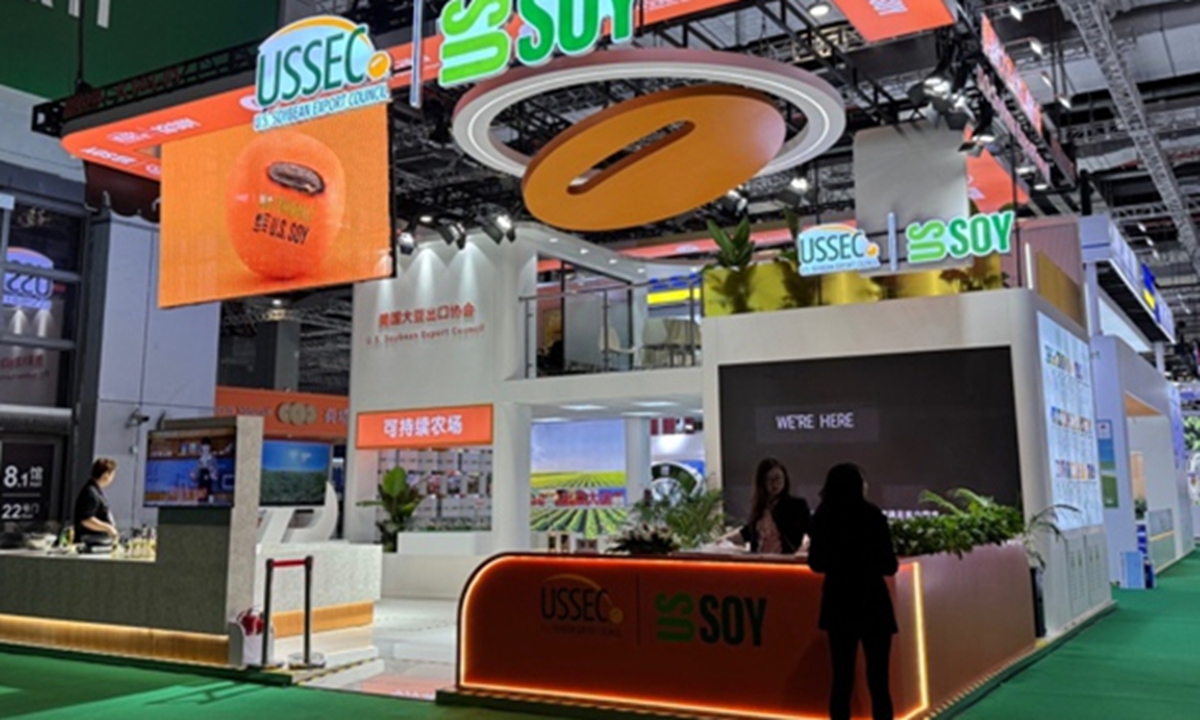
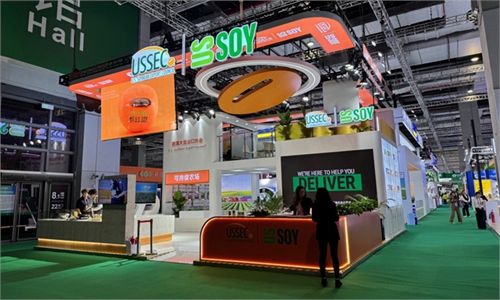
Booth of the US Soybean Export Council at the 8th China International Import Expo in Shanghai on November 5, 2025. Photo: Tu Lei/GT
China is vital to US farmers, as normally a significant portion of the American soybean crop is exported to China, Andrew Moore, a US soybean farmer and director of the American Soybean Association (ASA), told the Global Times on Thursday, stressing that "We value the market here. We want to be in the market here."
Moore farms with his father and uncle in the northwest area of the US state of Georgia, on a farm that was established in 1955. Generally, the harvest season for US soybeans is from September to November, and the family normally starts shipping soybeans to China during that period, according to Moore.
China has historically been the top importer of world's soybean supplies, with the US once serving as its top source, according to the ASA.
However, US tariffs disrupted trade with China in this sector.
In August, the ASA urged the US government to secure a deal with China to reopen this vital market for US soybeans, stressing that US soybean farmers cannot survive a prolonged trade dispute with their largest customer, according to the association's website.
In the latest development, China's Ministry of Commerce on October 30 unveiled the outcomes of recent economic and trade talks between the Chinese and US delegations in Kuala Lumpur. A spokesperson of the ministry said that the two sides also reached consensus on expanding agricultural product trade.
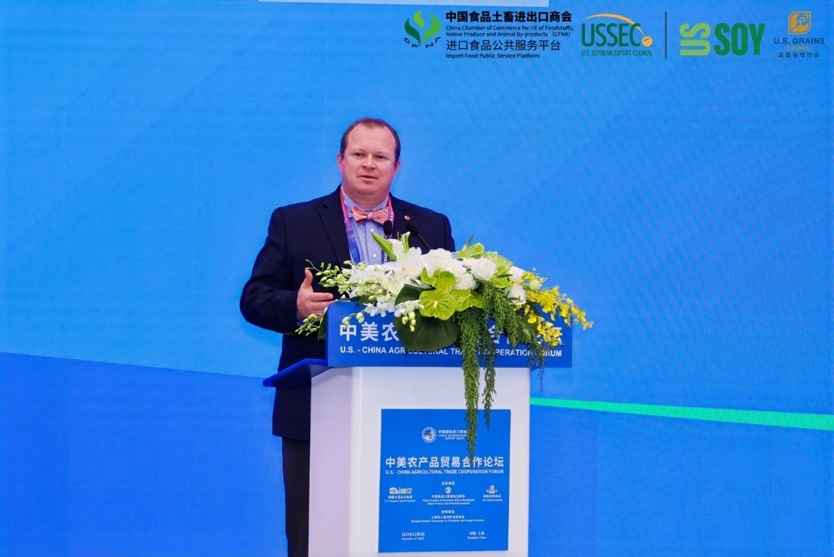
Andrew Moore, a US soybean farmer and director of the American Soybean Association, speaks at a forum during the 8th China International Import Expo in Shanghai. Photo: Courtesy of US Soybean Export Council
"I believe that the US farmers, specifically the soybean farmers, have been vocal in the past several months, saying 'We want to ship our soybeans to China.' I am happy that our voices were heard," Moore said at a forum during the 8th China International Import Expo (CIIE) in Shanghai.
Looking ahead, US farmers are committed to further strengthening relationships with their Chinese clients, Moore said. "We are committed to restoring normal, open trade. We're excited about the opportunity that's ahead of us," he said.
The US soybean industry has been developing in the Chinese market for more than 40 years, since the ASA opened an international marketing office in Beijing, according to a document of the association.
Moore said that he is 44 years old this year, and that almost during his entire life, the US soybean industry has had a relationship with China. "That's powerful for me. That is something that I am proud of," he said.
He said that he hopes one day his children will come back to his farm and will experience the cooperation with China too, and proudly say that they are partners with China in the soybean industry.
At the 8th CIIE, the US Soybean Export Council set up a booth with executives of the council and US soybean farmers. The council told the Global Times on Wednesday that it aims to have its long-term relationship renewed with many customers in China.
In response to a question seeking comment from the Chinese Foreign Ministry over media reports claiming that China has made its first purchases of soybeans this year from the US, spokesperson Guo Jiakun said at a press conference on October 29 that "China's position on the relevant issue is consistent. I'd refer you to competent authorities for anything specific."
Li Chenggang, China international trade representative with the Ministry of Commerce and vice-minister of commerce, said during a meeting with a US agricultural trade delegation in Beijing on Tuesday that sound China-US economic and trade relations benefit not only both countries but also the world, according to a statement on the ministry's website.
Since May, the two sides have held five rounds of talks under the strategic guidance of the important consensus reached by the two heads of state, helping stabilize trade ties. This fully demonstrates that guided by the principles of equality, mutual respect and reciprocity, China and the US can find solutions through dialogue and cooperation, Li said.
RELATED ARTICLES