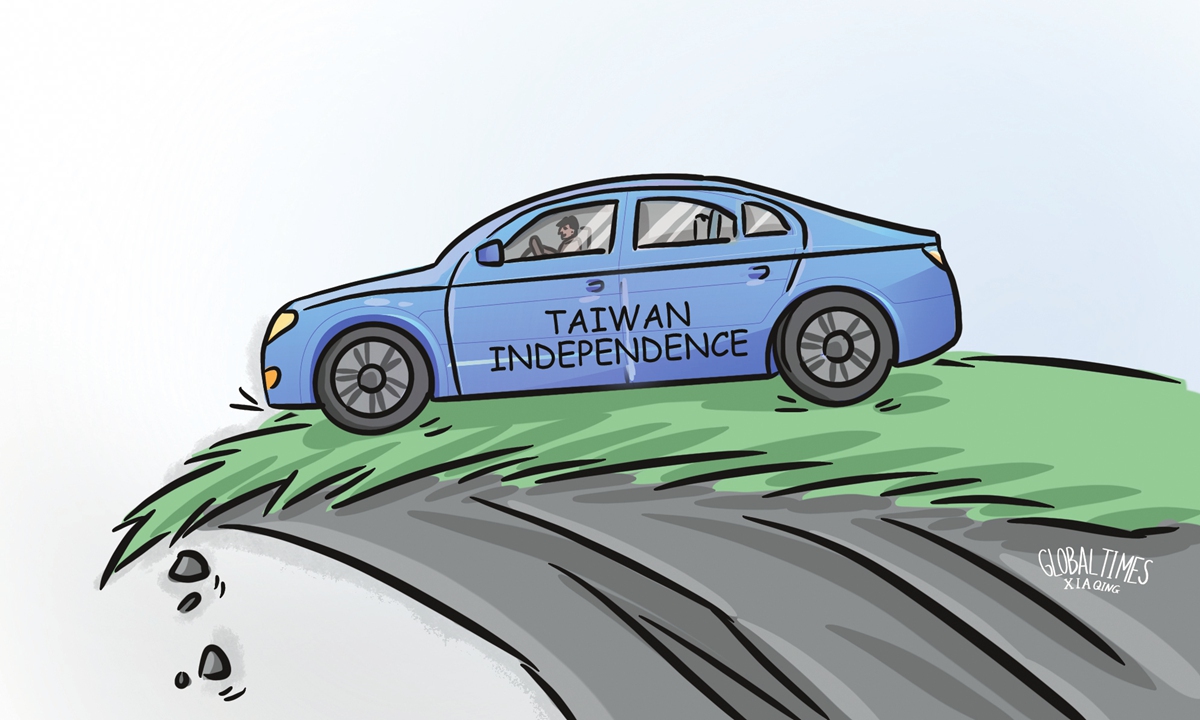
Illustration: Xia Qing/GT
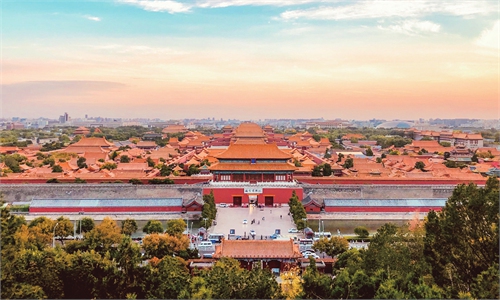
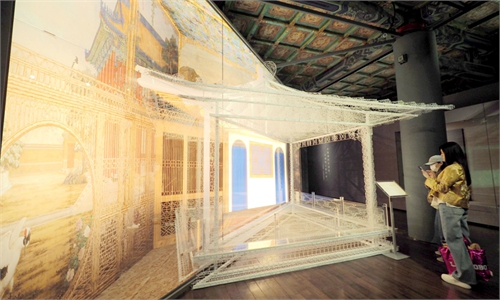
This year marks the 100th anniversary of the founding of the Palace Museum - a moment that should have served as an opportunity for both sides of the Taiwan Straits to jointly celebrate the brilliance of Chinese civilization and deepen their cultural ties. However, according to Reuters, the Palace Museum in Taipei announced recently that it does not plan any joint events with the Chinese mainland for the centennial due to alleged "Beijing's military threats." This deliberate avoidance of shared historical memory and cultural heritage mirrors the influence of the Democratic Progressive Party (DPP) authorities' long-standing strategy of politicizing the cultural sphere and promoting cultural "Taiwan independence.""Taiwan authorities refused cross-Straits cooperation between the two Palace Museums, citing the so-called 'military threat.' In reality, this reflects the DPP's ideological obsession with 'Taiwan independence,'" said Zhang Wensheng, deputy dean of the Taiwan Research Institute at Xiamen University. As a repository of Chinese civilization, the Palace Museum stands as a powerful symbol of the enduring cultural lineage shared by both sides of the Taiwan Straits. The DPP authorities' ultimate goal is to sever Taiwan's connection with its cultural roots on the mainland. This blatant politicization of culture is a betrayal of the Chinese nation and its ancestors.
Since cross-Straits exchanges began in the 1980s, relations have gone through ups and downs. If we view Palace Museum cooperation as a lens, we can see that 10 years ago, when the 1992 Consensus was recognized by the then Taiwan authorities, both sides across the Straits were able to jointly hold exhibitions and academic exchanges for the museum's 90th anniversary, celebrating the brilliance and continuity of the Chinese civilization.
A decade later, however, the DPP's persistent ideological manipulation has erected political barriers that now obstruct cultural connections. Since coming to power, the DPP authorities have not only refused to acknowledge the one-China principle - with their leader, Lai Ching-te, even describing himself as a "pragmatic worker for Taiwan independence" - but have also aggressively promoted "de-Sinicization" and cultural "Taiwan independence" across various domains. These efforts have seriously undermined cross-Straits cultural and educational exchanges, particularly those centered on shared Chinese heritage.
Through tactics such as "de-Sinicization," promoting a false historical narrative that serves "Taiwan independence," and even labeling traditional Chinese cultural symbols like Mazu as "tools of united front work," the DPP is attempting to sever the island's cultural ties with the Chinese civilization in pursuit of its separatist political agenda. What the DPP authorities fear most is that people in Taiwan, when exposed to these cultural treasures, will experience a deep sense of identity and belonging rooted in Chinese civilization.
The DPP authorities' attempt at cultural decoupling not only undermines the foundation of cross-Straits relations but also risks misleading the youth in Taiwan. They seek to block exchanges in culture, education and history because it wants to confuse young people about their national and ethnic identities - ultimately turning them into pawns for "Taiwan independence." This sinister strategy reveals how the DPP authorities are going against the tide of history, treating the people in Taiwan as political tools and sacrificing the younger generation to their separatist ambitions. Such an approach runs counter to the interests of people on both sides of the Straits and is doomed to be rejected.
Whether it is Beijing's One Thousand Li of Rivers and Mountains or Taipei's Dwelling in the Fuchun Mountains, these masterpieces are cultural IDs shared by all Chinese people. Culture should serve its true purpose - conveying civilization and connecting hearts - not be exploited by politicians to sow division. The DPP authorities' attempt at cultural decoupling will only leave Taiwan residents spiritually rootless and culturally adrift. It will further damage cross-Straits relations and escalate hostility. Such regressive acts will be met with firm opposition and resistance from the Chinese people on both sides of the Straits.
The author is a reporter with the Global Times. maruiqian@globaltimes.com.cn
RELATED ARTICLES