Trade deal should not target third party or harm its interests: FM, MOFCOM respond to US-Vietnam trade deal
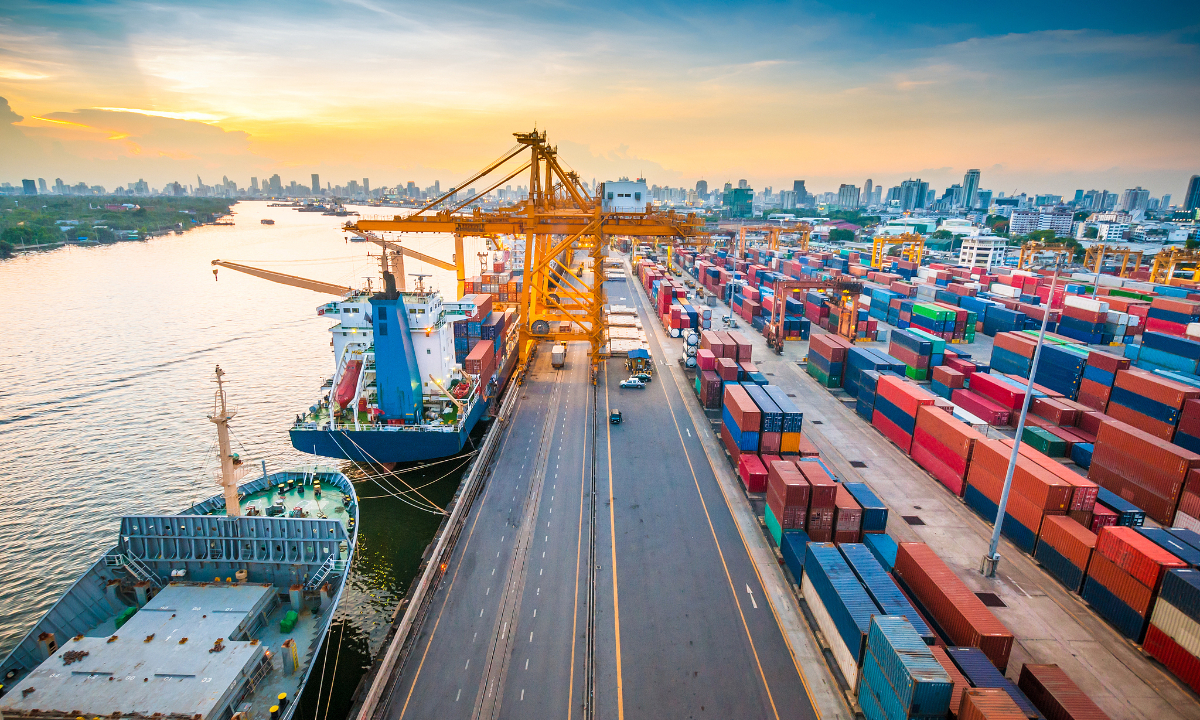
Tariff Photo:VCG
China's Foreign Ministry and Ministry of Commerce (MOFCOM) on Thursday responded to the trade agreement reached between the US and Vietnam, stressing that negotiations and agreements should not harm third parties, while opposing any party reaching agreements at the expense of China's interests.
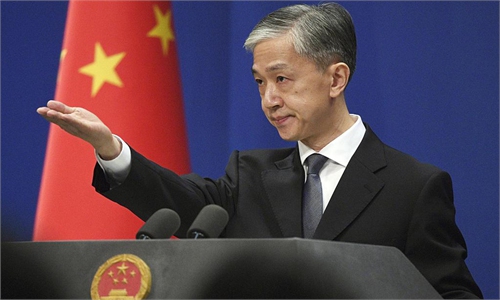
Chinese Foreign Ministry spokesperson Mao Ning stated on Thursday that China believes in equal-footed dialogue and consultation as the way to address economic and trade disputes. That said, relevant negotiations and agreements should not target or harm the interests of any third party.
The remark came in response to a media question that the US and Vietnam reached a trade agreement and part of that agreement would mean that a 20 percent tariff would be placed on Vietnamese exports to the US and a 40 percent levy would be placed on any goods deemed to be transshipped through the country, so that would affect some Chinese goods that are passed through Vietnam.
Commenting on the trade deal, MOFCOM spokesperson He Yongqian stated that the US imposition of so-called reciprocal tariffs on global trading partners is a typical act of unilateral bullying, which China firmly opposes. China has noted the relevant situation and is conducting an assessment.
He Yongqian emphasized that China's position is consistent: We welcome all parties resolving trade disputes with the US through equal consultations, but we firmly oppose any party reaching agreements at the expense of China's interests. Should such a situation arise, China will resolutely take countermeasures to safeguard its legitimate rights and interests.
In addition to the above-mentioned 20 percent and 40 percent levies targeting trans-shipments from third countries through Vietnam, Vietnam could import US products with a zero percent tariff, Reuters reported on Wednesday.
The trade agreement reached between the US and Vietnam violates the WTO's non-discrimination principle and also breaches the principle of fair and open global trade, He Weiwen, a senior fellow at the Center for China and Globalization, told the Global Times on Thursday.
He Weiwen noted that the trade agreement further proves that the current US administration's foreign policy prioritizes American interests at the expense of other nations, showing no regard for their benefits. He added that this also violates the principles of non-discrimination and mutual benefit.
The agreement was unveiled less than a week before a 90-day pause on many of the US administration's so-called reciprocal tariffs was set to expire. Under that protectionist trade plan, Vietnamese imports to the US were subject to a 46 percent blanket tariff.
That rate was lowered to 10 percent during the 90-day interim. Raising the tariff on Vietnamese goods to 20 percent will hike costs for US importers, which could be passed on to consumers or suppliers, CNBC reported on Wednesday.
As for how the US-Vietnam trade agreement would affect trade between China and Vietnam, He Weiwen expected bilateral exchanges to remain smooth in terms of trade flow, which are conducted under multilateral mechanisms, such as the Regional Comprehensive Economic Partnership.
A MOFCOM spokesperson said in a statement at the end of June that China firmly opposes any deal reached at the expense of its interests for so-called tariff relief; if that happens, China will never accept it and will resolutely take countermeasures to safeguard its legitimate rights and interests.
The remarks came in response to a media question as US officials said that they are stepping up negotiations with relevant economies and hope to reach trade agreements with some countries before the 90-day suspension period of "reciprocal tariffs" ends on July 9.
Global Times
RELATED ARTICLES