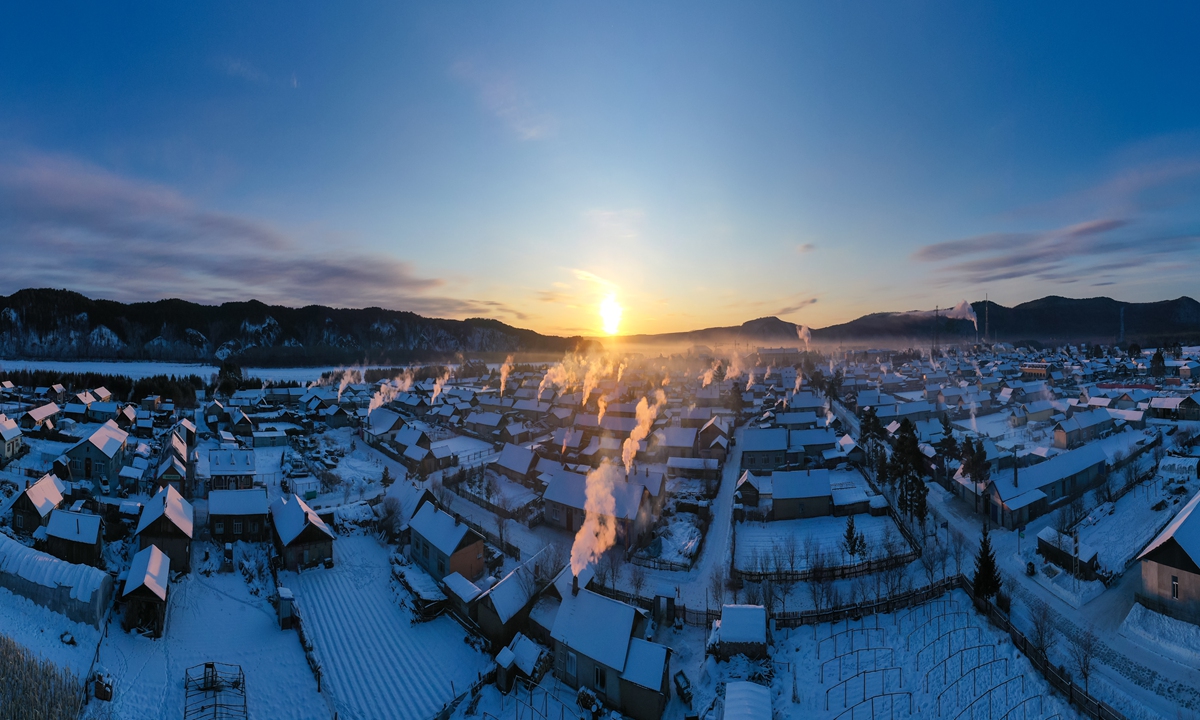
Arctic village in Mohe Photo: VCG
Recently, scorching heat waves have swept across numerous regions worldwide. Even Mohe, China's northernmost city in Northeast China's Heilongjiang Province, has experienced several days of temperatures soaring to 35 C — a place where the annual average temperature used to be below 30 C. Some local homestays have installed air conditioners lately.
Located at Mohe, Beiji Village or "North Pole Village," is a riverside border village in the Dahinggan Mountains at 53 degrees north latitude. The village is among the coldest places in China, with a meteorological record low of minus 52.3 C in winter, according to the Xinhua News Agency.
The village is typically known for its cool summers, which attract many tourists seeking to escape the heat. But over the past week, Mohe saw several days with temperatures reaching 35 C, an unusual spike for the region, the Guangming Daily reported.
Some hotels in Beiji Village have even installed air conditioners to cope with the heat, according to the report.
A man surnamed Xue, who runs a guesthouse in the village, recently spent more than 10,000 yuan ($1,393) installing air conditioners in five rooms. "They're only for guests," he said. "I didn't install one in my own home, since the heat only lasted a few days, and we can stand it."
Zeng, a longtime guesthouse owner, opened a second, higher-end property earlier this year. "I decided to add air conditioning during the renovation, even if it's only needed for a few days each year," she said. "Guests don't have to use it, but as a host, you need to provide the option."
According to the report, Beiji Village has dozens of guesthouses and motels. Staff at many of them said their rooms don't have air conditioning, noting that recent daytime temperatures remained in the low 20 C, with nighttime lows around 16 C—cool enough to still require blankets. Air-conditioned rooms remain the exception.
Global Times
RELATED ARTICLES